




In January 2025, it was estimated that 47,000 Danish retirees were living outside Denmark. Most of them were living within Europe, but many were living outside the EU, in countries like Thailand.
However, those two groups are treated very differently. Danish retirees who decide to settle outside of the EU lose access to pension supplement, and that is a clear case of discrimination, according to the Secretary General of Danes Worldwide, Michael Bach Petersen.
Only the basics
To many Danes, the idea of retiring in a warm southern country like Thailand, can be appealing. To live out the rest of your days in a tropical paradise, where the climate is warmer and lifestyle cheaper.
But even if things are cheaper in Thailand and the rest of Southeast Asia, retirees must still be prepared to budget. When a Danish retiree moves outside of the EU, they lose access to pension supplements, leaving them with only the basic amount of the state pension; 7,544 DKK before tax. For many, this is not enough to make the dream of spending their golden years comfortable in the tropics come true.
A problem for danes worldwide
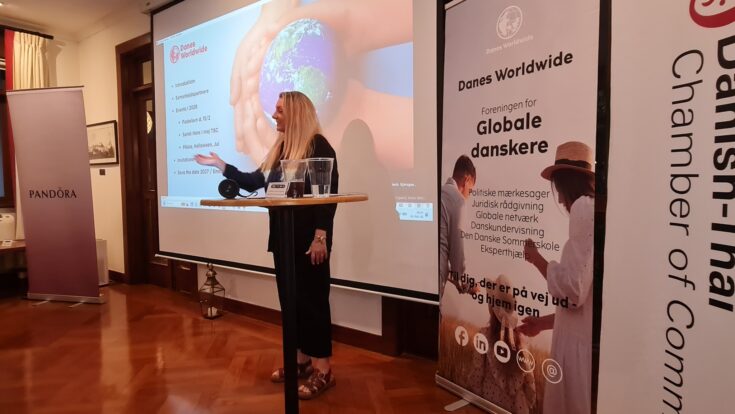
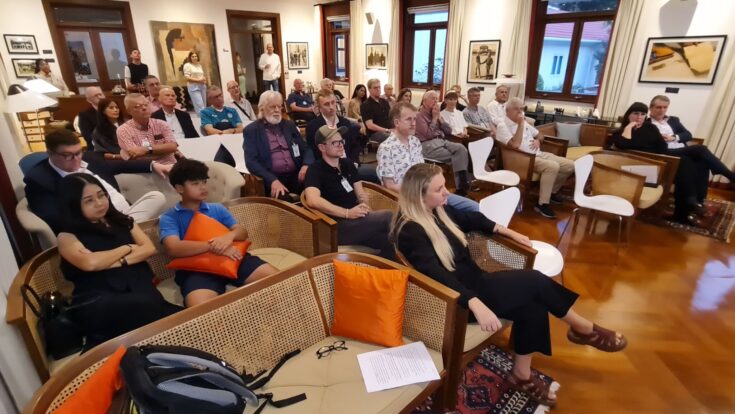
One loud voice for change on this issue is Danes Worldwide, the organisation for Danish expats. Making sure that Danish retirees receive equal pension benefits regardless of where in the world they live is one of their focus areas.
“It is a matter of principle,” Secretary General Michael Bach Petersen explains. “This is an obvious case of discrimination, that should be fixed.”
“When two people dedicate their whole lives to the Danish workforce, each of them has earned the exact same right to a state pension. It should not matter if one decides to stay in Denmark and the other moves to for instanceThailand. They have earned the same rights and should be given the same pension supplement,” Michael Bach Petersen says.
A matter of principle
Independent activists fighting to make the pension supplement equally accessible for all Danish retirees offer a long list of arguments for their case. Some arguments deal with finances, economic benefits or quality of life.
However, to Danes Worldwide, this is a matter of principle.
“I think it is good that activists are highlighting those factors, and I believe it would be interesting for politicians and lawmakers to delve into them,” Michael Bach Petersen says. “Danes Worldwide acknowledge those arguments. However, our focus is on the rights. To us, this is a matter of principle. It is discrimination. It is an inequality that should be corrected.”
Making things right
Danes Worldwide advocates for the rights of Danish people living abroad. Michael Bach Petersen works in close dialogue with politicians, civil servants and the press, not just on equal pensions, but on a wide range of other topics as well.
“We work hard for our members and our goals,” Michael Bach Petersen says.
Danes Worldwide has been instrumental in many political decisions concerning the rights of Danish people living abroad, as well as long-term Danish expats who have returned to Denmark.
The organisation has a long history of taking part in debates and responding to legislation that can affect Danish expats.
“We are not shy about entering debates and making our opinion heard,” Michael Bach Petersen says. “Sometimes we are the only ones speaking up, so it is important to us to speak on behalf of our members.”
Unaware politicians
According to Michael Bach Petersen, one of the biggest obstacles in the fight against unequal access to the pension supplement is a general lack of awareness among politicians and lawmakers.
“I have met many politicians, to whom it comes as a surprise, that when retirees settle outside the EU, they lose access to the pension supplement,” Michael Bach Petersen explains. “Often, it is simply not something lawmakers think about.”
“That is why we work so hard on this. We need to spread awareness of the problem before we can solve it,” Michael Bach Petersen makes clear.
One way, in which Danes Worldwide spreads awareness of their main focus areas, is through activities and events focused on highlighting the challenges faced by Danes living abroad.
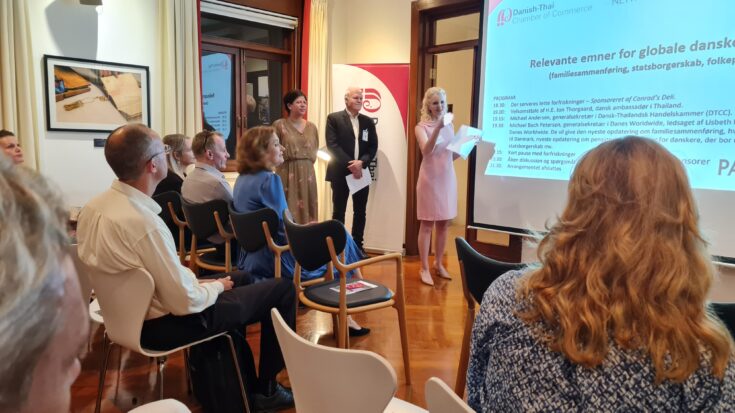
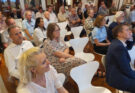
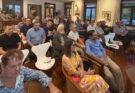
In 2024, Danes Worldwide hosted the event “The Global Danes’ Parliament”, where politicians and members from all around the world were invited to engage in debates on different issues. That year debates had to do with issues such as voting rights and citizenship rules, and the event led to real life legislative change.
Another Global Danes’ Parliament event is coming up in August 2026, where it is anticipated that the debate of equal access to the pension supplement will take up attention.



I have a daughter with a Filipina, she is now 13 years old, and she has lived with me in Denmark since she was 2 years old, it was her mother’s wish because she could not afford her school. I have traveled back and forth as often as I could, so that she could maintain her connection to her family. I have now retired, so now I have the opportunity to stay longer with her and her family in the Philippines, but only 6 months a year, in order to be able to receive the full pension. I cannot settle for the basic pension without a supplement, in order to be able to afford her school because she has started high school down here, the same school as her half-siblings. I would therefore like to point out that most countries, including Denmark and the Philippines, have signed the UN Convention on the Rights of the Child, which states:
Article 9 – Protection of the child by parents
The right of the child to live with his or her parents unless this is considered incompatible with the child’s best interests. The right of the child to maintain contact with both parents if separated from one or both of them. The obligation of the State to re-establish such contact if the separation is due to reasons established by the State.
Article 10 – Family reunification
The right of the child and his or her parents to leave any country freely and to enter their own or another country for the purpose of reunification or to re-establish the parent-child relationship.
Convention on the Rights of the Child | UNICEF https://www.unicef.org/child-rights-convention
Best regards Knud Schultz