




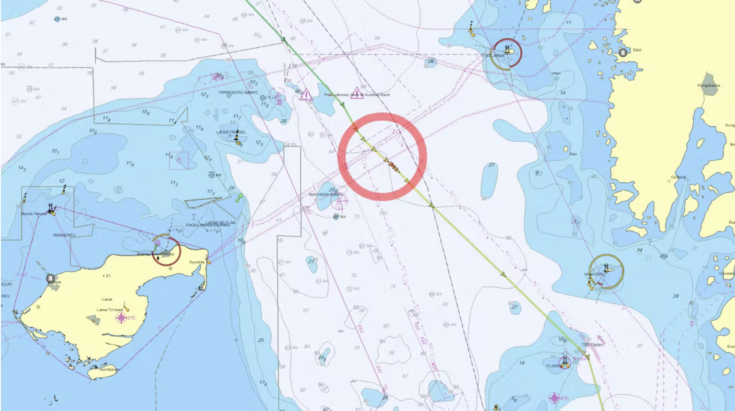
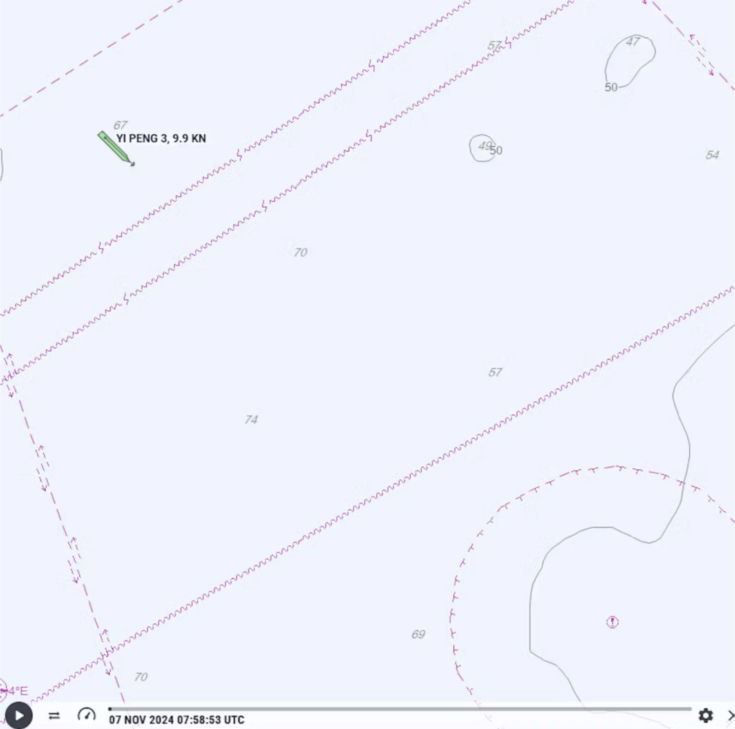
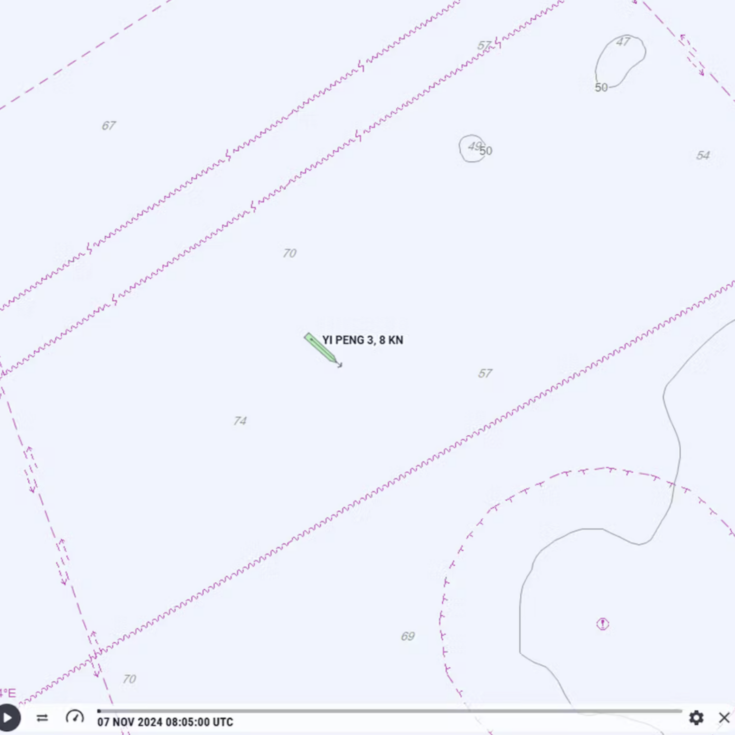
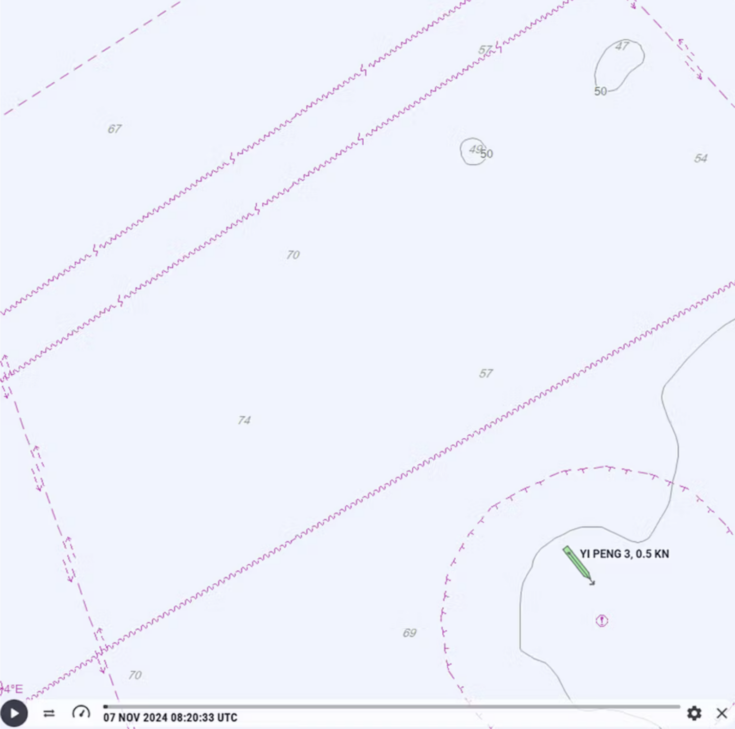
The Chinese cargo ship Yi Peng 3 is under increasing scrutiny following reports of its suspicious maneuvers over three crucial cables connecting Sweden and Denmark. On November 7, 2024, the ship drastically reduced its speed and nearly came to a complete stop while passing over the cables between Læsø and Sweden. This incident occurred just weeks before two undersea cables—C-Lion1 and BCS East-West Interlink—suffered damage, which Swedish authorities suspect may involve sabotage.
Experts have noted that the Danish-Swedish cables operated by TDC Net and Energinet lie at a similar depth to the damaged C-Lion1 cables, raising even more concerns about potential connections to the Yi Peng 3’s activities. TV 2 has reached out to both TDC Net and Energinet, but neither has reported any irregularities in operations on November 7.
Security meassures
“We take the delivery of critical digital infrastructure very seriously. We monitor our networks around the clock and continuously assess our procedures when we detect changes in the threat landscape, including our underwater cables,” stated Karsten Brinkmann, Security Director at TDC Net.
Brinkmann also confirmed that the cables near Læsø are buried beneath the seabed, which makes it difficult for anchors or similar equipment to entangle them. “We always bury our underwater cables with a safety zone on either side. Additionally, we secure and alarm the access points; these measures are standard practice,” he explains to TV 2.
Energinet has not disclosed specific security measures related to their cables.
Ongoing diplomatic negotiations
Defense analyst Jens Wenzel Kristoffersen underscored the suspicious nature of the Yi Peng 3’s behavior, commenting, “It is odd for a merchant vessel, which is typically in transit, to behave this way.” He noted that the depth of the cables might explain why reports of damage have not emerged in the Kattegat region, should the ship’s activities raise valid concerns
In light of these developments, Kristoffersen has advocated for a thorough examination of the seabed near the cable area. “It would be beneficial to deploy drones or other surveying technologies to look for any signs of disturbance that might connect the Yi Peng 3’s passage, including drag marks or evidence of anchor usage,” he recommended.
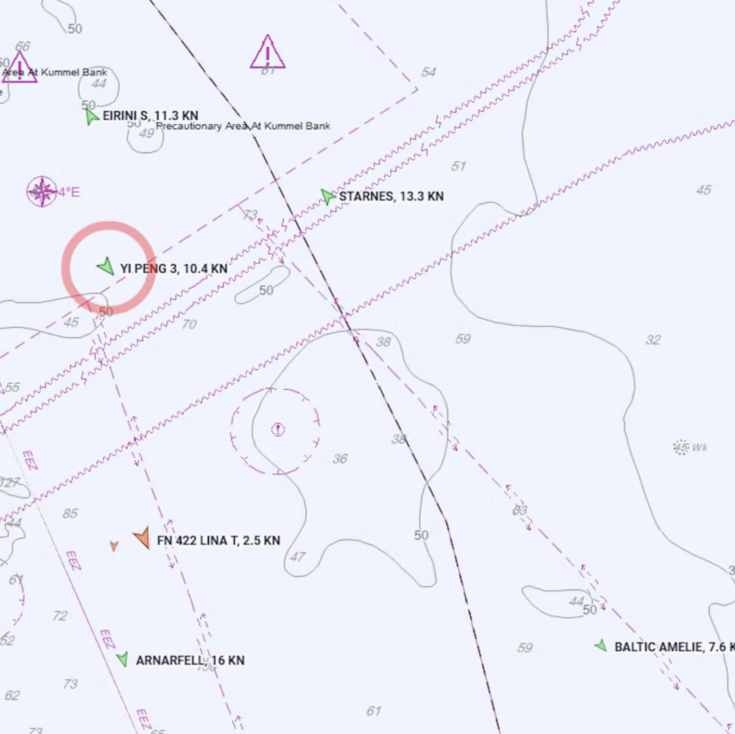
As of now, the Yi Peng 3 remains anchored in the Kattegat, approximately 20 km west of Grenå, as diplomatic discussions continue between several European countries and China, the ship’s country of registry.
Diplomatic conversations still going
Mao Ning, spokesperson for China’s Foreign Ministry, stated on November 27 that negotiations regarding the ship are ongoing: “As we have previously stated, communication channels between China, Sweden, and other relevant parties remain open. I would like to reaffirm China’s commitment to collaborating with all nations to ensure the security of underwater cables and other critical infrastructure in accordance with international law.”
TV 2 has also reached out to the Danish Armed Forces and the Defense Intelligence Service for comments regarding the incident, but both organizations have refrained from providing additional information at this time. cables Sweden and Denmark
If you would like to know more, read: Everything you need to know about the Yi Peng 3 and cable damage in the Baltic Sea
cables Sweden and Denmark
Source: TV2

The incident involving the suspected sabotage of cables between Sweden and Denmark raises significant concerns about the vulnerability of critical infrastructure. With three individuals under suspicion, it highlights the need for enhanced security measures to protect vital communication links that support internet and data transfer. Such acts can have far-reaching consequences on regional connectivity and security.