


There has undoubtedly never before been a more vibrant time for Swedish-Vietnamese trade relations than now. Swedish investments into Vietnam, paired with various bilateral collaborations, are at an all-time-high, and most likely just at the beginning of huge economic growth for Swedish businesses in Vietnam. Overseeing the bilateral relations and trade – public as well as private – is Sweden’s new ambassador to Vietnam, Mr. Johan Ndisi, at the helm Sweden’s Embassy in Hanoi. He has experienced a flurry of activities since his arrival in August 2024, his first posting in the Far East. Here, the Ambassador sums up his diplomatic career and Vietnam adventure so far.
Being his third posting as ambassador, and his first over in Asia, Ambassador Ndisi is thrilled about being in Vietnam, and which has been intense since his arrival.

“It feels both very exciting and a great privilege to be able to be in this super interesting country, which also shares a special and important history with Sweden! And as I have travelled around, I’ve learnt a great deal not only about Vietnam, but also about Sweden and its longstanding Vietnamese contacts, which originates from that it was the first Western country to establish diplomatic relations with Vietnam in 1969. And Sweden then became an exceptionally large aid donor, following our political support with substantial bilaterial aid during the 1970s and 80s,” begins Johan Ndisi and notes that Sweden still continues to benefit from this legacy today.
“The Vietnamese definitely remember that and it’s our brand; something that definitely makes a difference and distinguishes us from other countries. And the fact that we have had our incredibly large aid has also led to a lot of government-to-government contacts and strong people-to-people relations.”
First time in Asia
Ambassador Ndisi had previously visited India and Pakistan but this is his first time living in Asia.
“Part of the fascination and the fun of being a generalist at the Ministry of Foreign Affairs is that I am trained to be able to quickly immerse myself in new contexts and shift to new continents and issues. It is challenging, but also immensely enjoyable. It truly feels like a privilege to be able to change jobs within the job.”
Vietnam’s current overall conditions, together with the gradually implemented EU-Vietnam Free Trade Agreement, are opening up unprecedented opportunities for business, exports and bilateral partnerships.
“One of my ambitions here is to make use of and build upon the strong legacy we have and to develop it and modernise it. And Vietnam today is a very different country compared to the post-war period; since the conclusion of our aid programme, we have continued to deepen the trade relationship we already share and to engage in a forward-looking dialogue about the decades ahead,” responds Mr. Ndisi.
He has been with the Swedish Ministry of Foreign Affairs since September 2003, held his first ambassador posting in Albania between 2016 – 2019, followed by being the Special Envoy for Afghanistan in 2023 – 2024.
“My wife and two out of three children have come along. Our third child is already attending university back home in Sweden. Here in Hanoi, we are fortunate to have many good schools – in particular the United Nations International School of Hanoi, which is absolutely fantastic, and one of only two such schools in the entire world.”
This school primarily caters to the children of diplomats, aid workers, businessmen, and other expatriates living and working in Hanoi.
Personally, Mr. Ndisi likes to stay fit, and tennis is his favourite sport. He tries to find time to play within his usually tight, and often unpredictable schedule.
“I have travelled a lot since coming here, but less so with the family. But we to hope to be able to discover more of the region together going forward.”
Prior to Vietnam the ambassador also worked at Sweden’s EU representation in Brussels as well as at the foreign ministry’s EU unit. Mr Ndisi also headed the Africa department for four years, following earlier employment with SIDA, which took him to Sweden’s embassy in Harare, Zimbabwe.
His educational background is in political science from Uppsala University, before being accepted to the UD (Foreign Ministry’s) diplomatic programme.
“At the Ministry for Foreign Affairs I have over the years worked with many different things, among the EU enlargement and other EU issues. This took me to Brussels, where I worked for four years at our EU representation and was part of the team that led our EU presidency in 2009. So, that was a milestone I would say in my career.”
“I learned a lot during that period and had fantastic managers,” he adds. “It was an incredibly good school for a young diplomat, and a privilege to work with such capable people.”
“Later, my leadership role began when I became the group leader for the Horn of Africa and West Africa. That then brought me back to EU educational issues, when I went to Albania and became our ambassador. And when I returned home, I served as the Deputy Head of Communications and Deputy Head of Africa.”
“I have covered a wide range of topics, while there is still a focus on security policy issues, classic foreign policy issues, aid and trade and promotion. Then, I have been able to look at these issues from different geographical contexts, and I have enjoyed constantly learning about new geographical areas,” the ambassador reflects.
Strategic partnership with Sweden
Among his travel in Vietnam has been – especially at the beginning – nearly weekly trips to Ho Chi Minh City.
“There has been somewhat of a crescendo; first with the Vice President visit and then the Vietnamese Prime Minister’s visit to Sweden during 2025. Vietnam’s leadership maintains many international contacts but the fact that they prioritised Sweden was very positive, including entering into a very important sectoral partnership. This now provides a strong basis for closer trade relations as well as for the Swedish presence here, where we are seeing great opportunities ahead.”
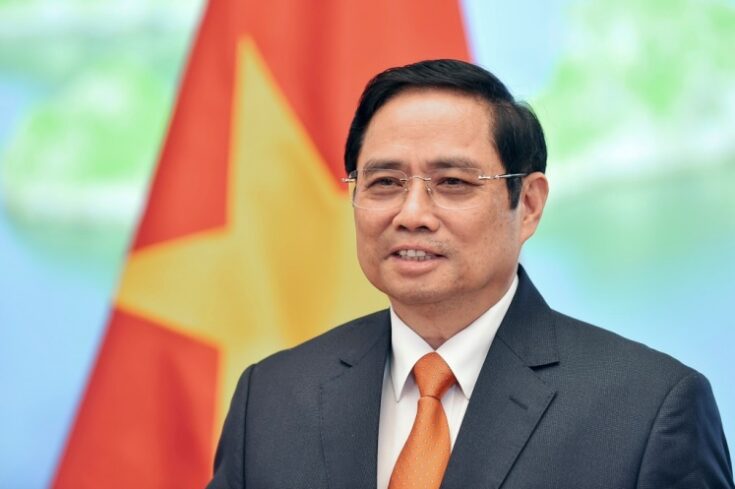
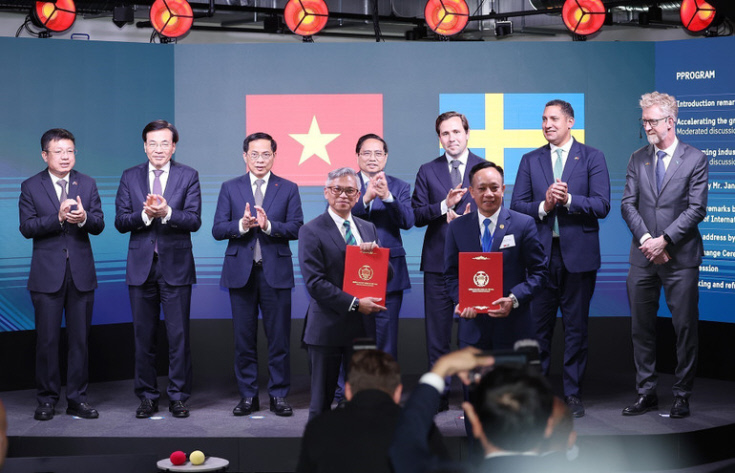
During PM Phạm Minh Chính’s visit, a wave of partnerships was sealed – spanning from AI innovation, green manufacturing, aviation, education, and air traffic tech.
The Swedish embassy stated that this cooperation reflects how Sweden and Vietnam are steadily building a shared future – based on mutual growth, trust, and sectoral partnership.
“A big step was taken when we entered into this sectoral partnership on Science, Technology, Innovation and Digital Transition. These areas have the highest priority on the Vietnamese agenda and we see that there is both expertise and know-how, but also where several Swedish companies – when it comes to the green transition, digitalisation, etc. – are global leaders. So, these are new areas of cooperation that will now be deepened, and year by year we will add more and more substance to the cooperation,” says the ambassador, underling that this takes things to the next level.
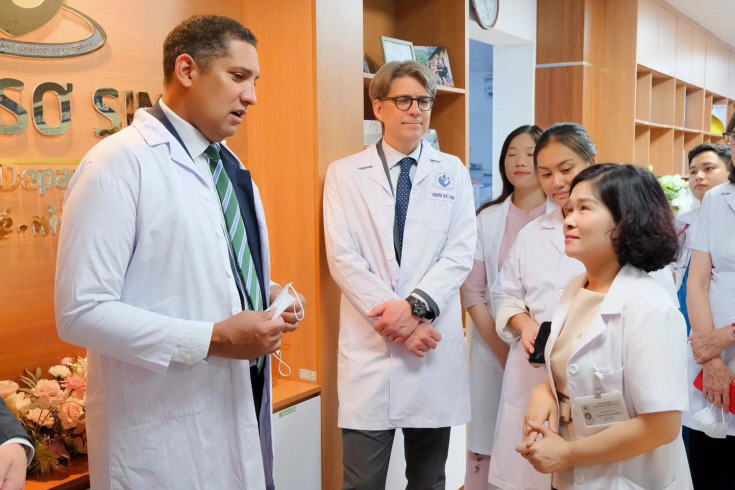
Smart healthcare is a perfect example of such bilateral collaborations, where Vietnam needs to improve its public health standards.
“When it comes to modernising and upgrading, we have Swedish companies and know-how that can build everything from operating rooms to those with hi-tech instruments. Sweden has many good companies in this area and here we can build on the fine foundation that we have, with, in 2026, 50 years of health cooperation!
Meanwhile, it is noteworthy that an MoU has been signed between the Vietnam Trade Office in Sweden and Business Sweden aimed at boosting bilateral trade and investments between Sweden and Vietnam. Included in its aims is the facilitation of business exchanges as well as the sharing of market intelligence and best practices.
Under the radar of the media, there are also many Vietnamese delegations travelling to Sweden. In October 2025 alone, there were six of them, including a visit from Vietnam’s Minister of Home Affairs.
“In particular, they are studying the Swedish model very closely. Vietnam is also a country that will have an aging population in the future, and is now looking at how to further develop the pension system that Sweden already has. And the welfare model over all; how it works in Sweden and the Nordics. And I think that there is both an interest in and knowledge of Sweden thanks to the old relations.”
A draw for Swedish firms
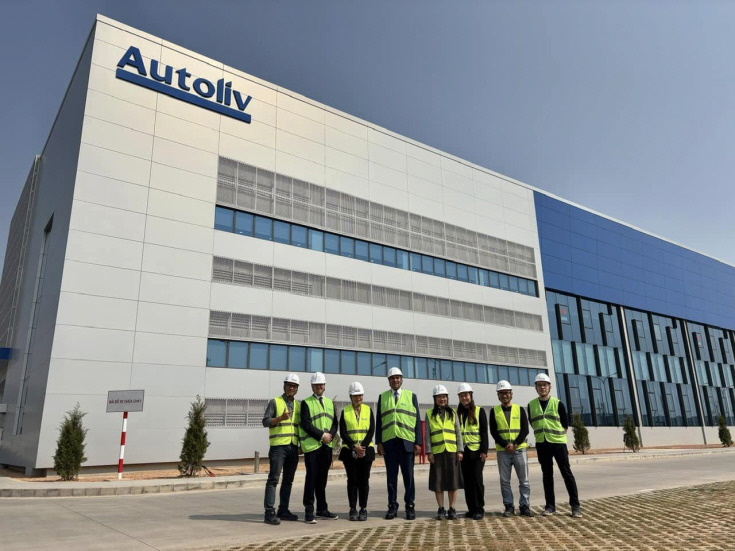
As for investment, Sweden has strengthened its footprint in Vietnam. In the first half of 2025, it became the third-largest foreign investor in Vietnam, contributing 1 billion USD, which accounted for 10.8% of newly registered FDI. This highlights Sweden’s growing interest in supporting Vietnam’s long-term development.
“It’s clear that the EU-Vietnam FTA creates great opportunities for increasing trade with the EU and Sweden. The second factor is the country’s competent workforce. This is a real trading nation and an important cog in global trade, where Swedish and other companies state that the workforce is very capable; making Vietnam an incredibly interesting country for foreign companies. So, several Swedish companies have factories here and produce goods, and these free trade agreements Vietnam has with large parts of the world makes up an incredibly big competitive advantage for the country. They have created a network that enables Vietnam to trade, export and import – and that makes it very attractive,” says Mr. Ndisi.
Highly skilled workers are also a prerequisite for high-tech production, and the ambassador brings up the Danish company Lego’s new factory in Southern Vietnam as an example. The plant was not established there, as one might think, because of any low-cost labour benefit, but as a completely high-tech robotized plant!
“So, companies at home that maybe never considered Vietnam previously have suddenly started looking at it precisely because of technology and a knowledgeable workforce, in addition to opportunities within the production hub’s many free trade agreements.”
It is a draw for Swedish firms, especially in areas like clean energy, smart infrastructure, and advanced manufacturing.
The Vietnamese Government is also working to streamline procedures and improve infrastructure to welcome high-quality international investments.
“There’s an ongoing dialogue with the companies and the chambers of commerce representatives when it comes to what Vietnam can do to simplify the rules, get rid of bottlenecks and address similar problems. There is no doubt that they have ambitions, with the goal of becoming a high-income country by 2045.”
The Nordic way
“I’ve visited a lot of Swedish factories that manufacture here and that play an important role in their companies, as well as businesses’ global value chain operations, so it is super interesting. And it’s very clear that Swedish companies are expanding.”
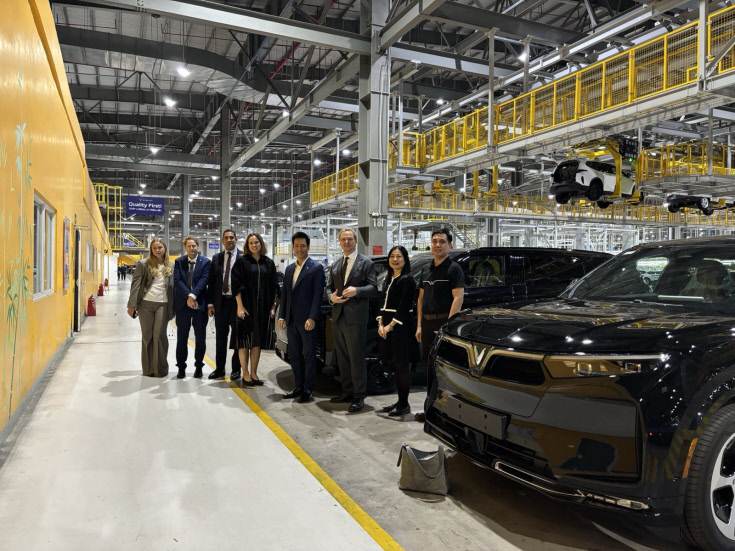
Several grand openings of new factories have taken place, including by Assa Abloy and Hestra Gloves, each inaugurating their second plant. The Ambassador also visited Polarium’s cutting-edge, energy storage factory, as well as Autoliv’s air-bag cushion plant currently under construction.
“When you visit these, the work they do is very impressive. Hestra – a fourth-generation family business from Sweden – continues to champion craftsmanship and sustainability, embodying Swedish values of quality and environmental responsibility. Tetra Pak has also expanded its packaging plant here and it has established a global research and development centre in Vietnam called ‘Bloom’.”
Ensuring their attractiveness as employers is also a common denominator noted by the ambassador: “For all of these companies, it’s great to see both the Swedish and Nordic way of working, with a mindset of taking care of your staff. When you talk to management here, they understand that there is also competition not least for skilled manpower. And the last thing they want is a revolving door; they want to invest in their staff so that they stay.”
Noteworthy from a Swedish perspective is also the established and comprehensive academic collaborations between the two countries. One example is that Swedish researchers benefit from studying Vietnam’s much larger population (for instance regarding cancer). Another is that no fewer than 65 Vietnamese have completed their doctorates at the Karolinska Institute in Sweden.
“It’s incredible to see this high number of Vietnamese PhDs! And every other week we have Swedish universities coming here, often based on long-lasting existing exchanges, partly a result of Sweden’s previous bilateral aid.”
Fast-growing consumer class
A second part, highlighted by the ambassador, is that with each passing year Vietnam becomes more and more interesting, which has a lot to do with the fact that in the next decade an additional, whopping, 37 million people are expected to enter Vietnam’s consumer class!
“It’s a country of 100 million people and has averaged 7% growth for three decades, so there’s an incredibly fast-growing middle class here. Thus, Vietnam is not just a place for production, but also a growing market. I think that, slowly but surely, more Swedish companies will start to think about Vietnam as a consumer market, and those who are already here as producers know this because they have their eyes and ears on the ground.”
In 2025, Business Sweden organised a ‘Focus Asia’ SME study trip that included Ho Chi Minh City (Saigon), aiming to help Swedish small and medium-sized enterprises (SMEs) explore expansion opportunities in the region.
“Together with Business Sweden we could give our perspective, but also link them up with partners and help them to take part in various company visits so that they could look at established companies. And as ambassador, I’m very much available to act as a door opener – for instance, to meet with authorities and showcase concepts.”
“It’s very positive to get these companies – not least SMEs – to open their eyes to these countries and their potential as a market. There’s a lot going on and new investments are coming in, so it’s quite clear that for Swedish companies, Vietnam is an interesting place. These are exciting times, and what makes it so fun to be an ambassador here is that there are a lot of very positive things happening,” thinks Mr. Ndisi.
Business Sweden can also help establish a presence via their office-desk facilities and various facilitation services, including advise.
“We continue to help Swedish SMEs reach out and find new markets – and thereby also create opportunities for them to grow.”
Swedish credit as enabler
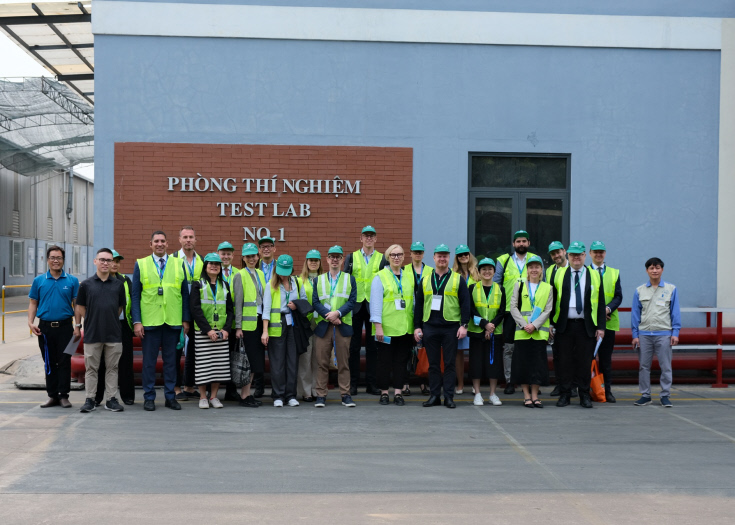
Aside from such support, the Swedish export credit system has recently been expanded, with a new innovative financing instrument that can help turn essential infrastructure projects in low- and lower middle-income countries into investments for the future – and strengthen Swedish exports at the same time. And as enablers of this, representatives from both EKN, Exportkreditnämnden, and SEK, Svensk Exportkredit, visited Vietnam in 2025.
Many vital infrastructure projects never come to fruition due to the lack of affordable financing – which is where EKN and SEK can now step in and play a role in such countries, via a model that helps reduce borrowing costs for buyers of Swedish goods and services.
“It’s very important for Swedish companies to be able to utilise this instrument and help businesses that want to export by minimising the risk. But it’s also worth saying that when it comes to big investments, Vietnam has a number of very large of infrastructure projects, such as are ports, airports and high-speed trains. And here Sweden’s triple-A credit rating means that if Swedish suppliers are involved, the interest rate on loans will be lower. So, this will be really interesting, not least for larger infrastructure investments. It’s great that they are involved. And Swedfund, which is active here too, should also be mentioned, with its important mission to help in developing concrete projects and support.”