





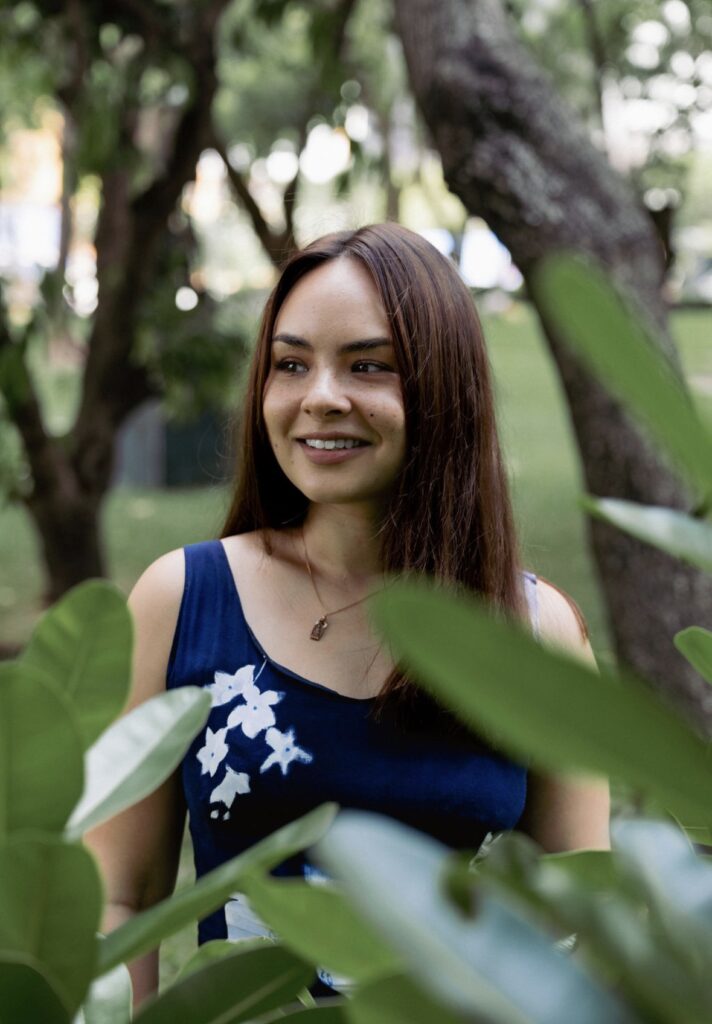
After initially turning away from journalism, Swedish-Thai journalist Nilla Dau found her way back through a growing interest in storytelling and a desire to understand the country she had come to call home.
Today, she is the creator of the Instagram account Stories of Thailand, where she explores the country’s history, culture and society through short videos. Since June, the account has attracted more than 26,000 followers, with subjects ranging from Thai monarchs and Bangkok’s recurring floods to local folklore and ghost stories.
In an interview with Scandasia, she shares how the late Princess Bajrakitiyabha Narendiradebyavati’s death was the seed of curiosity that made the instagram account bloom:
“I remember it was when the princess passed away. I remember I was like looking at the way people were reporting, and I was like, Oh, but who is she? Because I didn’t know a lot about her. So I was talking to my friends, and I was like, It would be interesting to do more research and share who she was.” Nilla says.
Nilla had made the Instagram account a few weeks earlier, which at the time only consisted of one video and some photos from her hometown in Isaan. The day after the princess’ passing, Nilla sat down, did the research, wrote the script and produced the video.
She posted the video the following day, and the response was immediate.
“I got my first few hundred followers within a day, and then it just grew from there,” she says.
Vis dette opslag på Instagram
Between Sweden and Thailand
Born in Jönköping, southern Sweden, to a Thai mother and Swedish father, Nilla grew up between two cultures. Although she attended school in Sweden, she frequently visited Thailand and grew up closely connected to her Thai family.
After high school, she moved to Singapore to study journalism. However, the intensive course left her questioning whether the profession was right for her.
“I told myself, I’m never going to work as a journalist. I don’t want to be a journalist ever,” she recalls.
After spending time in Australia and Thailand, Nilla returned to Sweden during the Covid-19 pandemic. There, she rediscovered her interest in creative work through a film course, where she met journalism teachers who encouraged her to reconsider the profession.
She subsequently completed a two-year journalism education in Sweden and worked as a reporter for Swedish public service broadcaster SVT, as well as a video editor for Newsner.
Despite finding success in Swedish media, she felt drawn back to Bangkok, where she eventually moved in May 2025. After briefly working as a freelance photographer, she began missing the intellectual challenges of journalism.
“I really miss working actively with my brain and as a journalist. The best thing for me when I was working as a reporter was meeting random people and learning,” she says.
Making Thai history accessible
Throughout school, Nilla explains how she has always been fascinated by history, because it can help us understand the society we live in today. With Thailand particularly, historical information is often documented but difficult for ordinary people to understand, and Nilla wants to bridge that gap through her content, with history being the red thread through it all.
“My goal, I think, is to give it in bite sizes enough that people will understand that, oh, okay, this is the reason why Bangkok floods so much. And this is why we have this view on this specific thing because this thing happened and this is the aftermath. I think it’s important to remember and to be educated. Like, not everyone can know everything, but everyone can know a little bit of something. And I think it helps.” she says.
Nilla also explains, that she wants to make complicated subjects accessible through short videos rather than expecting audiences to read lengthy academic or historical material.
This is why she spends a lot of time researching academic and peer reviewed papers, to educate her audience on everything from CIA’s role in the Bangkok red light district to the thai ghost that hunts men.
“I’m very interested in the paranormal, and I think that’s also the Thai side of me, but I think it ties together with history more than what people realize. So many of the origins of these folklore stories come from something like cancer or natural phenomena, but became a ghost and it shapes the culture along with it.” She says.
Vis dette opslag på Instagram
A different understanding of journalism
Nilla attributes much of her approach to journalism to her Swedish upbringing. While she describes herself as culturally Thai in many ways, she says her Swedish background has particularly influenced her understanding of education, human rights and women’s rights.
“I think the Swedish side of me definitely comes out when it comes to education, human rights, women’s rights, and discussions of things that have to do with society and the world,” she says.
Her understanding of journalism was also shaped by a lecture she attended in Sweden, where an experienced journalist challenged the familiar idea that journalists give people a voice.
The journalist argued that people already have voices, but that political circumstances, geographical inequalities and social norms can prevent them from being heard. Rather than giving people a voice, journalists should act as a bridge, bringing their experiences and perspectives to a wider audience.
The idea stayed with Nilla and changed how she viewed the responsibility of the profession.
“I really, really liked that and resonated with it a lot. I think it changed my perspective a little bit. But it’s also a big responsibility to choose what voices are supposed to be heard,” she says.
Navigating journalism in Thailand
Putting that understanding of journalism into practice in Thailand comes with its own challenges. Nilla explains that reporting on certain historical and political subjects requires particular attention to language, sources and how information is presented.
She points to a video she produced about the events of 6 October as an example. When researching the subject, she relied on academic papers and sought out Thai authors, while taking particular care with the wording of her script.
Rather than presenting personal interpretations, she wanted to make clear that the video was based on documented historical accounts.
Nilla says that the legal and social environment in Thailand means she has to consider how her work could be interpreted, particularly when covering sensitive subjects. This also extends to moderating comments and removing content that contains potentially problematic claims or misinformation.
She does not necessarily see these considerations as a reason to avoid difficult subjects. Instead, she views them as a challenge that requires her to approach stories differently.
“Today, I see it as just a challenge for me to write differently. To still get my point across and to still report without breaking the law and putting myself in danger,” she says.
She acknowledges that reporting in Thailand is not always as straightforward as it might be in Sweden, but believes there are ways to continue covering important subjects while being mindful of the environment in which she works.
Looking ahead
For now, Nilla’s ambition is to establish Stories of Thailand more firmly in the country, expand her network and meet more people whose stories she can share.
Although she is open to eventually covering subjects beyond Thailand, she sees Bangkok as her base for the foreseeable future. She also hopes to use the opportunities she has had through her Swedish education and upbringing to contribute to the society she now calls home.
For Nilla, journalism remains a way of bringing attention to perspectives that might otherwise go unheard, and of making complicated subjects easier to understand.
“I think if more people knew more about history or society in general, I think we would be better as humans because I think there would just be more compassion and understanding to why things are the way they are,” she says.
