


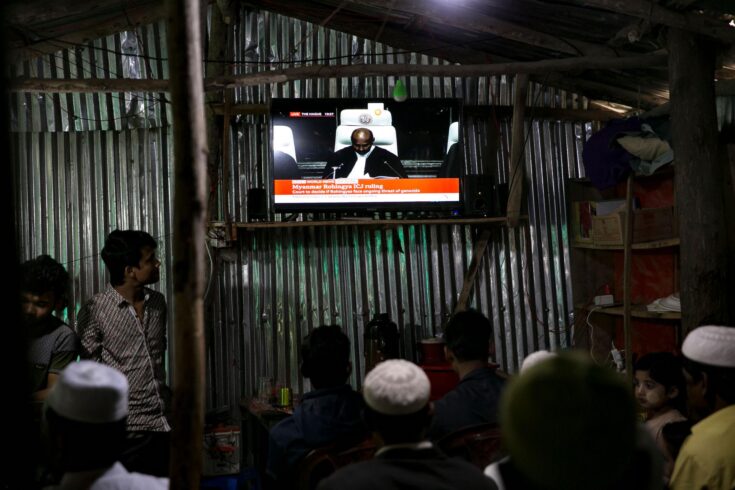
The International Court of Justice (ICJ) ruled on 19 November 2026 that Myanmar committed genocide against the Rohingya minority during military operations in 2017, in a landmark case in which Denmark was among eleven countries that intervened to help clarify the interpretation of international genocide law.
The ruling, delivered in The Hague by nine votes to six, is the first time the United Nations’ highest court has found a state responsible for committing genocide under the 1948 Genocide Convention.
The Court found that Myanmar’s security forces had killed thousands of Rohingya civilians, committed widespread sexual violence and inflicted serious harm on the minority population during operations in northern Rakhine State.
More than 700,000 Rohingya fled to neighbouring Bangladesh during the military campaign in 2017. Many remain in refugee camps, unable to return safely to their homes.
Denmark joined international legal intervention
The case was brought by the West African country The Gambia in November 2019, with the support of the Organisation of Islamic Cooperation.
On 15 November 2023, Denmark joined Canada, France, Germany, the Netherlands and the United Kingdom in submitting a joint declaration of intervention before the ICJ.
The six governments sought to clarify how the Genocide Convention should be interpreted, including the legal requirements for establishing that genocide had occurred.
Their joint statement emphasised that countries which have signed the convention share a responsibility to prevent genocide and ensure that those responsible are held accountable.
Five additional countries subsequently intervened in the proceedings, bringing the total to eleven.
Denmark was not a direct party to the case brought by The Gambia but participated under provisions allowing other countries to present their interpretation of an international convention.
Myanmar ordered to provide reparations
The Court ordered Myanmar to investigate and, where warranted, prosecute those responsible for crimes covered by the Genocide Convention.
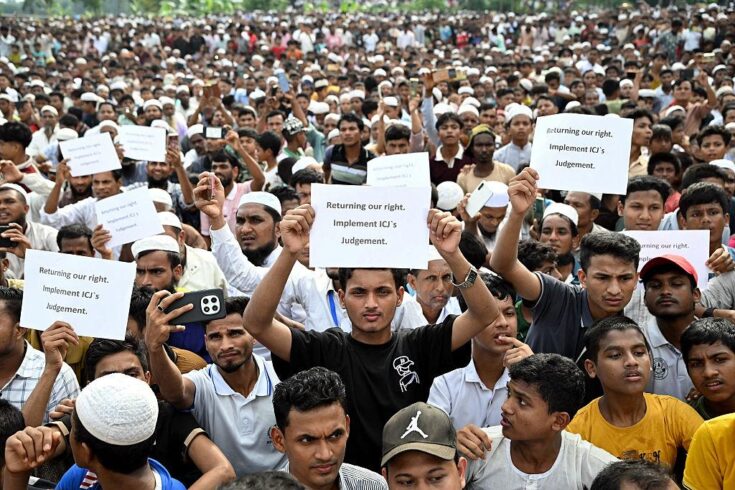
It also ordered Myanmar to prevent further violations, facilitate the safe and voluntary return of displaced Rohingya and provide reparations to victims.
The amount and arrangements for compensation will be determined in a subsequent phase of the proceedings.
UN Secretary-General António Guterres welcomed the judgment as a recognition of the Rohingya victims of genocide and called on Myanmar to comply with the legally binding decision.
Myanmar’s Foreign Ministry rejected the Court’s conclusions, arguing that the military operations were responses to insurgent attacks rather than acts committed with genocidal intent. It also pointed to the six judges who dissented from the majority ruling.
The judgment is final and cannot be appealed. However, its implementation remains uncertain, as the ICJ has no independent enforcement mechanism.
For the Rohingya refugees who fled Myanmar nearly a decade ago, the ruling provides international legal recognition of the crimes committed against them, while the possibility of returning home remains unresolved.
Sources:
- International Court of Justice – Judgment press release, 19 November 2026
- Joint declaration by Denmark and five other countries, 16 November 2023
- United Nations – Statement by the Secretary-General, 19 November 2026
- Myanmar Ministry of Foreign Affairs – Response to judgment, 20 November 2026
- Human Rights Watch – World Court finds Myanmar committed Rohingya genocide