



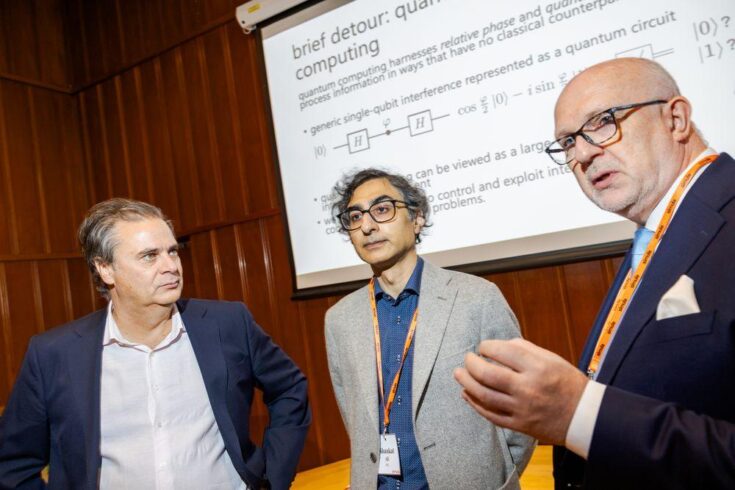
Norwegian research institute Simula and the Singapore University of Technology and Design (SUTD) have signed an agreement to develop new computer technologies that could eventually help solve complicated problems much faster and make digital communications more secure.
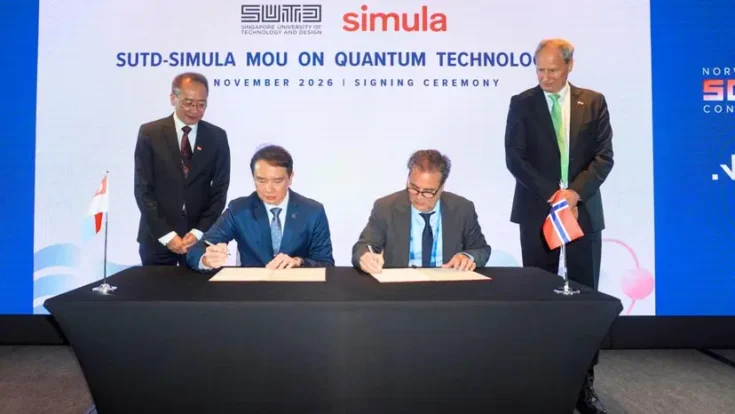
The cooperation focuses on quantum technology, an emerging field that uses the unusual behaviour of extremely small particles to develop new ways of computing, measuring and protecting information.
Although the science is complicated, its potential benefits are easier to understand.
Ordinary computers already perform billions of calculations every second. Quantum computers work differently and may eventually solve certain specialised problems that are extremely difficult for today’s machines.
For example, future applications could help shipping companies plan more efficient routes, improve the movement of goods through busy ports or develop new ways to protect sensitive information from hackers.
These are potential applications rather than technologies already delivered by the new partnership.
Both Norway and Singapore have strong maritime industries, making shipping a particularly interesting area for cooperation.
Lance Lim, Senior Director at SUTD, said the university’s expertise in quantum computing could complement Simula’s work on computer software. He specifically highlighted opportunities to apply their combined research to the maritime sector.
The two institutions plan to work on research projects, seek funding together, exchange researchers and organise joint events. They may also expand their cooperation into artificial intelligence and cybersecurity.
Simula is a Norwegian research institution specialising in computer science and digital technology. It is involved in two national research centres developing quantum software and secure communications.
The Norwegian research institute is already at the centre of a major national effort to develop quantum technology. In December 2025, Norway awarded Simula approximately NOK 120 million over five years to establish two research centres working on the computer software and secure communication systems needed to make the technology useful.
The two centres are led by Shaukat Ali and Carlos Cid. Their work includes developing practical applications for quantum computers and creating new ways to protect sensitive digital information. Researchers from both centres visited Singapore in August 2026 to explore cooperation with universities, research institutions and technology companies.
SUTD is a public university in Singapore established in partnership with the Massachusetts Institute of Technology (MIT) in the United States.
Bjørn Simonsen, Science and Technology Counsellor at the Norwegian Embassy in Singapore, described the agreement as an important step in strengthening scientific cooperation between the two countries.
The partnership is still at an early stage, and no specific commercial products or completion dates have been announced.
Nevertheless, it gives Norwegian and Singaporean scientists an opportunity to work together on technologies that could become increasingly important for businesses and society in the years ahead.
Sources: Quantum Spectator, 17 November 2026; Innovation Norway, Norway–Singapore Science Conference programme; Simula, 2 September 2026.