




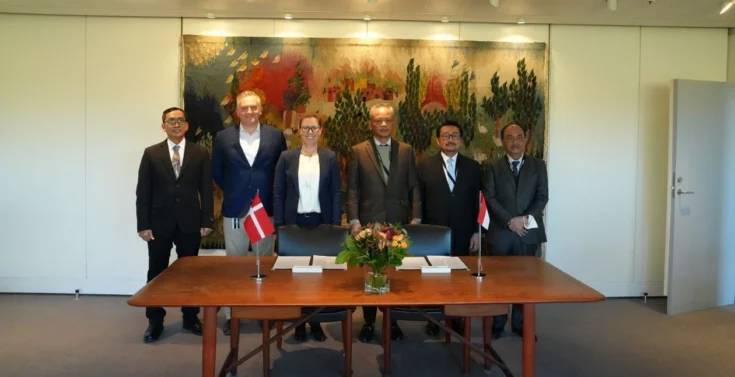
Danish technology company Topsoe has secured a contract to supply ammonia production technology for a major fertiliser plant in Fakfak, West Papua, Indonesia. The agreement with state-owned Pupuk Indonesia, through its subsidiary Pupuk Kalimantan Timur (Pupuk Kaltim), was signed in Copenhagen on 13 November 2026.
The Danish company announced the agreement on 16 November, saying it would provide its SynCOR Ammonia technology, basic engineering design and proprietary equipment for a new ammonia-urea production complex. The plant is designed to produce 2,500 tonnes of ammonia per day, which will be used to manufacture urea fertiliser.
The project is intended to strengthen Indonesia’s domestic fertiliser supply, particularly for farmers in eastern Indonesia, while supporting the country’s ambitions to become a more competitive producer of petrochemicals.
“Topsoe has a proud history of supporting food security around the world. This project will supply fertilizers to farmers in Eastern Indonesia, where there is a real need,” said Yassir Ghiyati, Chief Commercial Officer at Topsoe.
Pupuk Indonesia President Director Rahmad Pribadi said food security was the starting point of the project. He added that the cooperation with Topsoe would help transform the Indonesian company from a national fertiliser producer into a globally competitive petrochemical business.
Topsoe’s SynCOR Ammonia technology is designed to reduce natural gas consumption in ammonia production by approximately 10 percent compared with conventional processes, contributing to lower production costs and emissions.
A final investment decision is expected in 2027, with completion of the plant targeted for 2030.
A major project with a complicated history
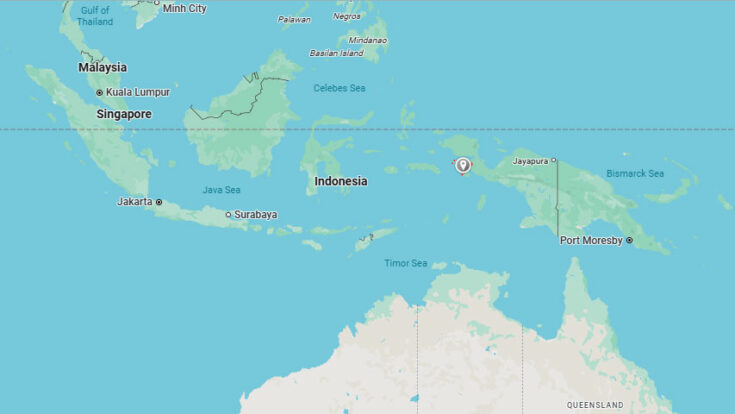
The Danish contract represents a new step forward for a project that has already experienced several years of delays and disagreements over its location.
Indonesia’s former President Joko Widodo attended the groundbreaking ceremony for the Fakfak fertiliser industrial complex in November 2023. The original location was Fior village in Arguni district.
However, according to local newspaper PinFunPapua, subsequent technical and environmental assessments found the original site unsuitable for construction. The project was consequently reconsidered, with alternative locations within Fakfak Regency being examined.
In June 2026, Fakfak Regent Samaun Dahlan reaffirmed his administration’s determination to keep the investment in the regency, despite the required changes to the factory location.
The proposed relocation has also raised concerns among indigenous communities.
Local news outlet Detik Papua reported objections from customary landowners in Tomage district, who complained that preliminary surveys had been conducted without adequate consultation or permission. They also alleged that trees had been cut in customary forest areas.
Pupuk Kaltim disputed the allegations, saying its surveys had been conducted with official permission and that the company respected indigenous rights and environmental protection requirements.
In July, West Papua Governor Dominggus Mandacan called on Pupuk Kaltim to prioritise the recruitment of local workers when the factory is built.
He warned that excluding local communities from employment opportunities could create social problems and stressed that the investment should improve living standards in West Papua.
Local authorities have nevertheless continued to support the project, regarding it as an opportunity to create industrial employment and stimulate economic development in one of Indonesia’s less industrialised regions.
The latest agreement with Topsoe suggests that technical preparations are advancing, although the companies’ announcements do not clarify whether all outstanding land and environmental issues have been resolved.
Danish technology for Indonesian agriculture
Founded in 1940 and headquartered in Denmark, Topsoe is an international supplier of catalysts and technologies for the production of fuels, chemicals and other industrial products.
The company employs approximately 2,500 people worldwide and has an established presence in the Asian market.
For Indonesia, the Fakfak project is part of a broader strategy to modernise fertiliser production


