



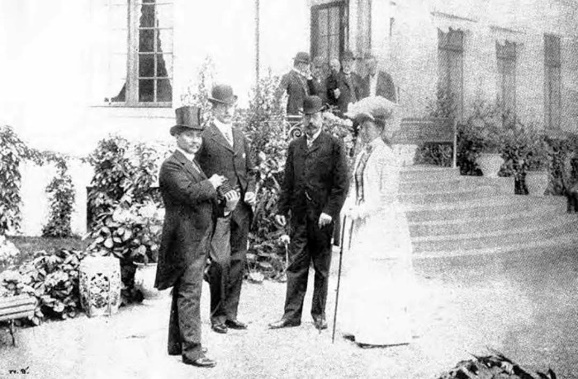
Between Sunday 30 June and Thursday 4 July, 1907, when King Chulalongkorn visited Denmark for the second time, he renewed friendships with the Danish royal family, visited Danes who had served him in Siam and now had high positions in Denmark and travelled through Jutland before sailing on to Norway.
“We were so much at home with the royal family that we could romp and joke with everyone, ladies and gentlemen alike. There was none of the formality of a state visit.”
This was how the King described an evening at Fredensborg Palace on 1 July 1907. Writing to his daughter Princess Nibha Nobhadol, whom he affectionately addressed as Ying Noi, he recalled a reception that felt more like a family gathering than a formal royal occasion. The account appears in Royal Letter No. 26, later collected in the book Klai Ban, or Far from Home. The translated passages quoted here come from those personal letters.
His observations range from railway ferries and motorcars to gardens, farming and dinner-table teasing. Read alongside the photographs, they reveal both the public welcome and the private pleasures of his second visit to Denmark, ten years after his first European journey.
A train that went to sea
The journey from Hamburg on 30 June to Denmark began in bitter cold and intermittent rain, the King writes in his letter. The King wore an overcoat and covered his legs with a rug.
A highlight of this leg of his travels was when they arrived at Warnemünde, a harbor on the German side of the Baltic Sea. Here, his train reached a ferry lying stern-first against a loading bridge, with two railway tracks on board.
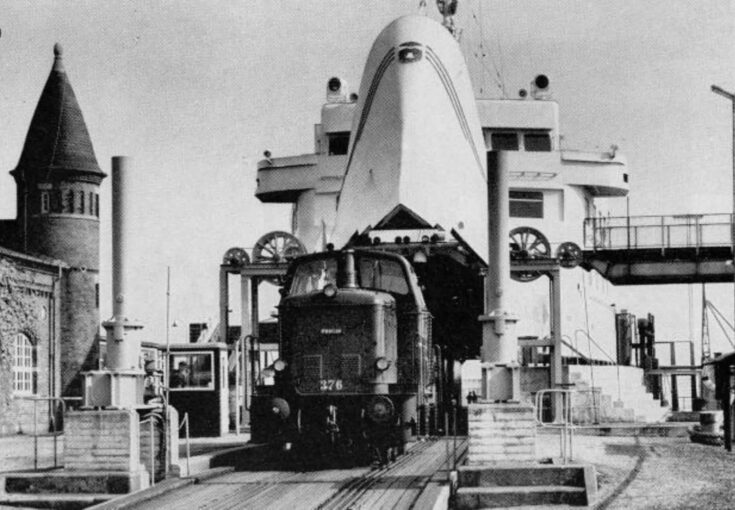
The locomotive was moved to the rear to push the carriages aboard. The Siamese party’s train went first, making the ferry list a little to one side due to the weight – until another set of carriages was loaded onto the second track.
The transfer was so smooth that the King missed the moment his own carriage went aboard, although he was watching for it. A sleeping passenger, he observed, could have crossed the sea without knowing it.
The crossing to Gedser, the harbor on the Danish side of the Baltic Sea, took two hours. Another, shorter ferry crossing brought the train from Orehoved on Falster to Masnedø, from where it continued across a bridge to Zealand.
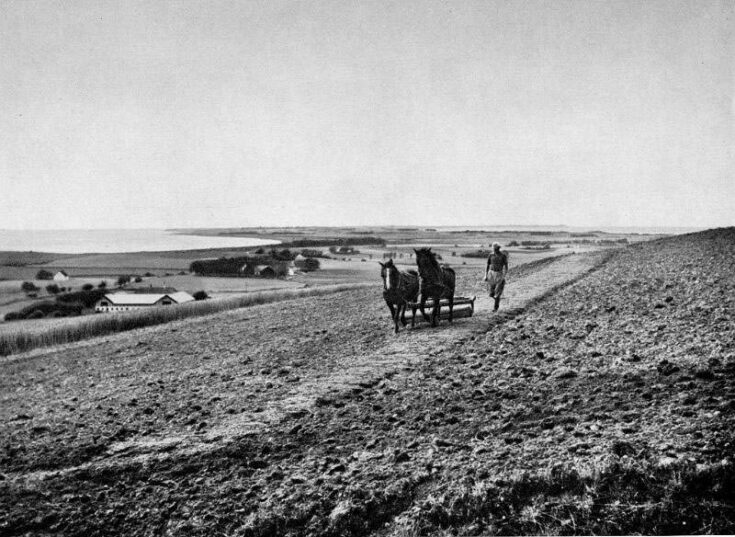
Along the way, the King noticed cultivated fields, windmills and heavily thatched cottages that reminded him of houses roofed with palm leaves at home.
King Frederik VIII and members of the Danish royal family met him at Copenhagen central train station at seven that evening. Although many residents had gone out of town for Sunday, crowds packed the route to Amalienborg Palace, where the Siamese royal standard was flying.
When King Chulalongkorn first visited Denmark, his host had been King Christian IX. Since he passed away in 1906, the year before his current visit, his son, Frederik VIII, was now the King of Denmark.
At Amalienborg, King Frederik showed him the rooms they had prepared for his stay. They had been redecorated, fitted with electric lighting and furnished with a larger bed. But the King had shortened his Copenhagen arrangements and chosen to stay at Bernstorff, sparing the staff the trouble of moving his party after a single night. Seeing the care taken over the rooms, he regretted having to pass them up, he noted in the letter that night.
Familiar rooms at Bernstorff
After dinner at Amalienborg, Prince Valdemar, Princess Marie and Prince George accompanied their guest to Bernstorff. The drive revealed how much Copenhagen had expanded since his previous visit. Fields had given way to streets and building plots, a development he recognised from Bangkok.
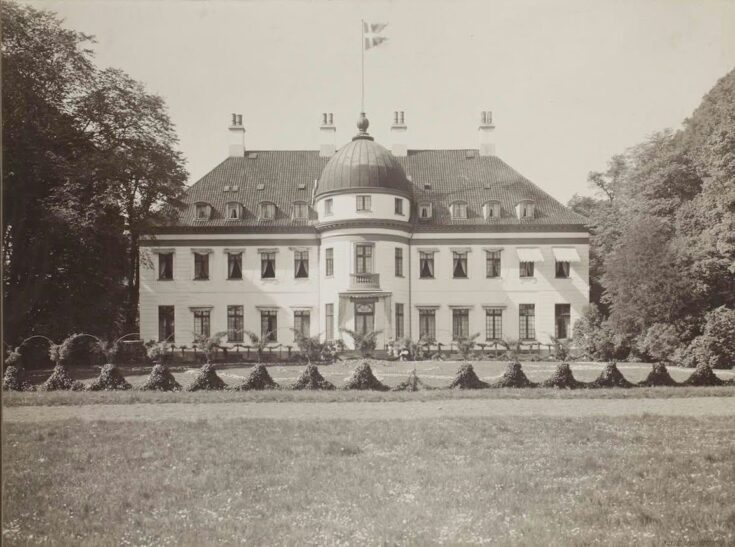
Inside Bernstorff, however, much was familiar. Electric lights had replaced candles, but the bed, pictures and books in the late King Christian IX’s ground-floor rooms remained where they had been. Chulalongkorn remembered where Christian and Queen Louise had sat, talked and played cards. He had visited them almost daily during his earlier stay and now felt their absence keenly.
The year after Chulalongkorn’s first visit, in 1898, Queen Louise had passed away at the castle – and now the King himself had passed away just the year before he was back.
The younger generation helped restore the family atmosphere, King Chulalongkorn notes. Valdemar’s children came to play in his room and joined walks in the gardens. His own son, Prince Uruphong, was shy at first but gradually relaxed in their company.
A lasting mark at Roskilde
On the morning of 1 July, the party drove to Roskilde Cathedral, the burial place of Danish kings and queens. The King examined the tombs and laid wreaths for Christian IX and Queen Louise. Princess Marie placed flowers at the four corners of their tomb.
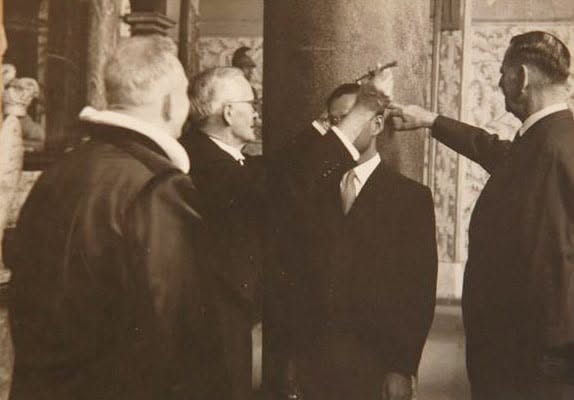
In one chapel stood a stone column marked with the heights of visiting sovereigns. The King compared the marks, noting Christian I at the top and Christian VII at the bottom. Then his own height was recorded.
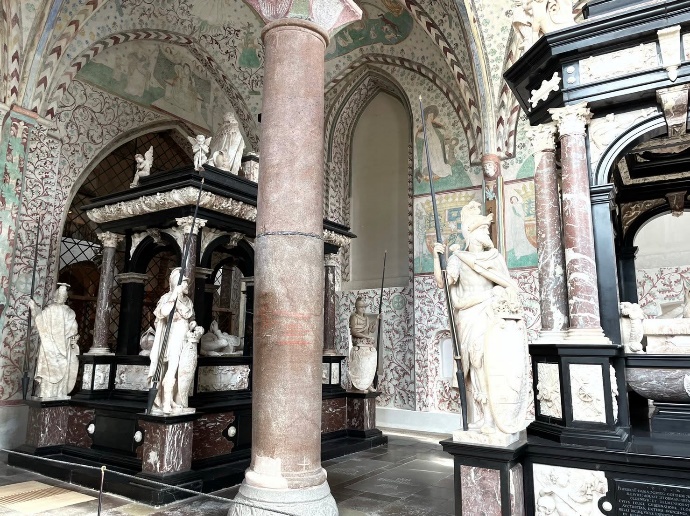
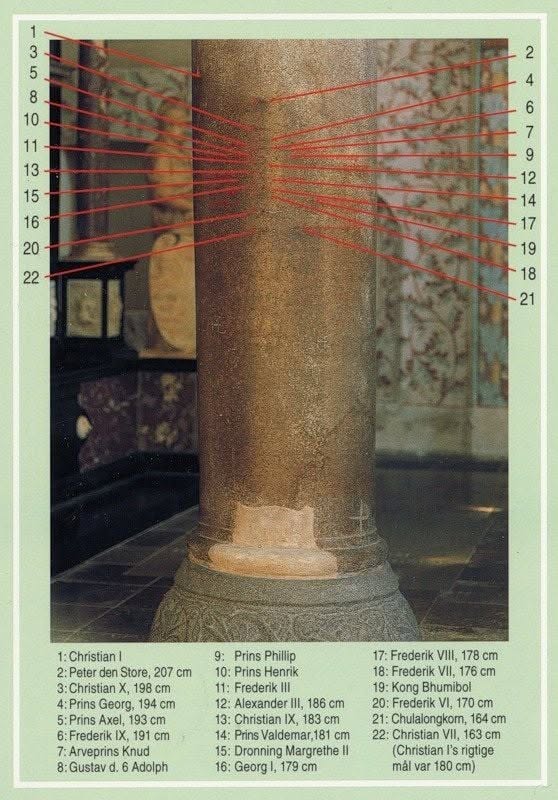
“They had me stand against the pillar, and I came out a little taller than Christian VII. They marked my height on the stone, where it will remain for ages to come.”
The column provides a tangible connection with the visit. King Bhumibol Adulyadej later had his height recorded there during his state visit in September 1960, as did Princess Maha Chakri Sirindhorn on a subsequent visit.
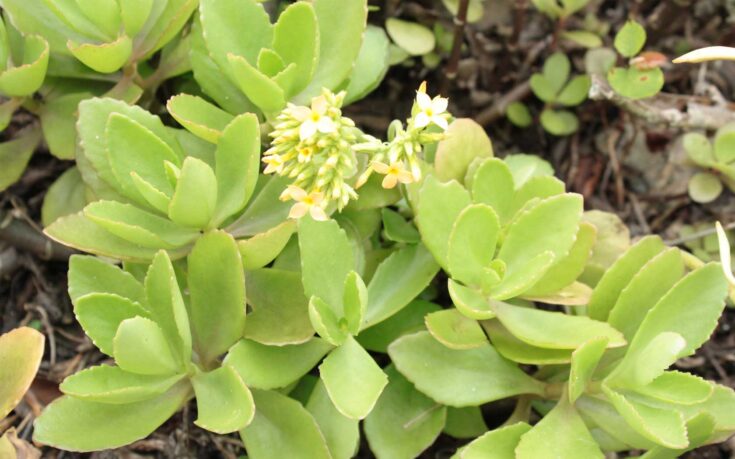
Back at Bernstorff, the King walked through the grounds with his hosts. Beyond the lawns and trees were roses, greenhouses, a kitchen garden and a pond for ducks and geese. Among the plants was a reminder of Siam: a thong sam yan plant that Valdemar had grown from a leaf that he collected on Ko Khram during his earlier visit.
An evening among friends
That evening, the party drove to Fredensborg for a gala banquet. King Frederik and Queen Louise welcomed them at the steps. Ministers, members of the royal household and several Danes who knew the King from Bangkok joined the gathering.
The dinner retained its ceremonial setting. The royal party entered together, the King and Queen sat on either side of their guest, and Frederik proposed a toast. Afterwards, however, the evening became thoroughly informal.
Once they had spoken with the guests, the King and his hosts slipped into another room to smoke. Frederik brought out cigarettes on an enamelled tray Chulalongkorn had given him during his earlier visit. It was in describing this scene that the Siamese King wrote of everyone joking together without the formality of a state visit. Frederik himself had said in his speech that he did not regard Chulalongkorn as a guest among them.
The Queen, too, seemed more at ease than before, greeting him affectionately and conversing freely. King Frederik regretted that their time together was short and invited him to stay at Fredensborg on a future visit. Everyone came down to the car to see the party off.
King Chulalongorn returned to Bernstorff at ten, with daylight still lingering. He reflected on how easily the two families mixed, adults and children alike. Despite predictions that the old closeness would fade after the deaths of Christian IX and Queen Louise, the ties they had forged remained remarkably strong.
He also made a note about King Frederik VIII having bestowed the title of Chamberlain on Phraya Chonlayut – the Danish admiral Andreas du Plessis de Richelieu, who had served King Chulalongkorn in Siam.
“Today, the King appointed Phraya Chonlayut a Chamberlain as a mark of honour to me. Only the King can confer this title,” he wrote.
“It carries no particular duties, but it gives its holder a high rank at court and is often bestowed on generals and admirals who have retired from active service.”
Motorcars and friends from Siam
On 2 July, the King visited Copenhagen’s Free Port to inspect Albion, the yacht chartered for the onward journey. The 252-foot vessel belonged to Sir George Newnes and came with a captain, crew and galley. The King admired its drawing room, library and dining room, although he found the beds rather narrow.
Nearby lay Birma, being prepared for Frederik VIII’s voyage to Iceland. After inspecting the ships and visiting the East Asiatic Company’s offices, the party returned to Bernstorff for lunch.
In the afternoon, they drove along the coast to visit admiral Andreas du Plessis de Richelieu. The King described the house rented from the King of Greece, set a little back from the shore with a fine view of the sea. Richelieu was then renting Smidstrupgård, which he later bought and it was named Kokkedal Castle.
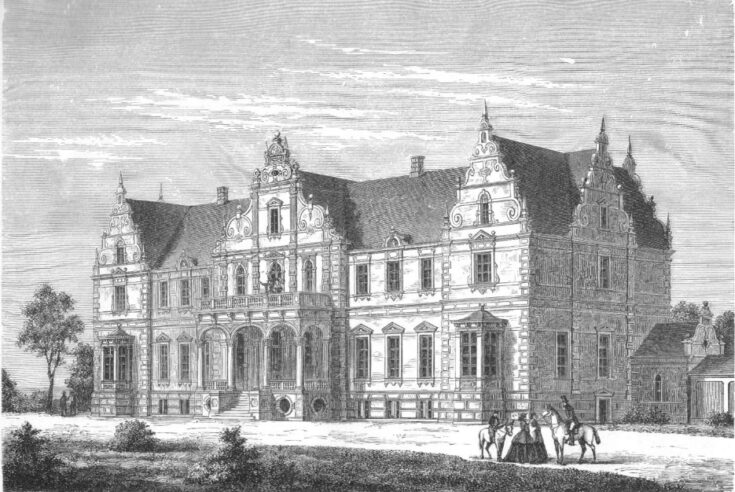
The drive prompted a lively complaint about Denmark’s restrictions on motorcars. Princess Marie had needed a minister’s permission to use one because of fears that horses would bolt. The King thought the animals would soon become accustomed to cars if only they were allowed to see them.
“When they do, they stiffen and stand on guard, but it is their owners who take the greater fright. Once a rider panics and starts whipping his horse, off it bolts.”
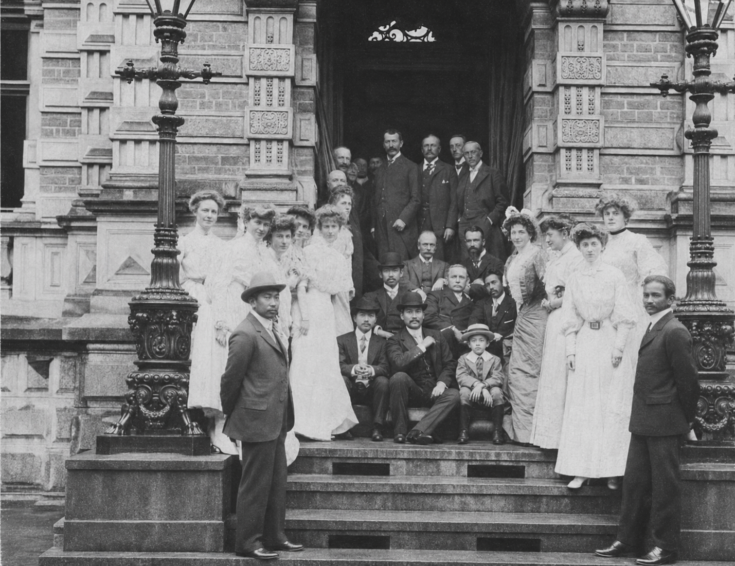
Richelieu’s family and friends served tea, and the visitors posed for a group photograph in the rain. They then continued to the home of Consul H.N. Andersen, founder of the East Asiatic Company, for another welcome and another tea. Valdemar’s children joined the outing, making it a lively party.
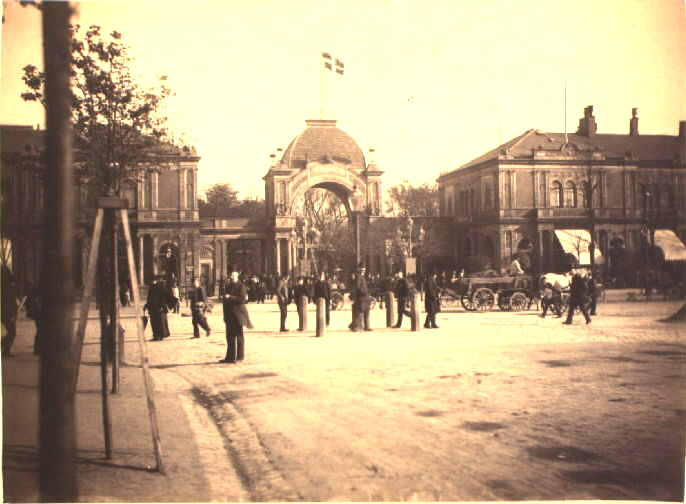
There was little time to rest before dinner at Bernstorff, followed by an equestrian circus and supper at Tivoli. The amusement garden was so crowded with people waiting to see the Siamese King that walking about became difficult. At eleven, the party boarded Albion. Rain fell, but the quay remained packed, and cheers followed the yacht out of the harbour.
Dinner and teasing at Frijsenborg
The final two days took the King beyond Copenhagen. On 3 July, Albion reached Aarhus, where officials and townspeople waited in heavy rain. From there, the party travelled by train to visit Count Mogens Christian Krag-Juel-Vind-Frijs at Frijsenborg, near Hammel.
After warming themselves by the fire and lunching with nearly thirty guests, they toured the castle and estate. The King admired the antique furnishings and paintings, including the Countess’s own work. Outside, he inspected working horses, dairy cattle, trout ponds and cheesemaking equipment. The rain followed them throughout and the King detested the cold weather. But he made detailed notes of all he saw and clearly gathered inspiration for what could be done back home in Siam.
Dinner offered more cheerful entertainment. Countess Ahlefeldt, seated beside him, insisted that he choose whether dark eyes or blue eyes were more beautiful. Both could be beautiful, he replied. She would not accept the compromise. Pressed for an honest answer, he chose dark eyes, prompting laughter and accusations that he disliked blue ones.
The teasing continued until the Countess offered to pluck out her blue eyes for him, if he liked them. His reply settled the exchange:
“I told her there was no need to do that or to worry, as I had already kept her blue eyes in my heart.”
The company roared with laughter. Later, when someone suggested visiting Albion, the Countess protested that she could hardly go now: people would say she was following her eyes. The jokes continued until the party left for the train back to Aarhus.
A final stop in Skagen
On Thursday 4 July, the King arrived at Frederikshavn and took the train north to Skagen, continuing by carriage towards Grenen, the northern most tip of Denmark.
After lunch at the wooden seaside hotel among the dunes, he watched a demonstration of a lifeboat being launched and a rocket carrying a rescue line being fired. That idea was also noted in details for future inspiration.
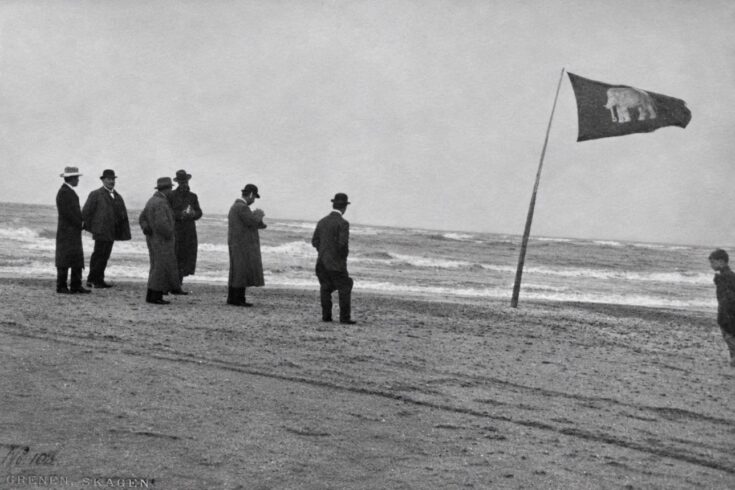
At the tip of the tip, he watched how the opposing waves of the North Sea to the west were meeting with the waves of the Skagerak Sea to the east. The King planted the Siamese flag as a memento.
That evening, the Albion sailed for Norway, with crowds still cheering from the harbor despite being soaked with rain. He closed his Danish account with a simple transition:
“I shall end here for now, as this brings us to the end of Denmark. I shall begin the account of Norway separately.”
Related posts:
 Denmark-Thailand relations taking shape towards green energy
 Forestry has played a major role in the history of Sweden and Thailand relations since 1897
 King Chulalongkorn’s close friend and trusted adviser for more than 27 years was Danish
 The elephant flag planted by King Rama V of Thailand is exhibited at museum in Denmark