




A groundbreaking collaboration between Chinese and Swedish scientists has resulted in the development of a new rice variety that could significantly reduce global methane emissions while maintaining high yields.
The research team, comprising experts from Hunan Agricultural University and the Swedish University of Agricultural Sciences in Uppsala, has successfully created a rice hybrid that emits up to 70% less methane than conventional rice varieties.
The researchers recently disclosed their findings in a study published in the peer-reviewed journal Molecular Plant on February 3, 2025. This publication has garnered attention from various media outlets, including the South China Morning Post and the Bangkok Post, which reported on the development on February 5, 2025.
The breakthrough came after researchers identified that two chemical compounds – fumarate and ethanol – released by rice roots play a crucial role in methane emissions. By developing a variety that produces less fumarate and more ethanol, the team achieved a substantial reduction in methane production.
The new variety, developed through traditional breeding methods rather than genetic modification, has demonstrated impressive results during field testing across China. With an average yield of 8.13 tonnes per hectare, it significantly outperforms the global average of 4.27 tonnes per hectare.
“We can create low-methane and high-yield rice using traditional breeding methods, without GMO, if you know what you’re looking for,” explained Anna Schnürer, a microbiologist at the Swedish University of Agricultural Sciences.
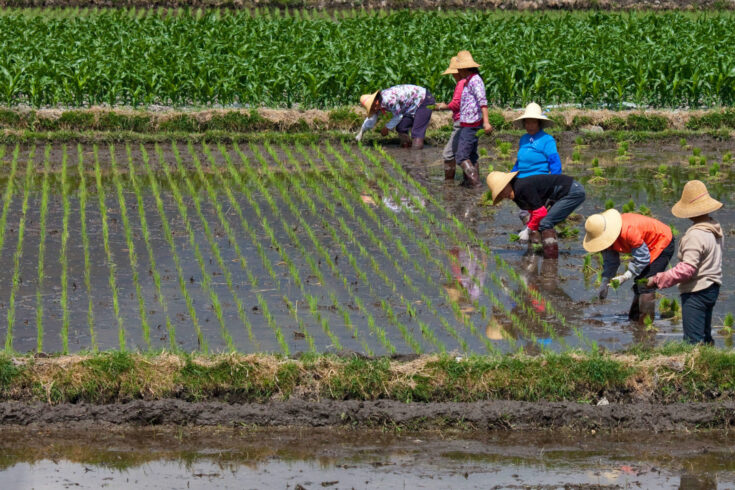
The research holds particular significance as rice cultivation currently accounts for approximately 12% of global human-caused methane emissions. With the increasing global population and rising rice demand, this innovation could play a crucial role in reducing agricultural impact on climate change.
The research team is now working towards registering the rice variety in China and exploring possibilities of incorporating methane-reducing compounds into fertilizers. However, they emphasize that government support will be crucial in encouraging farmers to adopt these eco-friendly varieties.
Source: The Star



[…] Agricultural researchers have created a new hyrid rice with 70% lower methane emissions at its roots. As a rather useful byproduct of this research, the planted rice reportedly gives […]