



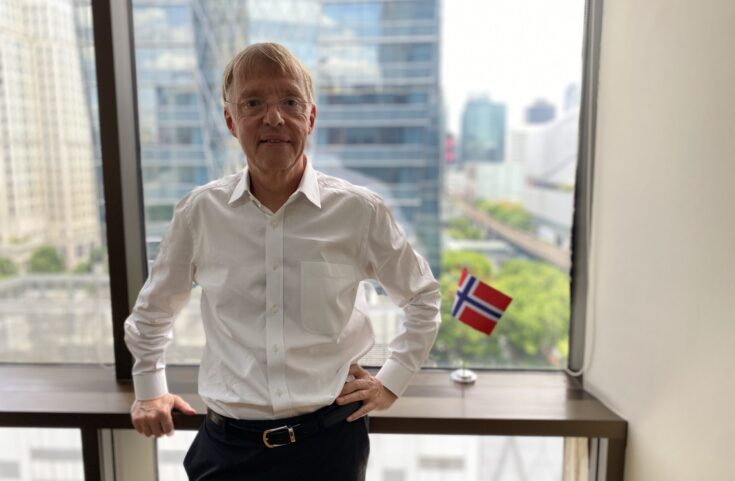
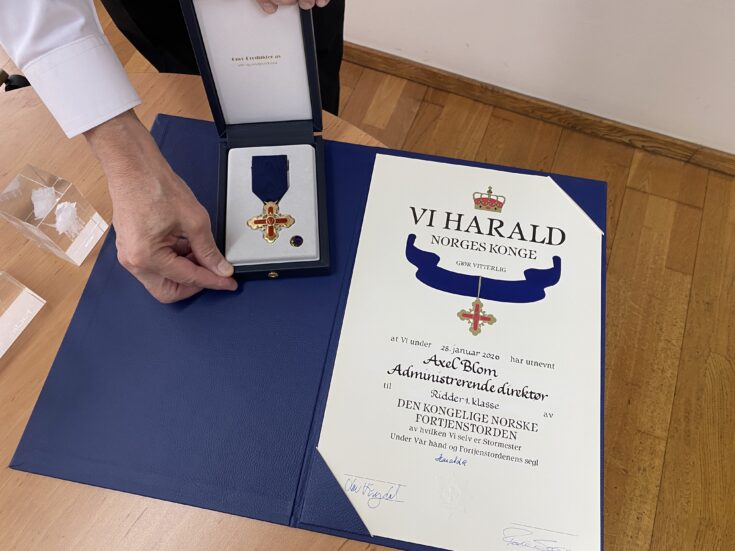
For nearly two decades, Axel Blom has helped connect Norwegian businesses with Thailand through his company Norway Connect. Now, he has been awarded the Royal Norwegian Order of Merit, Knight 1st Class.
Millions of people in Thailand have held it in their hands.
The 100 baht banknote carries the image of King Chulalongkorn Rama V, one of Thailand’s most respected monarchs.
But hidden in the story behind the note is also a Norwegian connection – one that would later become part of Axel Blom’s own work connecting the two countries.
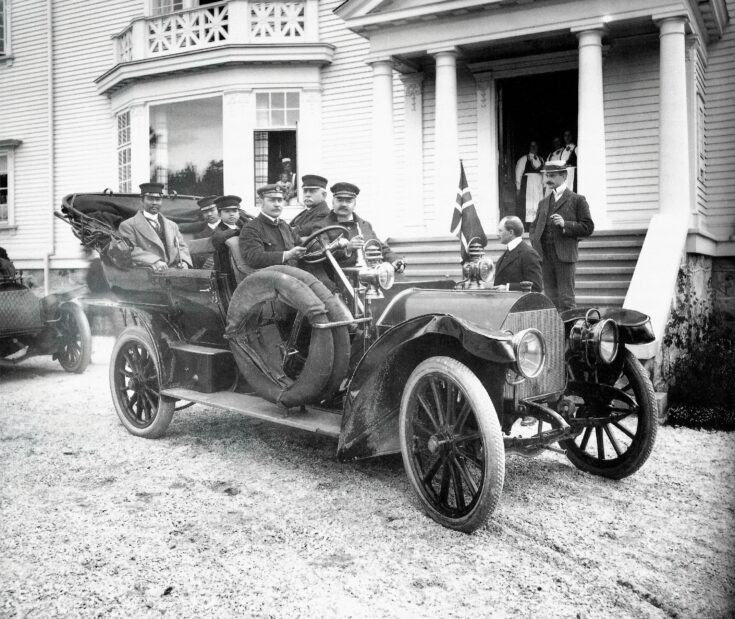
In 1907, King Chulalongkorn travelled to Norway. One of the places the king visited was Norsk Hydro, where he wanted to learn about Norway’s methods of extracting nitrogen from the air to produce fertiliser.
A photograph from that visit is today featured on the Thai 100 baht banknote.
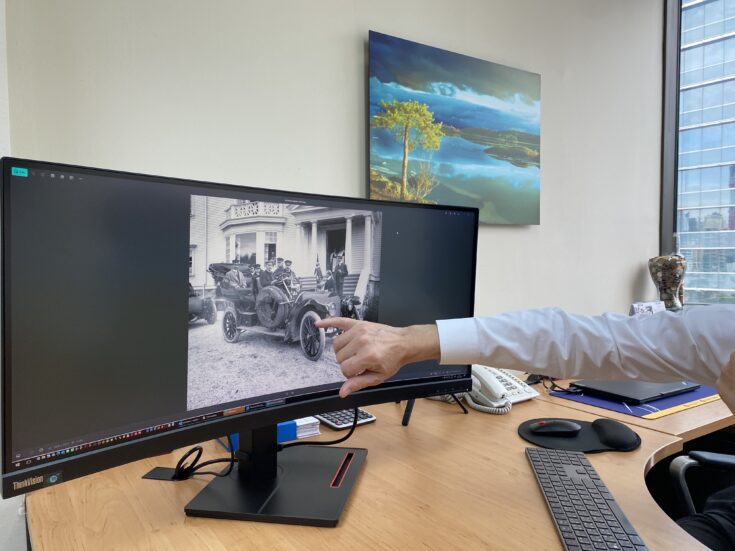
More than a century later, that same historical connection has become part of Axel’s own story. It has become part of the story he tells when he works to strengthen the relationship between Norway and Thailand.
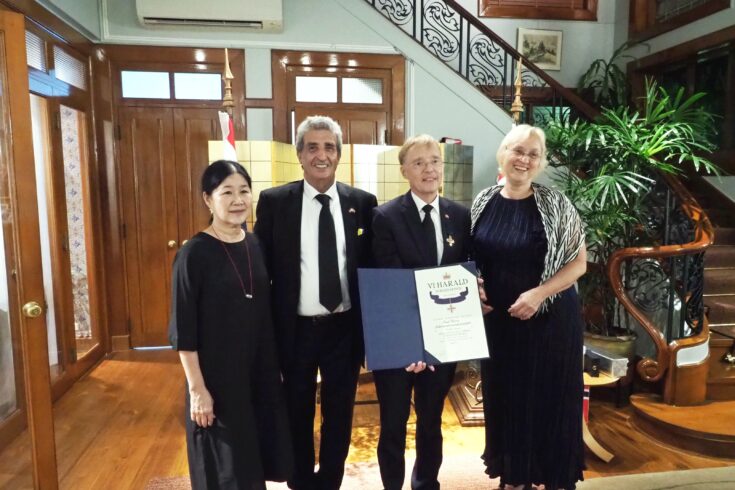
After 44 years in Thailand, the Norwegian businessman has received the Royal Norwegian Order of Merit, Knight 1st Class, for his longstanding contribution to strengthening economic cooperation between Thailand and Norway and advancing Norwegian business interests in the region.
“I did not expect it at all,” Axel says.
He had arrived at the Norwegian embassy to discuss a regulatory case for a client. When the ambassador called him into her office, he assumed they would talk about the case.
Instead, she told him he had received the order.
A childhood of travel
Thailand was not completely unknown territory when Axel first arrived.
He had already visited the country as a child in 1968, when his parents were living in the Philippines. At the time, travelling was a very different experience.
“There were no direct flights, so you had to make around ten stops along the way,” he recalls.
The journey went through Europe, the Middle East, Pakistan and India.
“My entire childhood was about travelling around the world. We were in Africa, Greece, and many other places. I spent 17 years travelling on and off.”
His international upbringing continued. His father was born in the Netherlands to a Norwegian mother and a Dutch father, and the family spent a lot of time in the Netherlands.
In 1982, Axel moved to Thailand after meeting the woman who would become his wife.
They had met in Copenhagen, where he was working with SAS in Copenhagen and she was studying architecture and furniture design at the Royal Academy of Arts. She lived in Denmark for nine years and still speaks Danish today.
When Axel received a job offer in Thailand, he moved there during the first year of their marriage. His wife returned after finishing her studies.
For Axel, their relationship has always been built on understanding.
“The most important thing in a marriage is respect for each other and each of our cultures.”
Building his own business
Axel arrived in Thailand with a job already waiting.
He transferred from Thai Airways International in Denmark to SAS in Thailand and began working at the airport.
“For two years, I was just a regular employee at the airport.”
At the time, SAS operated ten flights a week to Thailand, continuing onwards to Singapore, the Philippines, and India. Everything was still handled manually.
After four years at the airport, Axel moved to the SAS office at Siam Square in Bangkok.
Then, in 1991, he took over the sales responsibility after another fellow Scandinavian who lives in Thailand, Tom Sørensen.
Over time, his responsibility grew. He started with a team of 18 employees, later added airport operations, and eventually managed more than 40 employees.
When he left SAS in 2006, he had 130 employees.
“It has been exciting to be part of that journey.”
Beyond the daily operations, his team carried out important work for SAS headquarters in Scandinavia.
They handled departure control, weight and balance, and load control remotely for SAS’ intercontinental operations – tasks that required skilled employees and a high level of trust.
But in 2006, SAS decided to restructure the outsourced operations and moved these functions to Tallinn and Copenhagen.
That became the beginning of a new chapter.
Axel left SAS and started his own company, Norway Connect, in 2007.
A bridge between Norwegian business and Thailand
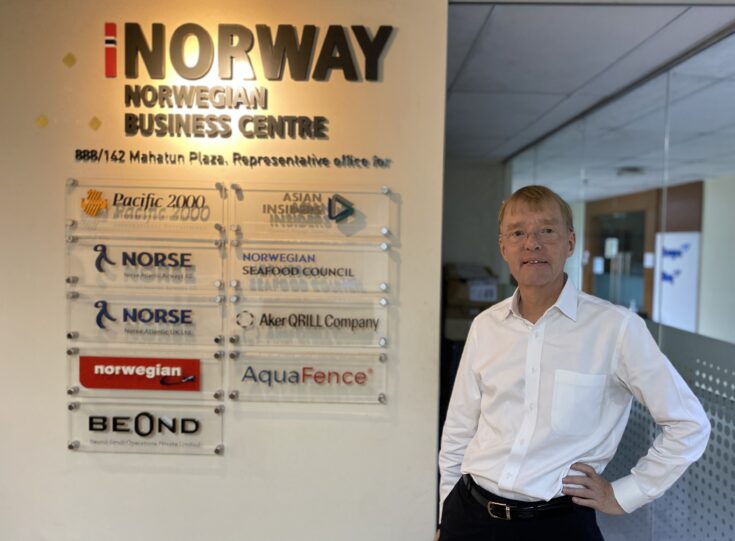
Today, Norway Connect represents several Norwegian companies in Thailand.
One of these companies is Norse Atlantic Airways. Norway Connect does not run their daily operations, but Axel manages practical matters, including payments, administration, and communication with authorities regarding permits and routes.
The company also works closely with Norwegian organisations and businesses looking to operate in Thailand.
Another of the entities Axel represents is the Norwegian Seafood Council where Norway Connect provides staff and practical assistance to the Regional Director for Southeast Asia located at the Norwegian Embassy.
And the relationship between Norway and Thailand is strongly connected through trade.
Around 60 percent of Norway’s exports to Thailand consist of fish and seafood. Most of the value comes from salmon and trout, with 90 percent of it transported fresh by air and consumed as sushi and sashimi.
But the relationship also goes in the other direction.
Thailand has exported products and expertise to Norway, including modules for offshore oil and gas platforms in the North Sea and lately transformer units for UK’s Hornsea 3 wind farms through the Norwegian company Aibel, located on Thailand’s eastern seaboard. And the company continues to produce equipment for offshore wind projects.
Axel believes part of the explanation is the Thai ability to deliver consistent quality.
“Thai people are very good at doing the same task repeatedly without getting tired of it, unlike many of us in the Nordic countries.”
He remembers visiting Thai Airways’ catering unit some years ago, where he met a chef who had spent 19 years making omelettes.
“He had a huge smile on his face. The omelettes he made weighed exactly 100 grams, not 99 or 101 grams, and he did it all through ‘fingerspitzgefühl’.” An intuitive feel for getting something exactly right.
The salary might not have been the highest, Axel says, but the man worked in a good environment, had good colleagues and was happy.
“That illustrates Thailand very well.”
More than business
Axel’s work has often been about more than commercial agreements.
In 2008, Innovation Norway approached him and asked if he could support their activities in Thailand. He agreed, and they found a solution where he represented them while continuing his other business.
That cooperation continued until 2017, when Innovation Norway reduced funding and closed several offices in the region.
Since then, Axel has continued supporting Norwegian companies and cooperating closely with both Innovation Norway and the Norwegian embassies in the region.
He helps companies understand the market, regulations, and opportunities.
“We do not receive government subsidies for this work. I also do not operate with a meter running whenever someone comes through the door. I simply try to help companies.”
Axel was also instrumental in opening Myanmar to Norwegian businesses back in 2011 and spent a lot of time in the country before the military coup ended everything in 2021.
And as the outgoing president of the Norwegian Chamber of Commerce, he also helped organise major Norwegian business summits in Asia, bringing together Norwegian companies across the region and from Norway.
Receiving the Royal Norwegian Order of Merit was therefore not something he sees as an individual achievement.
“It is thanks to all the people I have worked with. Not least the embassy, which has appreciated the work I have done.”
He even believes someone else deserves the honour more.
Vibeke Lyssand Leirvåg, chair of the Joint Foreign Chambers of Commerce in Thailand, has worked alongside him for years. In Axel’s eyes, she has done a lot for Thailand, and not only from a Norwegian perspective.
“I think she deserves this honour much more than I do. I hope her time will come.”
For Axel, the award is a recognition of a journey shaped by thousands of relationships – from a historic royal visit in 1907 to a lifetime spent connecting two countries.
“I am a little proud, of course,” he says.
But still humble enough to say thank you to all the people who have been part of the journey.