


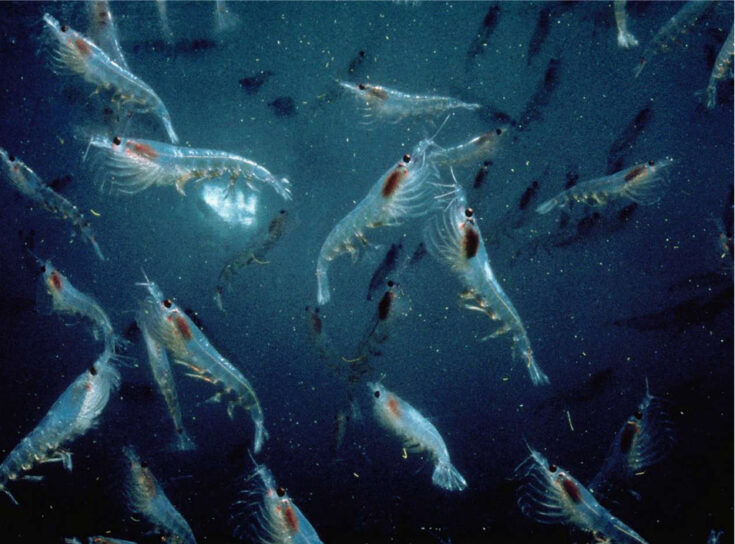
A battle is unfolding in the icy waters of Antarctica. At the centre is krill, tiny shrimp-like creatures that feed whales, penguins and seals, but are also becoming increasingly valuable for the global aquaculture industry.
China and Norway are now pushing to expand krill fishing in the Southern Ocean, despite growing criticism from environmental groups and scientists who warn that the fragile Antarctic ecosystem is already under pressure from climate change, Mongabay reports.
Norwegian company Aker BioMarine, which dominates the fishery, supports a proposal to almost double the krill catch quota from 620,000 tonnes to 1.1 million tonnes. The proposal was discussed at the latest meeting of the Commission for the Conservation of Antarctic Marine Living Resources but failed to gain unanimous support.
“We hope we will be able to get the decisions we need now in October 2026,” said Aker BioMarine CEO Matts Johansen, referring to upcoming international negotiations on the future of krill fishing.
Environmental organisations, including Sea Shepherd, argue that industrial krill fishing threatens species such as whales, emperor penguins and Antarctic fur seals, all of which rely heavily on krill for survival.
“The industry says it only takes 1% of the krill biomass,” said marine researcher Matthew Savoca from Stanford University.
“But fishing is concentrated on two pinheads. It would be like affecting just the populations of London and Paris.”
The debate has intensified after the European Parliament called for a five-year moratorium on Antarctic krill fishing earlier this year.
China and Norway are not formally cooperating on krill fishing, but both are independently pushing for expanded access and higher quotas through the same international negotiations.
China and Norway both have strong commercial interests in krill because it is widely used in fish feed for aquaculture – a major industry in both countries. China has also expanded its Antarctic krill fleet in recent years with significant state support and subsidies.
The issue is expected to return to the agenda when CCAMLR members meet again in October 2026.