


“Why Sweden?”
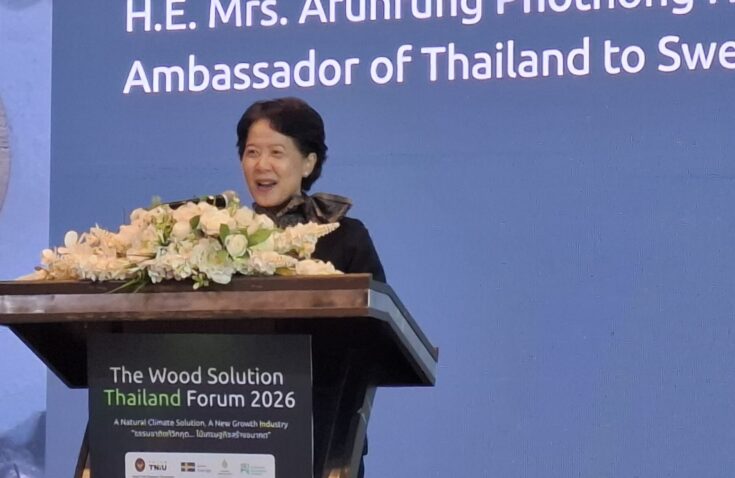
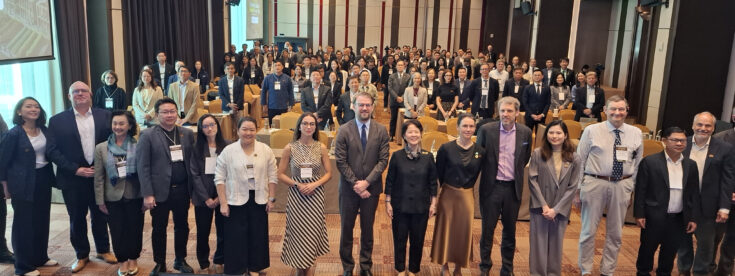
That was the question posed by H.E. Mrs. Arunrung Phothong Humphreys, Ambassador of Thailand to Sweden, as she opened The Wood Solution Thailand Forum 2026 in Bangkok on 2 June.
Her answer provided the context for an event that brought together representatives from forestry, academia, industry, government agencies and environmental organizations from both Thailand and Sweden to discuss how sustainable forestry and timber construction could contribute to Thailand’s future economic and environmental development.
According to the ambassador, Thailand sees Sweden as a natural partner because of its strong forestry sector, advanced wood-processing industry and long experience balancing economic development with environmental stewardship. She also highlighted the collaborative approach that has characterized the relationship between the two countries, recently strengthened through the Strategic Partnership Agreement signed between Thailand and Sweden.
The ambassador described The Wood Solution initiative as a new model linking people at the grassroots level with emerging green industries, creating opportunities that benefit both communities and the environment.
The forum, held at Eastin Grand Hotel Sathorn in Bangkok, marked another step in a process that began in 2022 through cooperation between the Thailand-Nordic Countries Innovation Unit (TNIU) under the Royal Thai Embassy in Stockholm, the Eco-Innovation Foundation (EIF), the Stockholm Environment Institute (SEI), Sida and a growing network of Thai and Swedish partners.
The stated objective is ambitious: to explore whether Thailand can develop a sustainable timber industry spanning the entire value chain from forestry and plantation management to engineered wood products and modern timber construction.
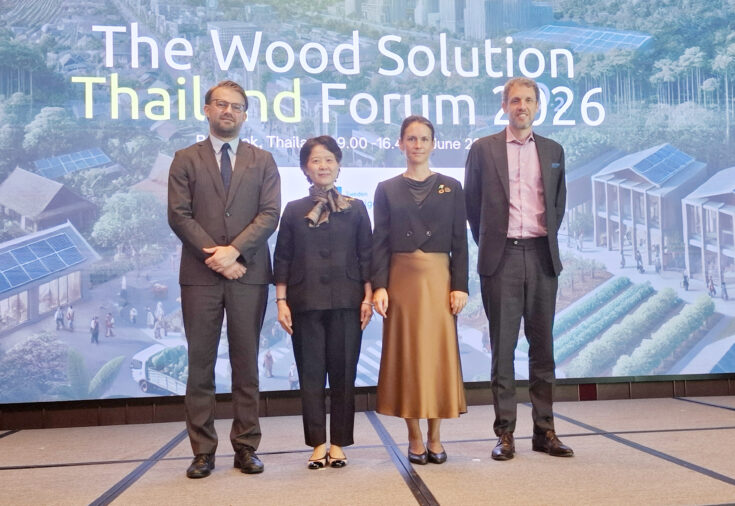
After the ambassador, a congratulatory remark was delivered by Emanuel Lundin, First Secretary at the Embassy of Sweden in Bangkok.
Mr. Lundin described the initiative as a shared effort to develop projects capable of benefiting both people and the environment while creating long-term value from Thailand’s largely underutilized forestry resources. He added that, for him, the journey itself was as important as the final outcome.
Mr. Lundin was followed by Marie Jürisoo, Director of SEI Asia, who had led the engagement phase during the three months leading up to the forum. She described how the process was designed to accelerate momentum, deepen stakeholder participation and help identify practical next steps.
What is in it for Thailand?
Following the three opening speakers, the forum turned to what many participants considered the central question: What is in it for Thailand?
According to Aaron Kaplan, Director of the Eco-Innovation Foundation, the answer would determine whether the initiative could evolve beyond research and discussion into a genuine development movement.
The morning session focused on the findings of several collaborative studies examining Thailand’s potential for expanding sustainable forestry and timber-based construction.
Researchers and industry representatives discussed opportunities, challenges and possible pathways for developing the sector, while emphasizing that success would require cooperation across multiple sectors including forestry, education, construction, finance and government.
One recurring theme was that the initiative is about more than timber construction alone.
Speakers repeatedly referred to the need to build an entire ecosystem connecting forest owners, researchers, processors, manufacturers, investors, architects and policymakers.
Participants discussed how a future forestry sector could create opportunities in rural communities, encourage long-term investment in land management and support new industries based on sustainably grown timber.
Drawing on Swedish experience, representatives highlighted the important role that smallholders can play in forestry development. They described how family-owned forests in Sweden have become part of a long-term value chain supported by institutions that help ensure fair pricing, certification and market access.
Several speakers stressed that forestry requires a long-term perspective, with decisions made today often benefiting future generations decades into the future.
Thai pioneer initiatives
A significant part of the forum was dedicated to showcasing projects already underway in Thailand.
Presentations highlighted initiatives ranging from sustainable forestry and economic plantations to engineered wood products and construction applications.
One of the featured projects was the Phrae Sustainable Wood City initiative, reflecting the northern province’s long association with Thailand’s teak industry. Other presentations focused on forest management, community development and new approaches to economic forestry.
Several of the projects highlighted Phrae Province as a potential model for future development, building on its historic connection to Thailand’s teak industry.
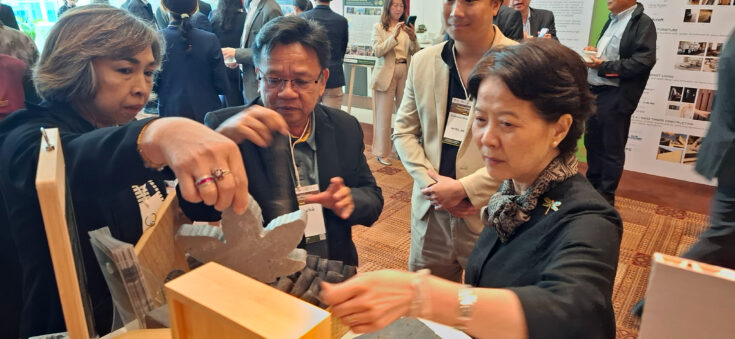
Outside the conference hall, a small exhibition provided additional insight into the breadth of activities now emerging around the initiative.
Among the projects on display was a programme promoting bamboo as an underutilized commercial resource with significant potential for industrial applications. Organizers described efforts to help communities establish bamboo plantations and develop local processing capacity.
Another project highlighted the potential of Casuarina, a pine-like species that researchers believe could help stabilize coastal areas threatened by erosion while also contributing to sustainable timber supply chains.
Education also featured prominently. An academic programme in Phrae has been established to train future forestry resource and environmental managers, with around 150 postgraduate students currently enrolled.
The Department of Forest Industry Technology presented its work on developing forest product certification systems, while the Hydro-Informatics Institute outlined plans to expand its Water Management School into a broader Water and Forestry Management School.
Visitors could also learn about the Teak Phrae Pavilion Project, which demonstrates modern applications of wood in public construction.
Several projects focused on how farmers can generate income during the years required for trees to mature. One example involved the production of lac, a resin created by insects living on trees, which can later be processed into shellac and other commercial products.
Together, the exhibits illustrated how the initiative is expanding beyond forestry alone into areas such as education, certification, water management, agroforestry, rural development and climate resilience.
International experience and future cooperation
The afternoon programme continued with presentations from Thai pioneers working on engineered wood products, bamboo development and plantation-based timber solutions before turning to international experience.
Representatives from Swedish and international organizations shared examples from countries where sustainable forestry, engineered wood products and timber construction have become established industries.
The event concluded with reflections on future cooperation and the next phase of development.
Aaron Kaplan, Director of the Eco-Innovation Foundation, described the initiative as a work in progress and emphasized that many additional stakeholders still need to become involved.
While acknowledging that the movement remains in its early stages, he expressed confidence that the foundations have now been laid for broader collaboration.
“Today is a small preview of what is yet to come,” he told participants.
For many attending the forum, that may have been the clearest message of the day. The discussions were no longer focused solely on whether Thailand could develop a sustainable timber industry, but increasingly on how the growing network of organizations, researchers, communities and businesses can work together to make it happen.
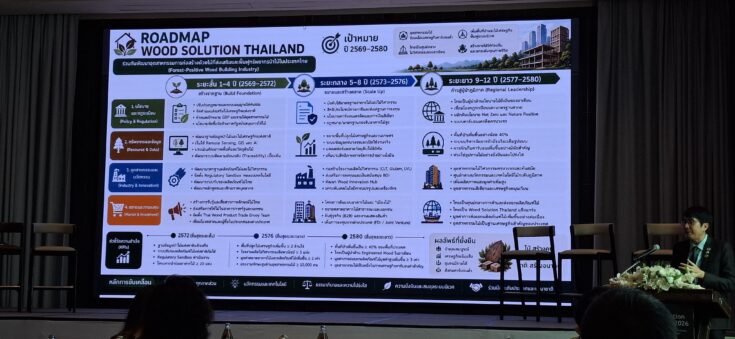
While organizers spoke about developing a roadmap for the coming years, one impression emerging from the forum was that many roadmaps may ultimately be created by different stakeholders, all moving in the same direction. If there was a common vision participants took home from Bangkok, it was that The Wood Solution Thailand is no longer simply a project. It is becoming a platform around which a growing number of initiatives are beginning to align.
Read also the opinion piece:
How Sweden started a Thai movement