



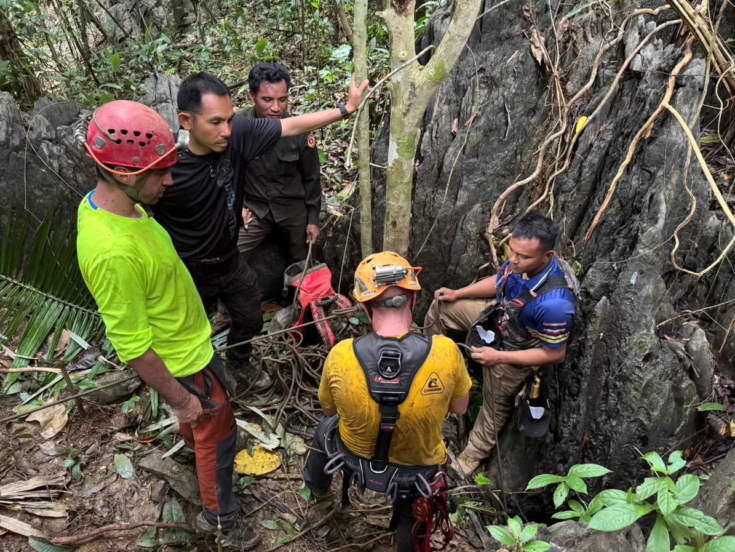
Rescuers in Laos are continuing a high-risk search for two men trapped inside a flooded cave system for almost two weeks, with operations now also expanding into surrounding jungle in search of alternative entry points, CNN reports.
The men entered the cave on May 20, just before heavy monsoon rains triggered sudden flash flooding that cut off their exit routes. Five others who were inside the system at the same time managed to escape during earlier international rescue efforts involving specialist cave divers.
On Monday, hope briefly returned when teams reported hearing what was described as a possible “knocking response” deep inside the cave network.
At the same time, rescuers identified a vertical shaft that raised hopes of a new way down into the system. However, both developments later became uncertain as assessments continued.
Thai cave diver Kengkard Bongkawong told CNN that “there were definite knocking sounds in response to the signals,” although it was not confirmed whether the sounds came from the trapped men.
Thai rescue technician Manat Artmongkron said the response was heard around 70 meters below the surface inside the shaft.
Australian diver Josh Richards later urged caution, saying the sound “could have been bats” or “the wind coming in,” noting how caves can produce misleading acoustic effects.
He added that many cave systems contain fissures and passages that can create unusual noises that are difficult to interpret in stressful rescue situations.
The vertical shaft itself was initially seen as a major breakthrough. Early estimates suggested it could drop more than 100 meters into underground chambers where the men may have taken shelter.
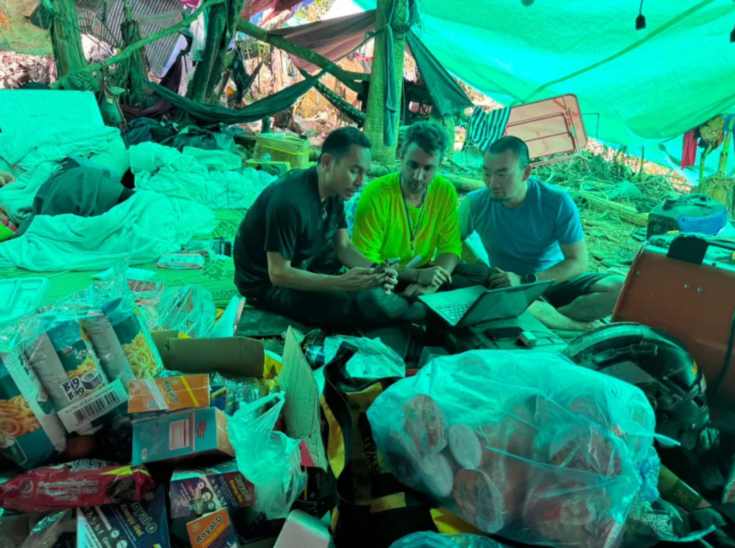
Teams were working from a map created with the help of the five survivors, while waiting for advanced scanning equipment that could provide a clearer picture of the cave system’s layout.
According to rescuers on site, the technology could potentially be used while lowering teams into the shaft to help identify safe passages and hidden chambers.
However, optimism faded later when the shaft was reported to be filled with rockfall and landslides, with divers unable to identify any viable route through. One diver involved in the operation said they were “not entirely sure what the next steps are,” underscoring the uncertainty facing the mission.
In the early hours of Tuesday, Kengkard Bongkawong said in a Facebook livestream that the team was taking a short rest before resuming operations. Finnish diver Mikko Paasi said teams were expected to return to continue pumping water out of the cave.
Water remains one of the biggest challenges. Heavy machinery has been deployed to create water retention ponds to manage the large volumes being pumped out, while ongoing rainfall during the monsoon season repeatedly threatens to undo progress.
Local rescue officials say work continues “to pump water out to drain the cave as quickly as possible,” as conditions inside remain unstable and highly dangerous.
The trapped men are believed to have been searching for gold inside the cave’s narrow underground passages when they were caught by rising floodwaters.
The five survivors who escaped earlier are now recovering in hospital after spending more than a week underground with limited supplies, conserving energy and water until help reached them.