



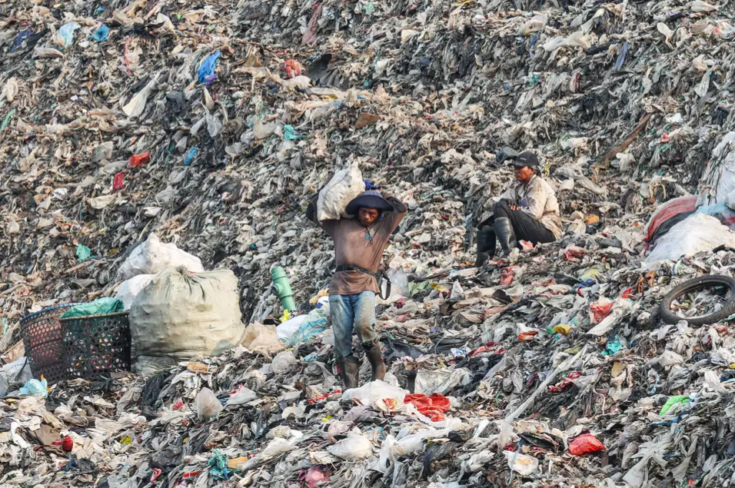
A growing waste crisis in Jakarta has prompted city leaders to turn to Denmark for inspiration, JakartaGlobe reports.
The issue recently came back into focus after large amounts of garbage were reported floating in the waters around Muara Angke Port in North Jakarta. The waste has disrupted fishing activities and marine transportation, with debris frequently becoming tangled in boat propellers.
In response, Jakarta Deputy Governor Rano Karno said the city administration would speed up efforts to improve waste sorting among residents.
“Perhaps starting this June, we must immediately implement waste segregation,” Rano told reporters in Kemayoran, Central Jakarta, on Tuesday.
Managing waste remains a major challenge in the Indonesian capital, which is home to around 11 million people. According to Rano, nearly half of the city’s waste consists of organic materials.
To address the problem, Jakarta Governor Pramono Anung issued a new regulation in April requiring households to sort waste into four categories: organic, residual, recyclable and hazardous waste. Hazardous waste includes items such as batteries, lamps, electrical cables and aerosol cans.
Residents who fail to comply could face administrative sanctions under existing regional regulations, ranging from written warnings to fines of up to Rp 5 million (approximately USD 288) or imprisonment for up to three months.
The Jakarta administration is also working with international partners to modernise the Bantar Gebang landfill, one of the largest waste disposal sites serving the capital.
“Hopefully, through cooperation with donor countries, we can turn Bantar Gebang into a new area where waste can be processed more effectively,” Rano said.
The deputy governor recently visited Copenhagen as part of a benchmarking study of Denmark’s waste management system.
Denmark is widely recognised as a global leader in waste management through its circular economy approach, advanced waste-to-energy facilities, high landfill taxes and extensive waste-sorting systems.
Rano noted that while Jakarta is introducing a four-category sorting system, Danish households are required to sort waste into as many as ten categories.
“They are far ahead of us. Metal, zinc, plastic, glass – everything is separated,” he said.
For now, Jakarta’s focus will be on ensuring that residents adopt the new four-category system, allowing recyclable materials to be processed more efficiently and reducing pressure on the city’s waste infrastructure.