


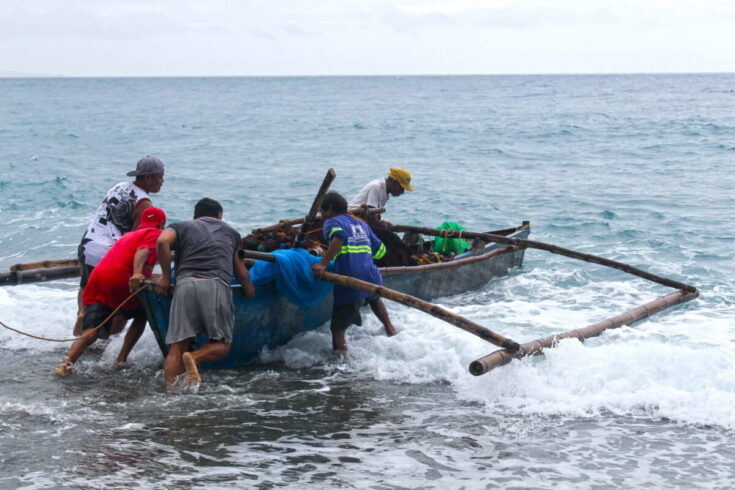
Along the windswept shores of northern Philippines, a green energy boom is unfolding fast.
But for many who live by the sea, the future arriving on the horizon feels less like progress and more like loss.
“What will become of us?” asks fisherman Ed Singson, a local fishing association leader in Ilocos Norte, who represents small coastal communities worried about losing access to traditional fishing grounds.
At the center of one of the country’s biggest offshore wind developments is a project involving the Danish company Copenhagen Energy. It is part of a multi-billion-dollar push to turn Ilocos Norte into a major renewable energy hub, backed by both national policy and foreign investment, Mongabay reports.
“Energy projects will really help the province economically, but we need to see to it that we don’t harm fishing communities,” says Joegie Jimenez, a provincial environment official responsible for balancing development and local impact concerns.
A green ambition meets coastal reality
For local fishing communities along the coast of Ilocos Norte, the promise of clean energy comes with growing fear for their livelihoods, which depend on daily catches close to shore.
“We will protest on the seas for this if we have mto,” says Ed Singson, who has been involved in organizing fishers in the region as offshore wind plans expand into traditional fishing areas.
Further along the coast, fisherman Tony Tabat from Pagudpud describes how the planned wind farm could force boats far out to sea, beyond safe and familiar waters.
“We’ll have to sail about 100 kilometers out to get a day’s catch. A lot of people go missing that far. We’ll lose everything. I don’t know how we can build a life somewhere else,” he says, referring to the risks faced by small-scale fishers with limited equipment.
Uncertain impacts beneath the surface
The wind project is part of a wider national strategy to expand renewable energy in the Philippines, where coal still accounts for a large share of electricity production and the government is trying to attract foreign investment into clean energy.
Church leader Bishop Vermillion Tagalog of the Philippine Independent Church has spoken out on environmental responsibility in the region, warning that development must not come at the expense of local communities.
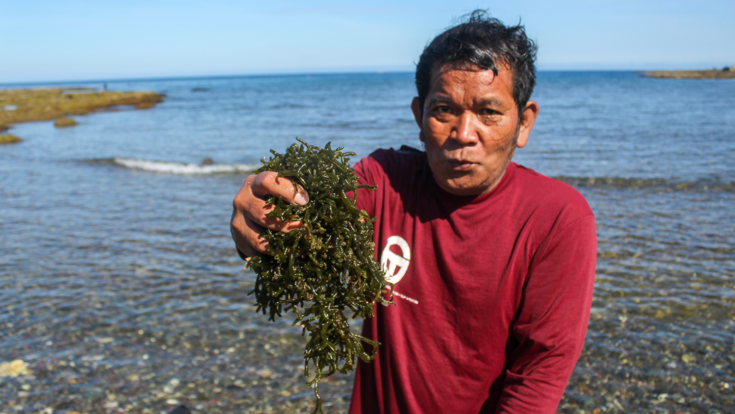
“Whatever happens to nature is reflected back on us as people,” he says, adding that environmental change and social impact cannot be separated.
Scientist Narod Eco, who works with the advocacy group AGHAM, says offshore wind remains scientifically uncertain in terms of long-term biodiversity effects in tropical marine ecosystems like those in the Philippines.
“No two ecosystems are alike,” he says, pointing to risks for fish migration patterns and marine life, even if similar projects have shown mixed results elsewhere.
For fishers like Tony Tabat, that uncertainty is already tangible. Planning for the future becomes difficult when the future of the sea itself feels unclear.
As Ilocos Norte positions itself as a renewable energy hub, the shoreline remains caught between two visions: national transformation driven by energy demand, and local survival rooted in the sea.