



When Swedish toddler Alma Macall was not granted gene therapy in Sweden, her parents travelled to China in 2024 in a final attempt to save her life, after doctors warned that her rare and fatal disease, Metachromatic leukodystrophy (MLD), might end her life before she turned five.
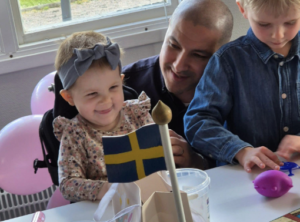
MLD is a rare and rapidly progressing genetic disease that causes severe neurological decline.
More than a year later, she is stable, off medication and has started kindergarten part-time – after a treatment Swedish doctors initially doubted would help her.
Prepared for end-of-life care
Alma received the gene therapy on October 9, 2024. The family returned to Sweden on December 17 the same year.
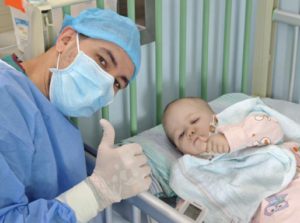
Her condition continued to worsen in the months that followed – as doctors had warned could happen. But in May 2025, it stabilised.
“When we came back to Sweden, the doctors had prepared for end-of-life care,” her father, Juan Macall, tells ScandAsia. “They didn’t tell us at the time, but later admitted they did not believe the treatment would work.”
Since May, there has been no further decline. Instead, Alma is slowly regaining some abilities. Her cognitive functions have remained relatively intact, and she now works daily on fine motor skills and walking through rehabilitation.
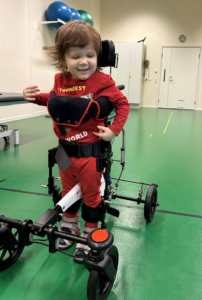
From fearing kindergarten to raising a tiny Swiftie-fan
In November, Alma began to feel more alert and energetic. She has now started kindergarten half-time.
“It’s kind of a milestone for us. Actually a very big milestone,” her father says. “She was tired for almost a year, and we were very worried she wouldn’t be able to go.”
Her mother, Maria, supports her at kindergarten in the mornings and continues rehabilitation training in the afternoons. Weekends are spent trying to maintain as normal a family life as possible.

“She likes kindergarten. She likes being outside, and she likes to listen to Taylor Swift,” he says over the phone, as Alma sits next to him.
At the sound of the singer’s name, she begins to smile.
“Now she’s smiling,” he adds with a laugh.

Awaiting the next MRI and long-term answers
Alma, who turns four in May, takes no regular medication today. The next milestone will be an MRI scan this spring at Central Sjukhuset in Karlstad.
“We hope it will show the same as last time – maybe even improvement. But of course, we are a little concerned.”
Swedish doctors remain cautious and say it is still too early to assess the long-term outcome of the treatment performed in China.
Families around the world reached out
Since Alma’s story became widely shared on social media, families from Poland, Russia, Canada and Thailand have contacted the Macalls seeking information about the treatment.
But not all children reach treatment in time.
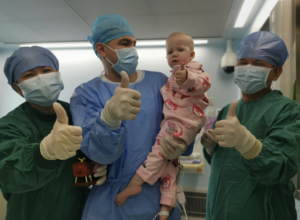
“MLD progresses very fast. Some of the children who contacted us were already too severely affected,” her father says.
“The earlier a child receives the treatment, the better,” her father says. “For example, if Alma had received it sooner, she might have fewer impairments today. But we are grateful she is alive.”
Sweden is set to introduce newborn screening for MLD in autumn 2026, a move that could allow children to be diagnosed before symptoms appear and qualify for approved gene therapy in Europe. However, once symptoms have developed, eligibility for existing treatments becomes more limited, leaving some families with fewer options.
Related posts:
 Sweden investigates parasite infection Cryptosporidium outbreak
 WHO recognizes Thailand and Denmark for effort in eliminating trans fat from food industry
 Family returns to Sweden after going to China for treatment of daughter’s rare disease
 Norwegian Alzheimer’s breakthrough backed by China collaboration