




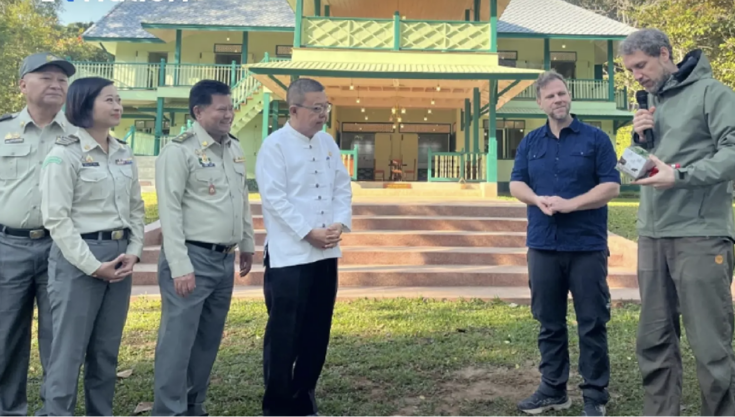
Sweden is actively promoting the transformation of Phrae province, Thailand, into a comprehensive sustainable timber city. This initiative leverages the region’s rich natural resources and artisanship in wood production, aiming to establish Phrae as a model of sustainability in forestry.
A collaborative effort through LoCoFoRest project
The effort is part of the LoCoFoRest (Locally Controlled Forest Restoration) project, backed by the Swedish International Development Cooperation Agency (SIDA). Recently, the project convened 60 forestry industry representatives from Nepal, Ethiopia, Laos, Vietnam, and Thailand for a three-day workshop in Phrae, running from January 15 to 17.
Phrae’s deputy governor, Chaiyasit Chaisamrit, emphasized the province’s significance, noting that it contains Thailand’s fifth-largest natural forest area and high-quality local teak wood suitable for industrial development. Despite these advantages, the region faces challenges, including a decline in timber popularity and agricultural expansion threatening forest lands.
Insights from Sweden’s sustainable forestry model
Fredrik Silfwerbrand, project leader from the Swedish Forest Agency, drew parallels between Sweden’s historical deforestation challenges and Thailand’s current situation. “More than a hundred years ago, Sweden faced severe deforestation, similar to Thailand,” he stated. Sweden’s successful strategy of balancing timber production and forest conservation—planting three new trees for each harvested—has led to an increase in forest coverage from 30% to 70%, positioning Sweden as one of the world’s top five wood and pulp exporters.
Key to Sweden’s model is the recognition that afforestation is crucial for absorbing carbon dioxide and combating global warming. However, it also highlights the need for forests to generate competitive income to motivate their preservation. Sweden has developed a thriving timber industry while maintaining extensive forest coverage.
Economic opportunities and community involvement
Phrae also shows potential in the European premium market, with local craftsmanship meeting international quality standards. The project aims to facilitate exchanges between Phrae residents and Swedish industries, envisioning not only furniture production but also climate-resilient wooden high-rise buildings designed to sequester carbon.
Samchai Panomkwan, chairman of the Phrae Sustainable Forestry Committee, emphasized the deep-rooted community connection to teak cultivation, stating, “Everyone in Phrae has been involved with teak since birth.” The province, home to Thailand’s first forestry school established over 60 years ago, aspires to serve as a prototype Wood City and a learning center for forest management in the ASEAN region.
Support for the initiative extends across various stakeholders, including the Thai-Nordic Innovation Unit under the Thai Embassy in Nordic countries, collaborating with government agencies, private sector partners, and local communities.
Research suggests that managed forest systems can enhance biodiversity more effectively than natural forests. Practices such as creating firebreaks can foster beneficial plant growth. The initiative also acknowledges teak’s economic potential as a high-value perennial crop that can bolster biodiversity and contribute to carbon sequestration.
As Phrae province embarks on this ambitious transformation backed by Sweden, the initiative promises to rejuvenate the local forestry industry while promoting sustainable practices that harmonize economic development with environmental preservation.
Source: The Nation



[…] In January, Sweden supported the development of Phrae Province as Thailand’s sustainable wood city, with contributions from Sida and the LoCoFoRest programme. https://scandasia.com/sweden-supports-development-of-phrae-as-thailands-sustainable-wood-city/ […]