




The film ‘The Bridge on the River Kwai’, about the Death Railway, takes place in the jungle on the border between Burma and Thailand during World War II. The premise of the film is accurate: Allied prisoners of war were forced under horrific conditions to carve their way through the river’s cliffs to construct the railway for the Japanese occupiers.
One of those prisoners was the Dutch archaeologist Hendrik Robbert van Heekeren, who must have been quite astonished by what he saw in the gravel one day in March 1943. Among the many stones cascading down the slope, he recognised markings that could only have been shaped by a skilled and systematic craftsman at some point in the distant past. Both van Heekeren and the stones survived Japanese captivity and the war.
This discovery would years later prove significant for both Southeast Asian and Danish archaeology, and it became the direct reason why the Thai-Danish Prehistoric Expedition of 1960–62 became a reality. About its significance, Professor of Archaeology Rasmi Shoocongdej from Silpakorn University in Bangkok explains:
“For Thailand, it marked the beginning of using modern methods in archaeology. The most important results from the expedition showed that the researchers were pioneers who could link the prehistoric populations of the Ban Kao area in western Thailand with today’s Thai people, based on skeletal remains analysed by Professor Sood Sangvichien. This claim has been cited as evidence that the ‘Thai people’ have been here for at least 4,000 years.”
Thai-Danish Collaboration on the Past
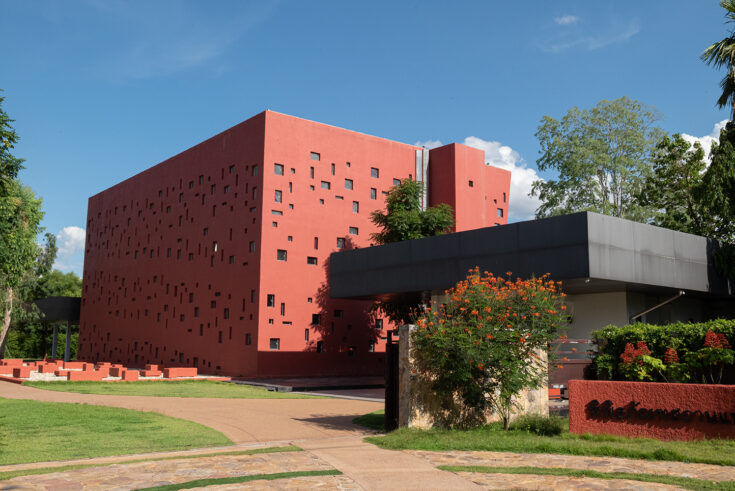
A half-hour drive from Kanchanaburi, the town by the bridge, lies Ban Kao — a small settlement with a new and beautiful archaeological museum which does an excellent job doing popular science communication. Most of the artefacts and the knowledge about them presented in the museum are thanks to the Thai-Danish Prehistoric Expedition of 1960–62.
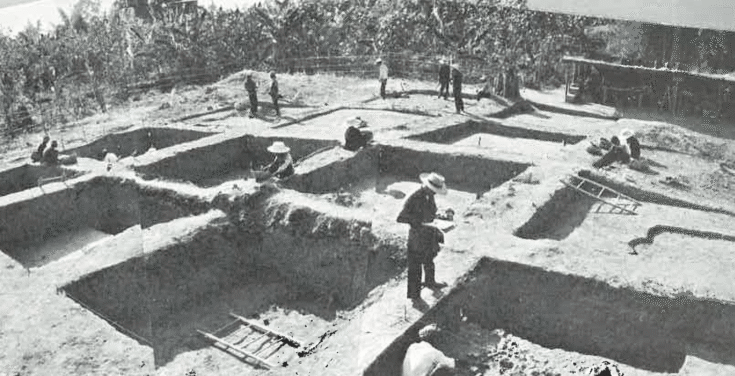
Over three years, the expedition excavated, among other places, the layers of soil where prisoner of war van Heekeren had found and collected some of the stone tools. Both van Heekeren and eight stones survived the war, and van Heekeren later became affiliated with Leiden University in the Netherlands.
“For Thailand, it marked the beginning of using modern methods in archaeology.”
Another Dutchman associated with the same university was researcher J. J. Boeles. He had lived and worked for many years in Siam, as Thailand was then called, and was head of research at The Siam Society in Bangkok. In late 1959, he met Danish WW2 resistance fighter, journalist, polar explorer, and later Queen Margrethe’s Lord Chamberlain, Ebbe Munck, who at the time was the Danish Ambassador to Thailand. They discussed how cooperation between Thailand and Denmark in culture and science could be strengthened. As Thailand’s prehistory was largely unknown at the time, one result of their conversation was the Thai-Danish Prehistoric Expedition of 1960–1962.
Expeditions were expensive then as now, but substantial funds were gathered—particularly from the East Asiatic Company, which was deeply engaged in Thailand, from the Otto Mønsted Foundation, and from the Danish Expedition Foundation, a fund initiated by Ebbe Munck and other exiled resistance members at a meeting in Stockholm in 1944. The Thai-Danish Prehistoric Expedition was becoming a reality.
Sacred Caves Were a No-Go
The first step was a reconnaissance expedition up the Kwai Noi River from Kanchanaburi to the Three Pagodas Pass on the border with Burma (Myanmar) in November–December 1960. Participants included palaeontologist Eigil Nielsen, archaeologist Per Sørensen, two Thai archaeologists, van Heekeren, and a team of police officers. The journey along the soil-brown Kwai Noi River was made by houseboat and elephant caravan, and film clips from the expedition show dense bamboo jungle occasionally giving way to small clusters of traditional stilt houses with curious villagers. As one of the museum panels in Ban Kao notes: “Jungle expeditions are part of an archaeologist’s job description.”
The reconnaissance led to a follow-up expedition in the first months of 1961 to identify the most promising sites for test excavations before the main work began. Attention was focused on Ban Kao, the Sai-Yok caves further north, and two caves at Lawa. But at Lawa the archaeologists met unexpectedly fierce resistance from locals, who regarded the caves as sacred. The locals blocked one of the cave entrances with bamboo, no guide could be found, and the workers fell ill when they were supposed to report for duty. The Lawa caves were therefore abandoned. Yet the results from the other test excavations exceeded all expectations, and the main excavations could now begin.
The larger expedition from autumn 1961 to April 1962 brought in additional personnel. Among them, the polar explorer, archaeologist, and artist Count Eigil Knuth temporarily swapped Arctic Northeast Greenland for the Sai-Yok caves, where he worked alongside van Heekeren to dig through the layers. In Ban Kao, Per Sørensen began uncovering the past together with archaeologist and curator at the Fine Arts Department in Bangkok, Chin Yu-di, and physician and anatomist Sood Sangvicien from Siriraj Hospital in Bangkok. The latter excavated 37 skeletons from the Ban Kao site, some of which can be seen at the Sood Sangvicien Prehistoric Museum at Siriraj.
Where Did They Come From?
The results of the expeditions were published in 1967–69, and Per Sørensen’s interpretation of the finds from Ban Kao’s Late Stone Age, about 4,000 years ago, triggered an academic “shitstorm” from a group of American researchers. They had conducted excavations in Northeast Thailand at the same time as the Thai-Danish expedition and argued that Southeast Asia had its own local cultural and chronological prehistory, independent of influence from China. Sørensen disagreed. He interpreted the skeletons and other finds from Ban Kao as culturally related to peoples in South China — something he believed was confirmed by later research in Chinese museums. He argued, as others have since, that Chinese rice farmers began moving south along major rivers such as the Mekong and the Salween during the Stone Age around 4,000 years ago. They settled along riverbanks in the valleys and began cultivating rice and other crops, as well as domesticating chickens and pigs.
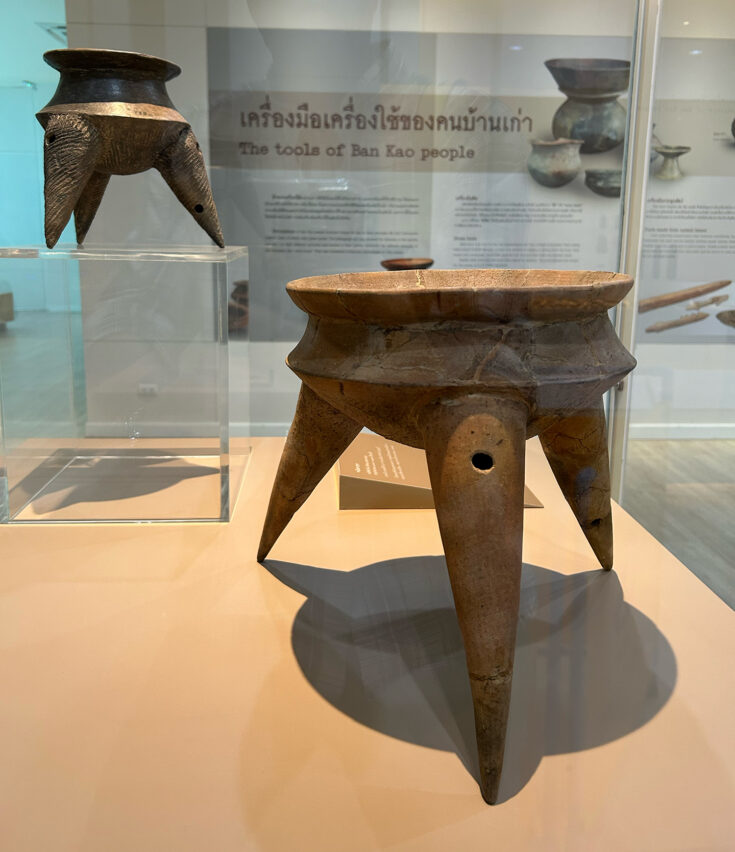
Some of Sørensen’s spectacular discoveries were the beautiful three-legged pots, several of which are displayed at the Ban Kao Museum. For Professor Rasmi Shoocongdej, they are important because they indicate a connection between western and central Thailand and Malaysia further south, where similar pots have been found.
But Thailand and this part of Southeast Asia were not uninhabited when the Chinese rice farmers settled and became agriculturalists in Stone Age Thailand. Research published in 2018 by both Eske Willerslev’s DNA group at the Globe Institute, University of Copenhagen, and by David Reich from Harvard shows that as early as 65,000 years ago, a wave of hunter-gatherers migrated from South Asia into Myanmar, Thailand, Cambodia, and Laos. Some of these original peoples were pushed into more remote areas, but DNA analyses also show that there was intimate contact between the old and new migrants — something reflected in modern Southeast Asian populations.
Today, DNA research shows that with the complexity of countless peoples in Southeast Asia, the earlier models are too simplistic: both are correct, but each represents only part of the larger puzzle.
