




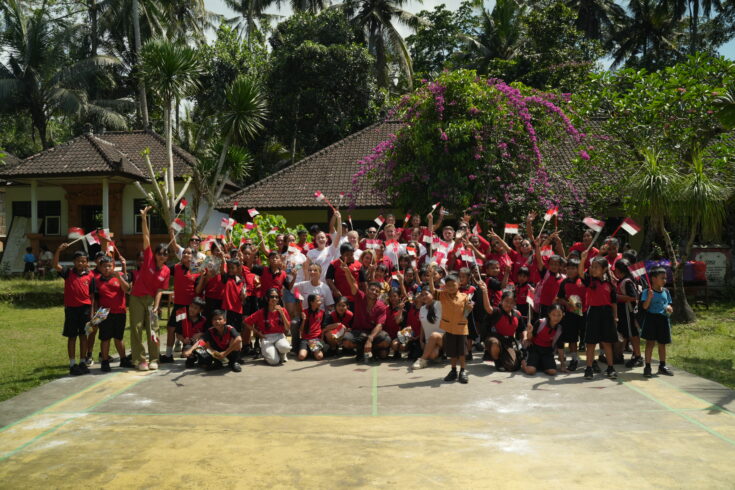
Forty children have gathered in the yard of a small village school in Bali, waiting for something special. Some rush forward with hugs, handshakes and high fives as the international volunteers arrive, while others hang back, shy but curious. Music begins to play, and soon everyone – locals, foreigners, young and old – is dancing together. Laughter cuts through the tropical heat, and the energy is contagious.
This is not a typical school day. Instead of textbooks and drills, the morning is filled with games, music and group activities designed to make learning playful. For Educate Bali, it is the start of a new partnership: the third school now joining their growing network. For the children, it is a break from routine – and a taste of a different kind of learning, one that blends fun with future opportunity.
A vision with roots in Denmark
Educate Bali was founded just one year ago. The idea behind Educate Bali grew out of conversations between a small group of friends – two Danes and two Dutch partners – who wanted to give something back to the island. Tourism dominates the economy, yet many families in rural areas struggle to give their children access to the skills required to work in hotels, restaurants or tour operations.
For Danish entrepreneur Lukas Seerup Nielsen, who has lived on Bali for several years, the contrast was striking.
“In Denmark we grow up with a welfare system that guarantees equal access to schooling. Here, people are incredibly welcoming, but opportunities are not equal. From the beginning, it was important for us to create something that could make a real difference,” he says.
From the outset, Educate Bali set itself apart from other small-scale initiatives.
“A lot of projects here are run with a bleeding heart but without long-term planning. My background is in business, and I know that sustainability requires strategy,” Lukas Seerup Nielsen explains.

Language skills that open doors
Three full-time Balinese teachers are already on the payroll, with more being recruited as the network expands. Choosing local teachers was deliberate – not only to provide jobs, but also to ensure that language, culture and teaching style are a natural fit.
For Prihartini Utami, who leads the teaching team, the mission is deeply personal.
“As a girl I dreamed of speaking English. I thought it was so cool when people could talk with foreigners. It changed my own life when I finally learned, and now I want to pass that dream on. The children deserve to believe they can achieve more,” she says.
At the small village school, she moves between groups with an encouraging smile. When a child hesitates, she kneels down to their level, repeating a phrase until the words come out. Slowly, confidence grows.
English may not be the only skill children need, but on an island that lives on tourism, it is an immediate gateway to work. According to Lukas Seerup Nielsen, Balinese pupils receive on average just 45 minutes of English lessons per week in the public system. Educate Bali’s goal is to raise that to at least two hours with motivated local teachers.
“To get a job in tourism, English is the quickest tool you can give a child. It can be the difference between staying in the village or finding work in hotels, restaurants or travel agencies,” Lukas Seerup Nielsen says.
A growing community
When the volunteers arrive on this September morning, many greet each other with hugs and cheerful “Good to see you again!” Others meet for the first time and exchange smiles before diving into the day’s activities.
Tobias Liljegren, a Dane who lives on the island, explains: “I come here with completely different financial means than most people in Bali. Being part of this project is my way of giving back. Helping the kids to learn English is like giving them a tool to see the world from a different perspective.”
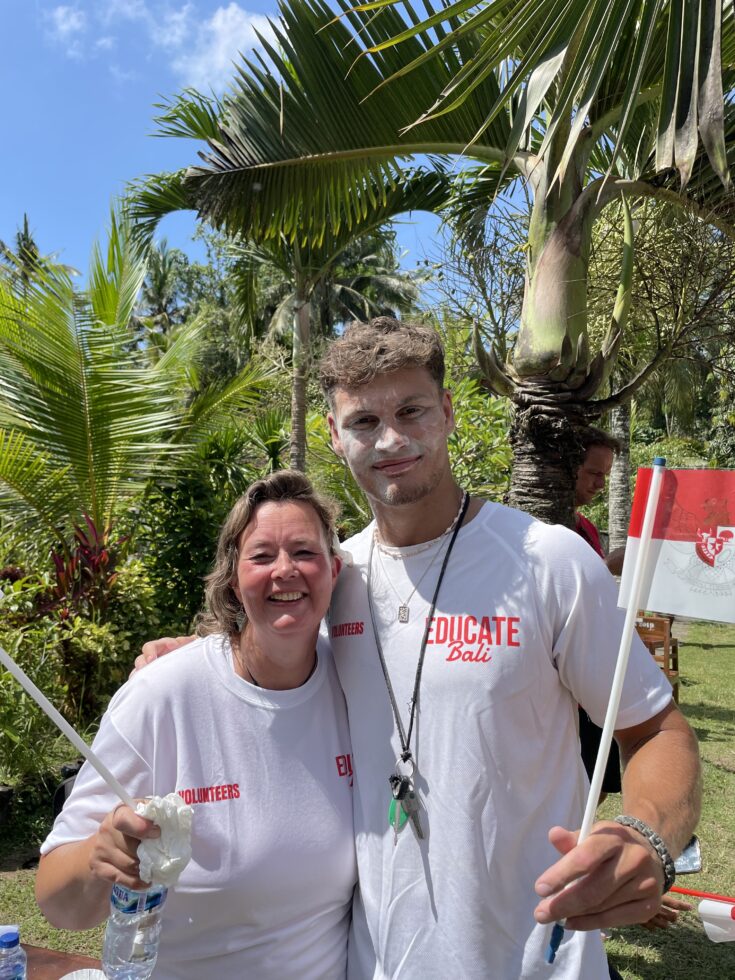
Over time, Educate Bali has become more than an educational project – it is a community that unites locals, expats and tourists. The weekly running club is part of that identity. Every Monday and Wednesday, participants set off together, sometimes just a handful, other times up to 40. For many, it is both exercise and social gathering, a way to support the project while building connections.
Monthly volunteer events draw around thirty participants who travel to partner schools to run games, lessons and workshops. For the children, it means excitement and attention. For the volunteers, it creates friendships and a sense of belonging.
“I really value the sense of community with the other volunteers, a break from everyday life, and I love seeing how happy the children are when we play games with them,” says Frederikke Gadegaard, a Danish volunteer living in Bali.
Oscar Stald Rasmussen, also Danish and based on the island, adds: “The locals give so much of themselves to all the foreigners who come to Bali. For me, it means a lot to give something back.”
Funding with a strategy
Keeping such an initiative alive requires careful planning. Unlike many smaller projects, Educate Bali has built its economy on multiple income streams. The most important are the rental incomes from villas that Lukas Seerup Nielsen has developed through another company. On top of this come volunteer contributions, donations linked to the running club, and larger sporting events that Lukas Seerup Nielsen helps to organise.
In Denmark, a formal partner association with five Danes on the board has been set up. This structure opens the door to grants from Danish and European foundations. Recently, Educate Bali secured support from CISU – Denmark’s largest umbrella organisation for civil society – to produce a short documentary about the project. The team now hopes to attract larger partners, including LEGO.
Emil Eldevig, a Dane with experience in NGO fundraising who has lived on Bali for several months, is leading the work to secure further funding.
“By setting up a Danish partner organisation, we are able to apply for support in Denmark and Europe. It’s a technical step, but one that opens many doors for us,” Emil Eldevig says.
Building for the future
Educate Bali is still a young initiative, but the vision is ambitious. With every new school that joins, the network grows, giving more pupils the chance not only to learn English but also to build confidence and gain access to future opportunities.
“Already, we have reached more than 500 children. That is real impact, and I am proud to contribute,” says Lukas Seerup Nielsen.
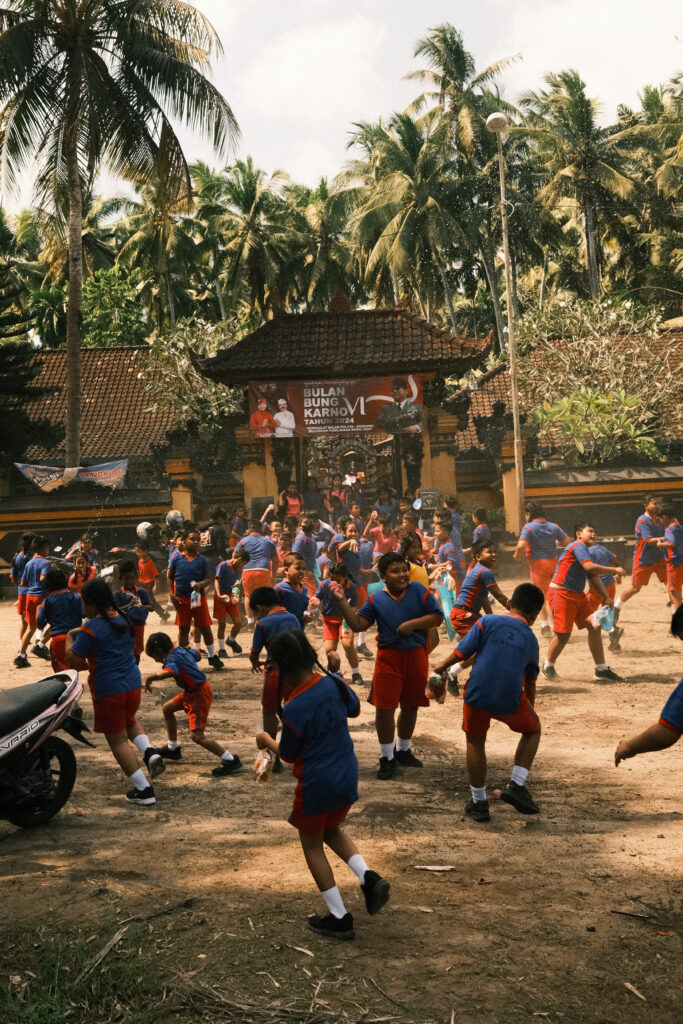
For the children, the difference is felt right away. At the end of the morning, their voices ring out in chorus: “I am happy for today!” Some even shout that they wish it could happen every day.
For the volunteers, those words capture the essence of Educate Bali. The project is about more than language skills – it is about connection, confidence and hope. And for Bali’s children, each playful Saturday is a step closer to a brighter future.
