


Pasi Haatainen, a long-term Singapore resident and also Finnish Business Council Singapore (FBC) Chairman since 2021, has since 2007 been based in the city-state as a senior business consultant. Because of these roles, Pasi naturally stays informed about key developments for business and trade. He also has vast experience within business transformation. In the wake of Covid-19 he paints a not so rosy picture for the business climate, while also giving examples about the impact from the large-scale arrival of AI (artificial intelligence). And in this time of particularly decisive disruptions and changes, Singapore as a hub is being impacted in various ways – now opening up for large-scale integration with the state of Johor. Get a Finnish executive’s top-of-mind insights and observations on these topics!
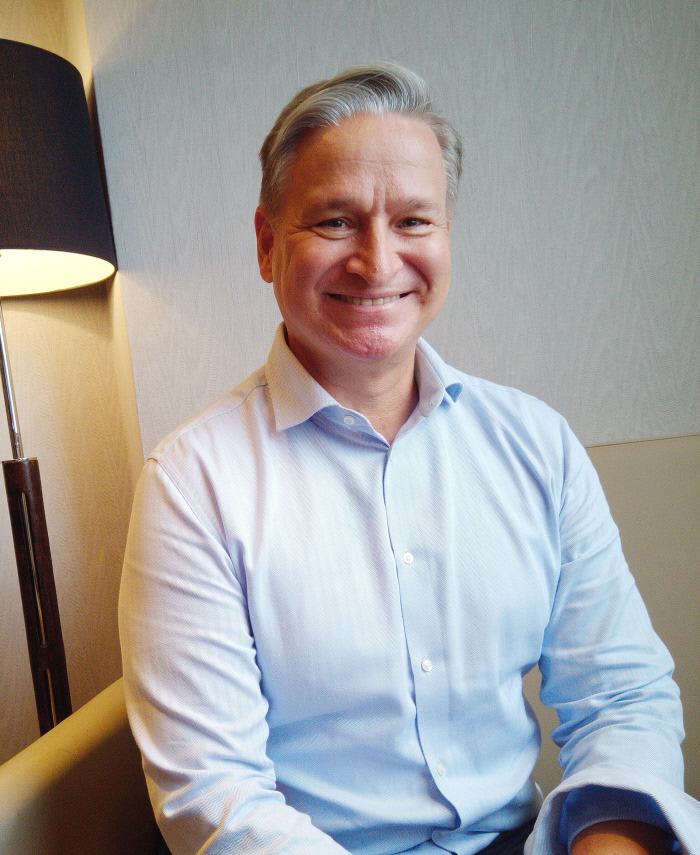
Pasi first arrived to Singapore in 2007, having been laid off during the Nokia–Siemens Networks merger in the U.S – enticed to come over by several friends living there.
“It took me one hour to set up a company here and get the bank account sorted, and then Nokia hired me back as a consultant.”
Working for them during two years was actually how his consultancy businesses started, explains Pasi.
“And, from then on, I’ve just worked out of Singapore with different multinationals as clients. I was in Pakistan, Russia, many northern European countries also, and for the last 14 – 15 years mainly in Southeast Asia.”
Two of Pasi’s clients were also Finnish companies; Taival (a boutique strategy firm) and Headlong Finland Oy (a small IT company), who both hired him as Head of Business Development.
“Unfortunately, we couldn’t gain enough traction in the market for either. Simultaneously I have been running my consultancy; mainly doing transformation programmes for clients.”
Another more recent client was the Japanese company Rakuten Mobile, where Pasi and other senior consultants were hired to establish its global headquarters in Singapore.
“I headed that – setting up the company, getting government grants and hiring people – which took place right when Covid-19 started.”
Transformation management in focus
Although Pasi spent many years at Nokia in telecom, he doesn’t specialize in any single sector, applying his transformation expertise across multiple industries. Today, with his consulting firm Dationic (rebranded from Dynamic Business Consulting) his expert services focus on strategic planning, sales development, and digital transformation programmes and other services.
“We believe that short-term efforts can yield long-term benefits – which is essentially our approach with clients.”
As an MSc-qualified Transformation Leader with over twenty years of experience he drives such large-scale business programmes and change initiatives.
“I’ve deliberately not limited myself to one industry. I’ve been doing consulting, specialising purely on transformation management. So, big MNCs and application rollouts in different business domains such as telecom, insurance, banking, mining, and a coffee business. And that doesn’t really matter because when you talk about change management it’s mainly about people and the organisation, as well as technology and processes. I get more crystallized on the added value of the services. Of course, if a customer asks specifically for other assistance I can also consider,” Pasi explains.
“Usually, companies hire me to manage their big programmes, and in a few of those cases they were suffering for whatever reason and brought me in to get things back on track. Oftentimes they also hire me to manage their vendors, as they prefer someone independent for that. If they use any large consulting company, it will definitely sell them more than is actually needed. The customers’ problem is that they don’t always know the pitfalls and terms – and should definitely have a well-defined and fair contract. For a lot of the transformation and change problems corporations use external resources that they don’t have inhouse. Then, they ought to start with analysing the vendor contract(s),” adds the Finn. “I help them to define the new contracts and do vendor analysis as well, as an easy, fast-fix.”
His clients are mainly European, American, Indonesian or Filipino – who are more inclined to use independent consultants.
Nothing has changed
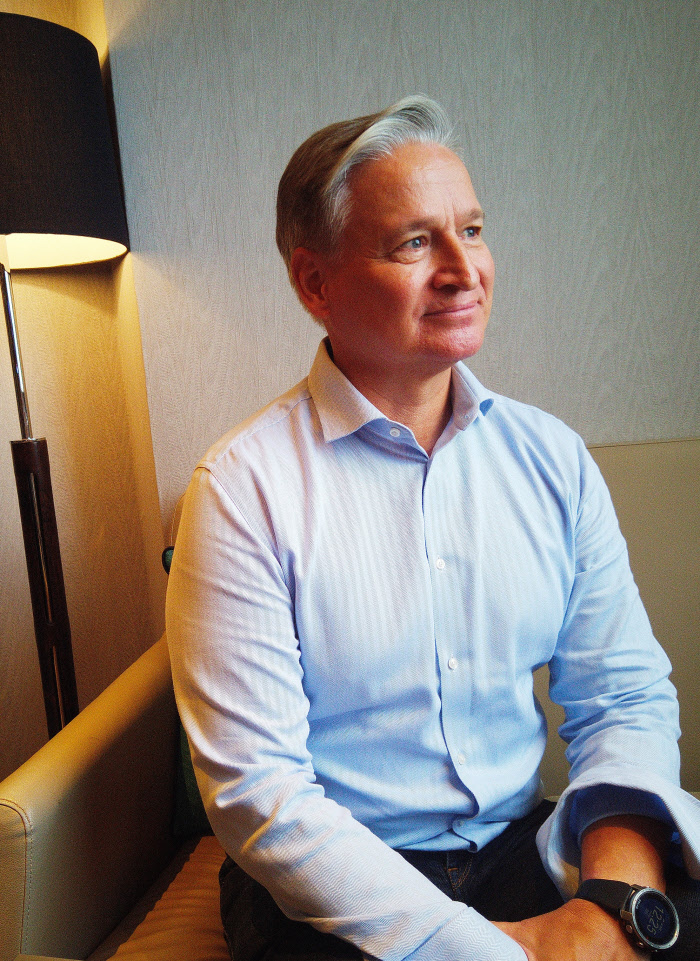
Digital transformation and AI are also unavoidable topics, since they connect strongly to Pasi’s services: “Nobody talked about ‘digital’ fifteen years ago; it was just a change programme, maybe ‘transformation’- or ‘process re-engineering’ programmes. Now, everything’s digital, but nothing has changed concerning that it’s all about the people, processes and technology. So, get back to basics!”
“A lot of times, companies start off with changing some technology, whatever that may be. But it always comes back to that you have to change people’s behaviour and the organisation. Then technology also follows through; that’s the easy part! People and processes are absolutely the most difficult ones to change! Ultimately, even with all the new digital tools, transformation success hinges on those. You can introduce cutting-edge tech, but if the team isn’t on board and processes aren’t aligned, it won’t stick – because nobody really wants to change!”
“Usually, you have to have a well-defined strategy, and then the transformation is what drives that through. And people think that everything’s transformational, when it’s actually normal operational excellence. Real transformation is about growth, innovative concepts and doing something new; that’s usually when transformation programmes come into play,” he elaborates.
“In the Nordics we conducted large transformation programmes already in the 1990s, while in Asia a lot of companies are still struggling to do the same! Out here businesses have been very labour-intensive, and now they are beginning to realise that they can no longer compete just based on hiring more and more people; hence these kinds of digital transformation efforts – of which the majority always fail!”
Golden era for consultants
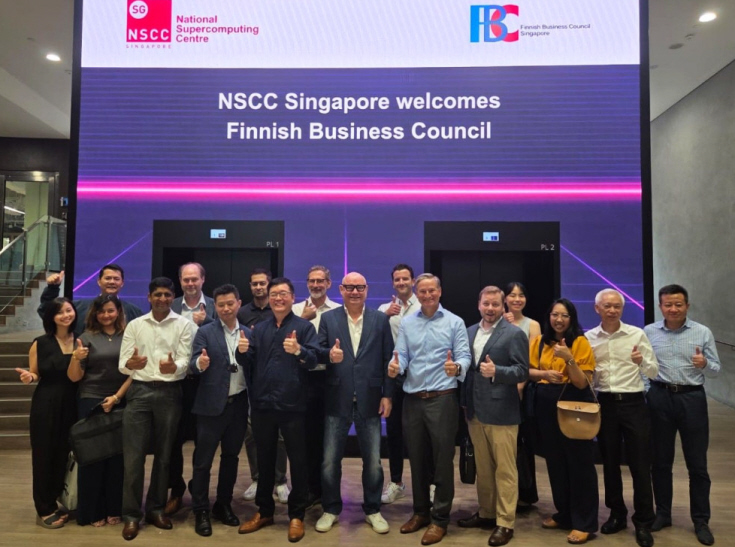
Meanwhile, the ‘digitalisation’ trend has led to a lot more consultancy work over all. Accenture, for instance, employs approximately 774,000 people worldwide. But that escalating need for management consultants is fast coming to an end and will likely go into reverse, leading to redundancies.
“With the arrival of AI this will now turn around, so 50% or more of those are probably going to be laid off in next five years!” believes Pasi.
Having scores of consultants spending endless hour on producing and polishing power points will no longer be needed with generative AI.
“For me, as a self-employed, AI is a blessing; one that levels the playing field. Now I can effortlessly produce research papers, and use cases for customers – regardless of what it is. And a lot of times the customers doesn’t realise what their current problems are and what their competitors are doing – lacking the research capabilities. And with AI LLM models customers can do it by themselves as well – or use people like me.”
“In other words, one experienced consultant equipped can with AI do what it used to require a whole team of juniors to accomplish. That’s why I believe we’ll see a golden era for senior advisors – companies will seek out veterans who can ‘jump onto a moving train and fix things immediately’, rather than paying for big teams of analysts. So, from that point of view, I’m kind of optimistic, and that more and more the customers will want immediate value, rather than the kind of transformation we were focusing on five years ago.”

“But at the same time, it’s tougher. Right now, the main problem in the business climate – and this is not limited to the consulting area – is that it’s very difficult to get new contracts signed.”
Pasi observes that, across industries, decision-makers are hesitating to commit to new projects because of geopolitical and economic uncertainties – hence the delaying mentality that slows down deal-making.
Joining forces with EuroCham
Overall, getting new customers for Pasi happens through networking.
“Currently I use being the Chairman of the Finnish Business Council Singapore as leverage to brand myself, and secondly my company. People mainly buy from people, not from the company.”
He notes that LinkedIn is “by far the best marketing tool for independent consultants” – a platform he leverages to build his personal and company brand (though he admits he could utilise it even more).
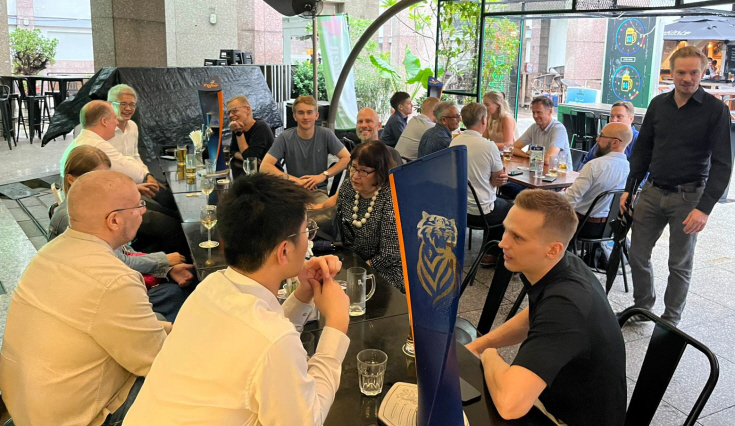
Pasi is also a board member of EuroCham as the FBC representative.
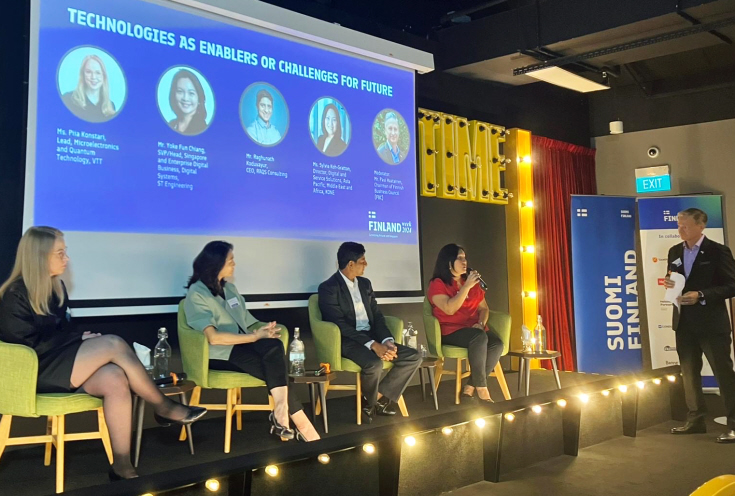
“FBC just rejoined as member and want to combine forces with EuroCham and do a lot of events, which I think is going to give more opportunities for Finnish companies to network and to get a bigger audience. I think that might give more value for Finnish B2B and B2C members as well. Events are a lot of times based on what’s in demand of that year. Sustainability was still a hot topic last year but has now cooled down. There was maybe too much hype around it and too many events. Now of course AI is still big, and it’s all about the quality of what is presented.”
Post Covid-19, events fatigue has also set in: “People went to so many physical events that they got tired of that too. Also, people work more from home these days and, consequently, go out less. Recently, we got more requests to just arrange networking events without any specific topic. So, we’ve had a whisky tasting and will have one for champagne! We also arrange company visits, as part of accommodating as much as possible what the members want.”
FBC members and Finland friends can also look forward to a big party later in the year, namely the 40th anniversary of the council’s establishment. “We will end this celebration year with a bang!” promises its chairman.
Attracting new members, he says is difficult: “Not that many Finnish companies come here and we have a few that have still not joined. I think one of the reasons is that you can easily find a lot of information by yourself in Singapore. And it’s an extremely social place: there are a lot of networking opportunities, compared to say Shanghai. Also, in my opinion, once outside Finland, Finns think they can handle things on their own.”
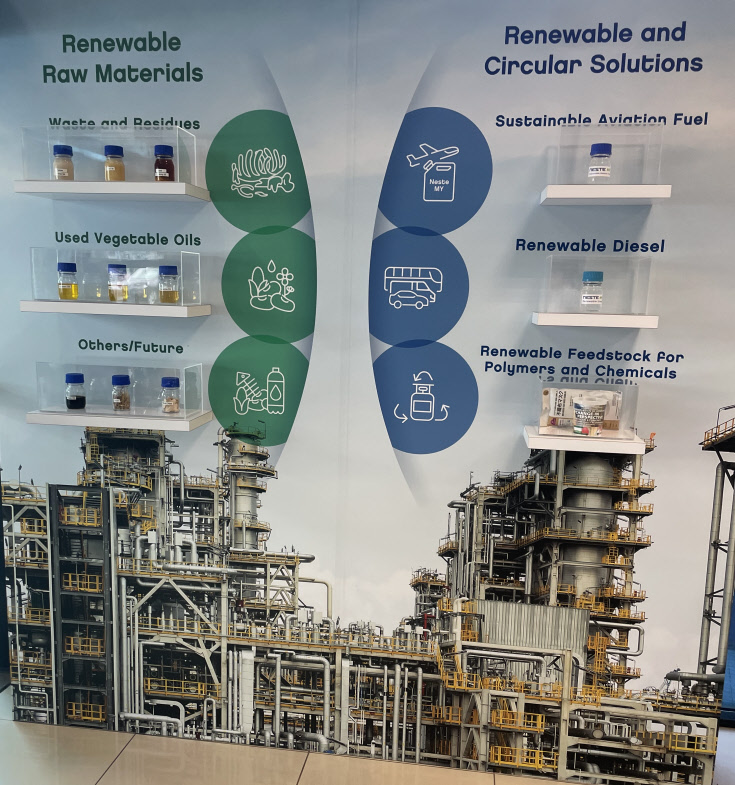
One way to try to entice Finnish companies to Singapore are the incentives offered for setting up headquarters there – regional or even global!
“Right now, the Singapore government offers businesses from overseas a big promotion. Put the regional or global headquarter here, and you’ll get a lot of different grants and tax incentives. And if you want to put your global headquarters here, the Singapore government will love you! At FBC we are not driving this, but we accommodate and share knowledge as much as possible.”
“Nightingale, a Finnish Health tech company put their regional headquarters here,” Pasi exemplifies.
Costs a major hindrance
Something undisputable is that Singapore is a hub for international trade and a gateway to Asia, with extensive trade networks and strategic maritime location. But despite foreign investor confidence in Singapore (with its may FTAs, cross-border investment facilitation and protection for foreign investors’ rights) there is crucial difference compared to before, and by no means any small matter. In 2025, the increased costs of living, and other challenges relating to Singapore and running a business there have become, to quote Pasi, a “major hindrance”.
“Rents have gone up on average between 50 – 100%, so this has hit really hard in the wake of Covid. And I don’t know how sustainable this is. The rents for individuals or household rents have continued going up insanely high. And over 3,000 F&B outlets closed down in 2024 alone!
I think Singapore will suffer, and I can through EuroCham confirm that many from various national business groups share this view.”
“Also, we have hard times getting highly skilled people in here because the spouse can’t easily get a work permit, while in Malaysia and Thailand you can.”
Overall, my view is that Singapore needs to address these cost- and talent issues or it could risk losing some appeal. And, actually, Hong Kong is now looking more attractive again. I have friends working there who say that their rents are lower, while salaries are higher. Cars cost one-third or one-fifth of the price here! And currently they don’t have enough skilled foreigners either.”
Moving production across the channel
For Singapore there are two clear paths emerging in 2025. “I meet a lot of people throughout the year who are about to set up their company and considering Singapore for global headquarters, especially digital mobile-only companies and based on Shopify. Mainly they give taxation as reason and that the people they hire are working from home all around the world and not in Singapore. So, putting the headquarters here is less about the people,” says Pasi. “And even Singapore is recognising that.”
Enter ‘JS-SEC’, the Johor-Singapore Special Economic Zone (launched in January) – an agreement for strengthening Johor and Singapore to jointly compete for global investments
by improving cross-border goods connectivity, enabling freer movement of people, and strengthening the business ecosystem within the region. JS-SEC’ is intended to supercharge cross-border investment, enhance supply chains and foster a Singapore–Johor economic corridor.
“Singapore is actively encouraging companies to headquarter here while placing operations in Johor to take advantage of cross-border efficiencies. There are currently 14,000 European companies in Singapore.”
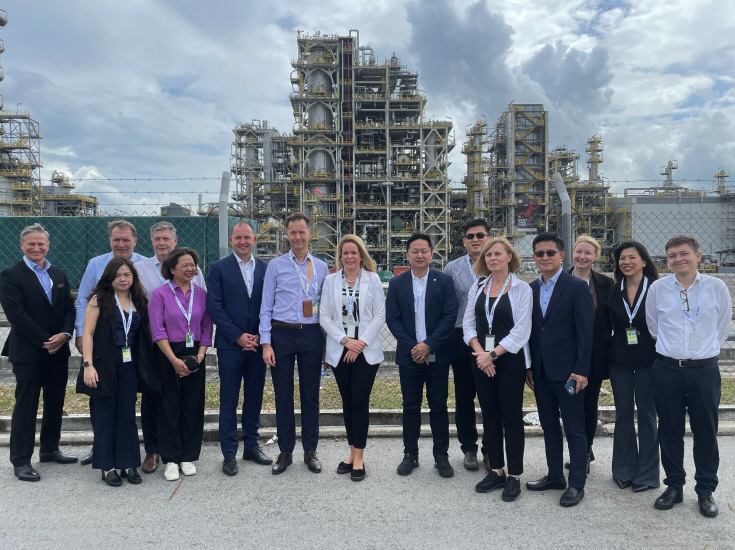
Pasi recently toured some Johor facilities with the Finnish Business Council and came away impressed. ‘They’re really heavily pushing the Johor economic zone everywhere,’ he says, noting that it’s a strategy for Singapore to remain attractive despite rising costs.