




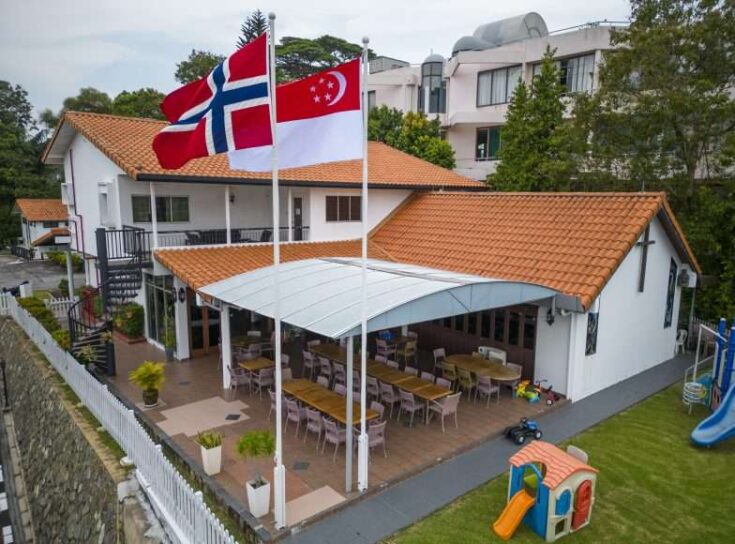
One of the most recognisable landmarks of the Scandinavian community in Singapore has been put on the market, as the Norwegian Seamen’s Mission (Sjømannskirken) seeks a buyer for its hilltop property at Pasir Panjang Road with a guide price of S$70 million.
The freehold property at 300 and 300A Pasir Panjang Road, which has been home to the Mission since 1977, is being marketed through an expression of interest exercise managed by JLL. Under Singapore’s Master Plan 2025, the nearly 49,000-square-foot site is zoned for residential development and could potentially be redeveloped into around 63 boutique homes.
The sale marks a significant milestone for an institution that has played an important role in the lives of Norwegians – and later many other Scandinavians – in Singapore for more than seven decades.
A mission born from Norway’s shipping ties
The Norwegian Seamen’s Mission first established itself in Singapore in 1955, recognising the city-state’s growing importance as one of the world’s busiest ports. Although the venture initially began as a trial, it quickly proved its value when Norwegian and Scandinavian shipping traffic turned out to be far greater than anticipated.
By 1957, more than 1,200 Scandinavian ships were calling at Singapore annually, making the new station one of the busiest in the Seamen’s Mission’s worldwide network. Ministers spent much of their time travelling by ferry or hitching rides with harbour launches to visit crews anchored far from shore.
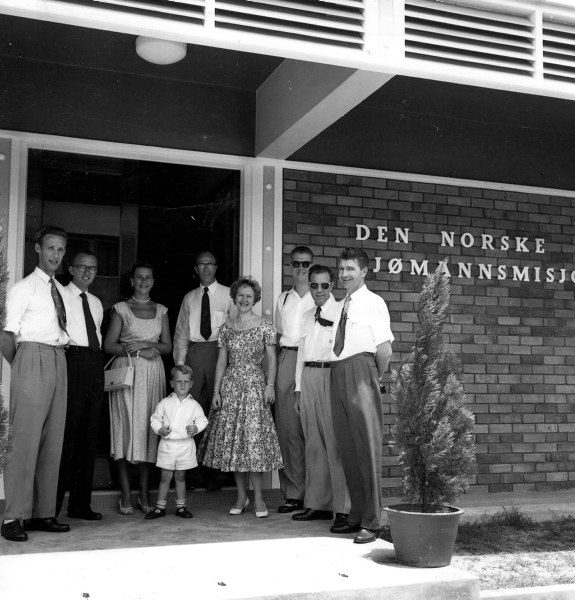
The first premises were a rented bungalow before the Mission entered a unique partnership with the Anglican Mission to Seamen. Together they built adjoining facilities at Connell House, where the Norwegian Seamen’s Mission operated from 1957 until the area was expropriated by the Singapore government in 1971.
Finding a permanent home
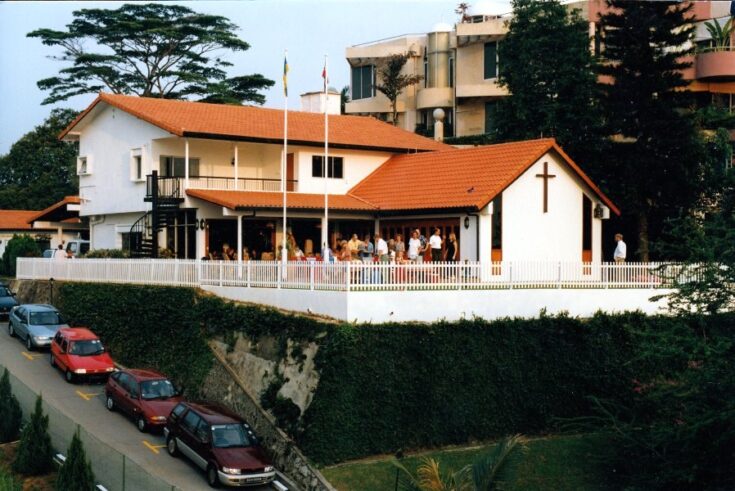
After several years in temporary accommodation, the Mission achieved what was then no small feat. In 1977 it succeeded in registering as a legal entity in Singapore, allowing it to purchase property – a privilege not easily granted to foreign organisations at the time.The Mission acquired the Pasir Panjang property, perched on one of Singapore’s highest hills with sweeping views over the Port of Singapore and the Strait of Malacca. The church was officially inaugurated on 17 April 1977.
The purchase soon proved remarkably farsighted. As Singapore’s property market developed, the value of the site multiplied many times over, making it unlikely that the Mission could have afforded the same property only a few years later.
From seafarers to expatriate community
While the Mission originally focused on serving Norwegian seafarers, its role gradually changed as international shipping evolved and the number of Norwegian residents in Singapore grew.
Singapore became Norway’s principal business hub in Asia, with many Norwegian companies establishing regional headquarters in the city. The church increasingly became a gathering place for expatriate families, offering worship services, choirs, children’s activities, business lunches, social events and its well-known Saturday porridge and Sunday waffles.
Since 1985, the Mission has also worked closely with the Church of Sweden Abroad (Svenska kyrkan i utlandet), serving both the Norwegian and Swedish communities in Singapore.
What happens next?
Although the property is now being offered for sale, the Norwegian Seamen’s Mission has not announced its future plans. No public statement has been issued on whether it intends to relocate to smaller premises elsewhere in Singapore or how the proceeds from a sale would be used.
The Mission continues to operate from the Pasir Panjang property, and community activities remain on its calendar while the sale process is underway.
For many generations of Scandinavians living and working in Singapore, the hilltop church has been much more than a place of worship. It has been a meeting place, a cultural centre and a home away from home. Whether the Mission remains at Pasir Panjang or begins a new chapter elsewhere, the sale marks the end of an era for one of the oldest Scandinavian institutions in Southeast Asia.


[…] ScandAsia previously reported that the historic hilltop property had been placed on the market with a guide price of SGD 70 million. However, it remained unclear whether the organisation would leave Singapore or relocate. […]