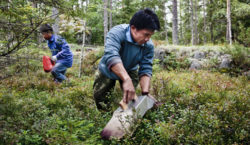




Without thousands of Thai berry pickers, there was a fear that the berries would rot in the forest. Now it seems that demand has pushed the prices so high, that Finns have returned to the forests to pick the berries themselves.
The sharp drop in the number of Thai berry pickers arriving in Finland has unexpectedly created a lucrative opportunity for local residents, with soaring berry prices encouraging thousands of Finns to head into the forests this summer.
Earlier this month, Finland approved visas for only 123 Thai wild berry pickers, compared with more than 2,100 applications submitted through the Finnish Embassy in Bangkok. The decision followed tighter scrutiny of the berry industry after several human trafficking convictions and concerns over the treatment of foreign seasonal workers.
Before the season began, berry companies warned that the shortage of Thai workers would leave much of Finland’s crop unharvested and push up prices.
Instead, higher prices have attracted a wave of Finnish pickers. According to public broadcaster Yle, blueberries are selling for as much as €4.50 per litre, almost three times last year’s advance price. Experienced pickers can now earn €200–300 a day, while one couple interviewed by Yle said they are making around €1,000 a week collecting berries.
The boom is also evident online. Marketplace Tori.fi has already recorded around 3,000 blueberry sale listings, with demand from buyers reaching record levels as consumers seek fresh wild berries.
The development highlights an unexpected consequence of Finland’s decision to tighten recruitment of foreign berry pickers. Rather than leaving berries to spoil, the higher prices have encouraged many Finns to return to a traditional seasonal activity that had increasingly been carried out by migrant workers from Thailand.
For many Thai workers, however, the season has become a missed opportunity. Thousands who had hoped to travel to Finland this summer were unable to do so after their visa applications were rejected, cutting off an important source of seasonal income for families in northeastern Thailand.