


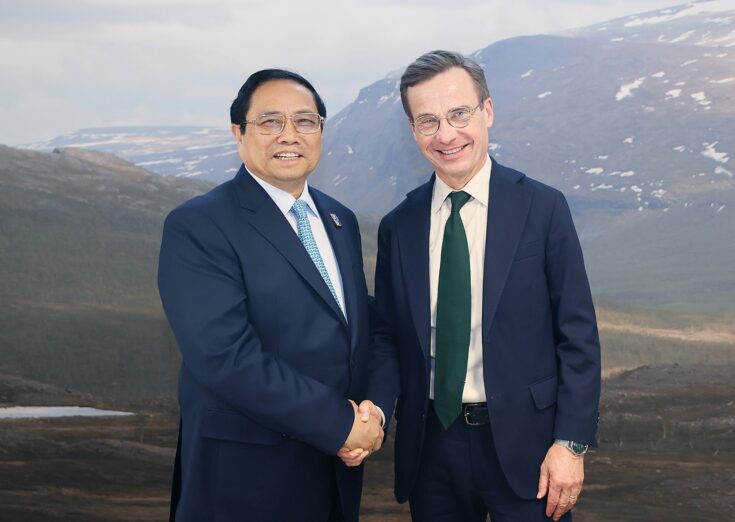
The official visit of Vietnamese Prime Minister Pham Minh Chinh to Sweden from June 11–13, 2025, marks a pivotal moment in the bilateral relationship, opening avenues for enhanced collaboration in science, technology, innovation, and digital transformation. This visit signifies a strategic advancement in Vietnam–Sweden relations amidst the global digital era.
From Historical Foundations to Strategic Leap: Governmental Direction
Established in 1969, Vietnam–Sweden relations have been built on a robust foundation of mutual support and cooperation. Sweden has consistently been a significant partner in Vietnam’s journey toward independence and national reconstruction.
Vietnamese Ambassador to Sweden Tran Van Tuan emphasized that Prime Minister Pham Minh Chinh’s visit aims to steer the two nations toward a sectoral strategic partnership, particularly in science, technology, innovation, and digital transformation. This juncture presents an ideal opportunity for both countries to explore sustainable and long-term cooperative ventures, aligning with the demands of the digital age.
Sweden, renowned for its innovation and scientific research, ranks second globally in the Global Innovation Index (GII), investing approximately 3.6% of its GDP in research and development (R&D), surpassing the EU average. Conversely, Vietnam boasts a youthful workforce, adaptable production capabilities, and a rapidly expanding consumer market. The Vietnamese Communist Party’s Politburo recently issued Resolution No. 57-NQ/TW on December 22, 2024, underscoring a high political commitment to advancing science, technology, innovation, and national digital transformation. This initiative aims to propel Vietnam swiftly into the digital era and global integration. Establishing a sectoral strategic partnership in science, technology, and innovation will enable both nations to leverage each other’s strengths for mutual development in the contemporary era.
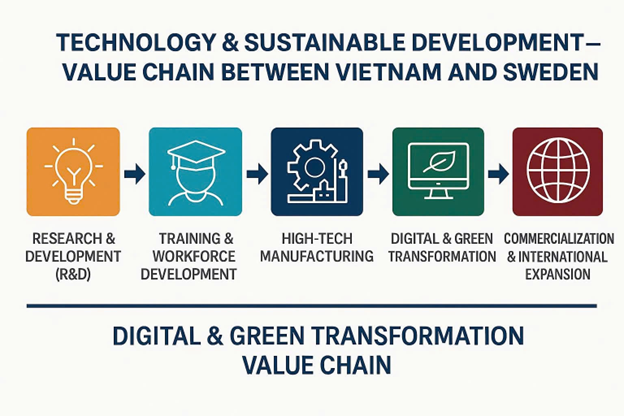
In the current phase, fostering collaboration between Swedish and Vietnamese enterprises is crucial, especially in high-tech sectors such as smart infrastructure development, renewable energy, healthcare, pharmaceuticals, and software outsourcing. These areas present significant potential and mutual interest for both countries.
Business Leadership: Technology, Sustainability, Connectivity
Within the framework of the visit, the Vietnam-Sweden Business Forum convened, bringing together 100 Vietnamese and Swedish enterprises. This forum serves as a vital platform for businesses from both nations to engage in substantive discussions, forge connections, and cultivate partnerships in high-tech industries, digital transformation, and sustainable development. Prominent companies such as Nutifood, HoaBinh Group, H&M, SYRE, and FPT Software…exemplify the new wave of collaboration, where technology, social responsibility, and innovation converge within the global value chain.
In the Vietnam-Sweden collaborative ecosystem, enterprises are not merely implementers but catalysts for transformation. Each entity contributes a unique perspective – from nutrition and fashion to event organization and technology services – united by a shared ethos of innovation, sustainability, and globalization.
Mr. Tran Bao Minh, Vice Chairman of Nutifood, stated, “Sweden is the cradle of global nutritional science, setting leading standards for organic milk and functional foods. Nutifood is proud to be the first Vietnamese enterprise to establish a strategic partnership with Sweden, aiming to enhance the health of Vietnamese people through high-quality nutritional solutions.”
With a long-term vision, Nutifood established the Nutifood Nutrition Research Institute Sweden (NNRIS) and has operated the Nutifood Factory in Sweden since 2020. Specialized nutrition formulas such as FDI and NuVi Power, along with medical nutrition products like Värna, have been developed based on international research and adapted to Vietnam’s nutritional context. Despite challenges such as differences in technical standards and product development mindsets, Nutifood has progressively localized international technologies to create products suited for Vietnamese consumers.
HoaBinh Group (The MICE Leader), though not the organizer of the current Vietnam-Sweden Business Forum, actively promotes economic diplomacy and international cooperation. With over 15 years of experience in event organization – particularly international conferences, high-level dialogues, and specialized forums, HoaBinh Group has established itself as a pioneer in creating connective spaces among businesses, policymakers, and academia.
According to CEO of HoaBinh Group Hoang Lan, the MICE industry has evolved beyond logistical services to become an essential catalyst for innovation. “MICE is not just a service industry but a foundational catalyst for innovation connections from policy dialogues to technological collaborations,” she emphasized. In the deepening Vietnam-Sweden partnership, the involvement of professional organizers like HoaBinh Group enhances business connectivity, fosters public-private partnerships, and supports digital transformation and sustainable development.
Speaking to a ScandAsia reporter, an H&M spokesperson highlighted the company’s strong commitment to sustainability, continuous investment in improving labor conditions, health and safety at partner factories, and minimizing environmental impacts from production activities. Over nearly three decades, H&M has established new standards and rigorously applied the Sustainability Commitment and Responsible Purchasing Policy, maintaining long-term, trustworthy relationships with global suppliers. In Vietnam, a key supply market, H&M appreciates advancements in environmental protection and sustainable social practices but also recognizes challenges in the global supply chain when aiming for circular economy goals and scientifically-based emission reductions.
SYRE, a pioneer in textile recycling and the circular economy, has selected Vietnam as the strategic location for its first large-scale recycling plant. Following a $100 million Series A funding round in May 2024, SYRE identified significant potential in Vietnam’s dynamic textile industry and strong commitment to the circular economy and sustainable development. However, achieving this goal requires substantial government support, particularly in updating regulations on importing textile waste, currently classified as “waste” but poised to become vital “recycled materials” in the circular textile industry. SYRE has signed a Memorandum of Understanding with Binh Dinh province to establish necessary conditions for its inaugural recycling plant in Vietnam, focusing on criteria such as access to industrial zones near infrastructure, green energy, and recycled materials.
FPT Software, a leading Vietnamese enterprise in technology and digital transformation, is progressively expanding its footprint in Northern Europe. According to Mr. Andrew Allison , CEO of FPT Software Sweden, this region presents substantial opportunities yet demands high standards in technology, transparency, and cultural understanding.
FPT identifies three strategic opportunities: collaborating with global leaders in smart manufacturing, clean energy, and digital finance; leveraging Vietnam’s positive image to enhance presence; and partnering with Northern European businesses in innovation, AI, and green technology – aligning with FPT’s “AI-Semiconductor-Automotive-Digital-Green” strategy.
FPT proposes three priority policy areas to bolster Vietnam-Sweden cooperation: establishing favorable legal frameworks for technology transfer; developing joint training programs and coordinating tech personnel between the two nations; and intensifying national branding efforts to elevate the credibility of Vietnamese tech enterprises in developed markets.
Today’s innovation-driven partnerships serve as a proving ground for tomorrow’s strategic depth. From policy formulation to product development, from conferences to concrete actions, Vietnam and Sweden are jointly scripting a new chapter in their comprehensive partnership, grounded in data, sustainability, and corporate synergy.
Five Strategic Cooperation Areas between Vietnam and Sweden by 2030
- Green Transition: Renewable energy, recycling, sustainable packaging, and carbon emission reduction
- Digital Transformation: 5G, AI, semiconductors, and intelligent digital infrastructure
- Healthcare & Life Sciences: Digital health, diagnostic technology, and medical research
- Education & Human Resource Development: Technical training, especially in energy and high technology
- Sustainable Trade & Investment: EVFTA, EVIPA, strategic investments, and addressing IUU yellow card issues