



It is the last night in Koh Lipe.
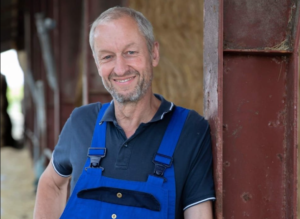
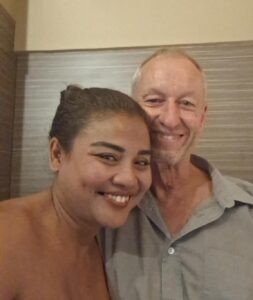
Ole Christian Andersen is sitting at a bar with friends, finishing the holiday with a few beers, when he starts talking to a woman called Nisa.
What begins as small talk turns into something that lingers.
The day after he flies back to Denmark.
The following year, he returns to the same place. He knows where to find her.
They recognise each other, pick up the conversation, and after he leaves Thailand again, they begin writing. Since then, they have been in contact almost every day.
“She wrote good morning today as well,” Ole says.
“It has just continued from there.”
Ole and Nisa first met each other 5 years ago.
But when he tells people he has fallen for a woman in Thailand, the reaction changes.
Love reduced to a transaction
The reactions are about the story people think they already know.
“People think I’m exploiting her.”
And he knows what else is being said.
“Some people go after the money.”
Nisa works as a freelance companion and has sponsors. Ole does not deny that that is part of her reality.
“I’m not blind to the fact that she’s a freelancer,” he says.
He explains that she earns her living as a companion and that having a sponsor is part of that world.
“She has to live. Of course she needs money – but in a different way. She doesn’t beg.”
But prejudices from the outside have planted a thought in Ole’s head:
“I can’t help thinking: is it your money, Ole, or is it you?”
Outside his own doubts, there is another layer.
In 2015, he took part in the Danish Farmers Wants a Wife. He became known in Denmark as the farmer who went to swinger clubs, and he remembers how quickly people decided what kind of man that made him.
“It really brought people’s taboos and prejudices out into the open,” he says.L
He recognises that pattern now. But he also knows that side exists.
“Some people do go after the money,” he says.
He does not deny that such arrangements happen. What he pushes back against is the idea that every Danish-Thai relationship fits that frame.
Four hours on a balcony
At one point during their second meeting, Ole decided to say something he had been holding back.
“I told her I had become more fond of her than I want to admit.”
That evening she disappeared. She did not come to his hotel, and when he wrote to her, there was no answer. He remembers growing irritated and trying to understand what had happened.
The next day she apologised and explained that it had suddenly felt too close. She had developed feelings as well, and that had taken her by surprise. They met the following day and talked for four hours on his balcony.
“Four hours about feelings,” he says.
Last summer they spent ten days together in Thailand. Two days before he was due to return to Denmark, she wrote that she was going to Koh Larn and would be back later that month. He asked whether it was a holiday to which she said yes.
But Ole knew she had found a sponsor.
He does not describe it as something dramatic. He describes it as part of the framework around her life and work, something he is aware of and has to navigate emotionally himself.
What affects him most now is the distance.
“I’m really affected right now. I just feel like getting on a plane.”
And while the distance weighs heavily on him – so do the assumptions.
He is tired of the ready-made story that follows a Danish man in Thailand. Tired of the idea that the explanation must be money, and that feelings are secondary or naive.
He does not deny the realities around them. He knows what Nisa does for a living, and he knows what people think that means. What he reacts to is the certainty in other people’s voices.
In his view, it is possible that money can exist in the background without defining everything. It is possible that what grows between them can still be genuine.
Ole wants room for that possibility.
Because in the middle of all the assumptions, he says, there is also something else. Love, for example.