



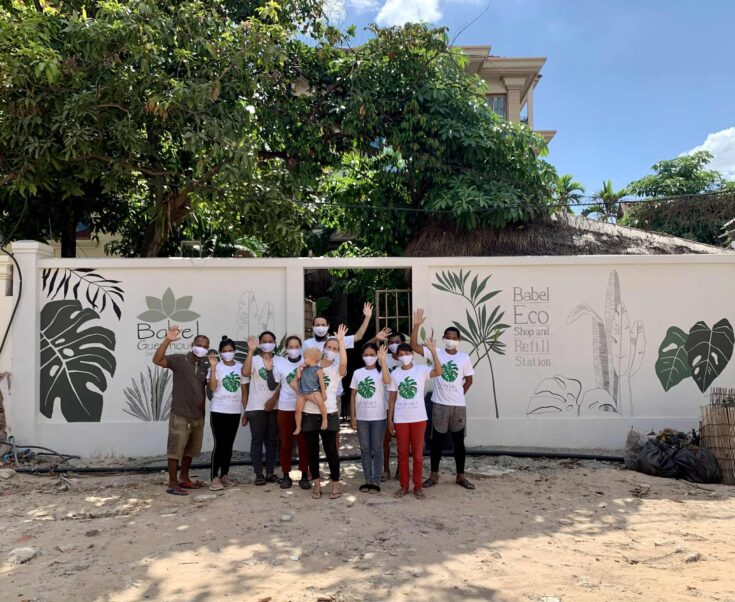
Norwegian couple Simen and Katrine Solhaug run two hotels in Siem Reap, Babel Boutique and Babel Guesthouse. They are big advocates for sustainable tourism. Sustainable tourism is a term often thrown around when travelers are picking their next destination, but to Katrine and Simen, sustainable tourism is not just a buzzword but a way of life — from employing local staff and tuk-tuk drivers to supporting local initiatives. Their story shows what “sustainable tourism” looks like in practice.
Siem Reap exists as the main gateway for millions of tourists to visit the world-famous ancient temples of Angkor Wat. But millions of tourists mean millions of dollars — dollars that unfortunately do not always go to the locals.
The United Nations World Tourism Organization bases its definition of sustainable tourism on three pillars: environmental responsibility, socio-cultural aspects, and benefit to the local community. For Simen and Katrine, all three pillars serve as core values, but especially the third one weighs heaviest.
The couple employs a staff of 26 people combined at their hotels, 25 of whom are Cambodian, mainly from the local area, with additional tuk-tuk drivers linked to the hotels to take guests on trips. To Simen and Katrine, it is important to hire locals for their hotels.
“They are the reason we are here,” Simen explains. “They are so friendly and hardworking.”

But it has not always been a smooth ride for the Norwegian couple and the staff at Babel. When COVID hit, like many places worldwide, Siem Reap became a ghost town. No tourists meant no money coming in. Hotel rooms remained unoccupied, and restaurants stood empty. Many hotel owners, often foreigners, abandoned the city, leaving the Cambodians behind to fend for themselves. During these dark times, Katrine and Simen considered returning to Norway as well, but something held them back.
“I couldn’t leave them,” Katrine says. “I couldn’t leave the staff behind without anything.”
So, the couple stayed put, refusing to let go of their employees. But without guests, there was no income, and without an income, they couldn’t pay wages. So, the couple had to find a solution.
“We did a fundraising event,” Katrine says. “I would make small videos of our staff and their families during the lockdown, and then share them with people back in Norway to show how people in Cambodia were struggling through COVID, and telling them how they could help.”
And it worked. The goal of the fundraising was to raise 20,000 dollars; it ended up raising 40,000. Unlike many others in Siem Reap, no employee at Babel was laid off.
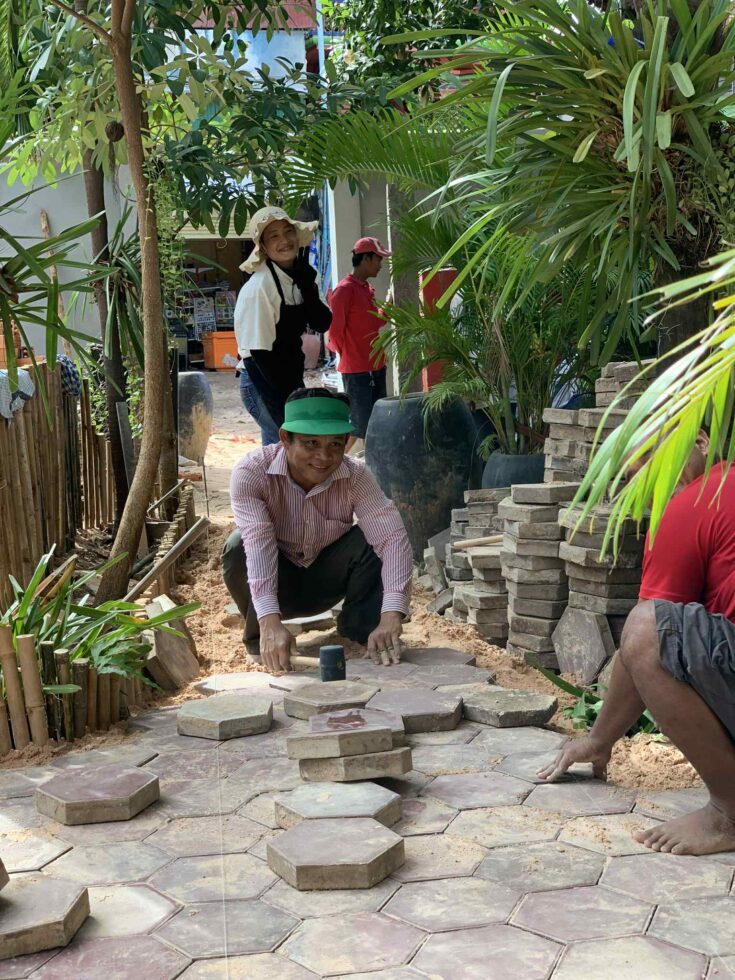
But the money could not just be a handout. Simen and Katrine knew their staff and knew that just giving away the money would be demoralizing for them. Instead, they decided to hire them again to run projects around the hotel, renovate the garden, and lay new floors. So, while Siem Reap lay quiet, Babel turned into a construction zone with well-paid, happy workers. That way, the employees and tuk-tuk drivers earned their salaries and gained new skills simultaneously. They were not professionals, and projects took a lot longer than if an experienced work crew had been hired, but it kept the employees busy.
“We are so happy we could keep them around, even if the floors are a little wobbly,” Katrine says with a smile. “It adds to the charm of the place.”
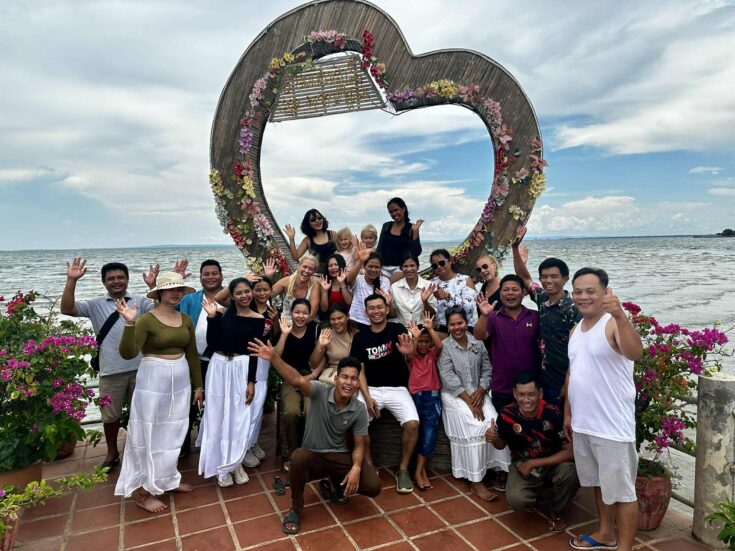
Katrine and Simen wish to add a Scandinavian flair to the work environment at Babel. They take their staff on work trips around Cambodia, something that is quite uncommon for a typical Cambodian workplace. The couple wants their staff to see and enjoy their country.
“It’s not fair,” Katrine says. “Many tourists see more of Cambodia than the Cambodians themselves. It’s a wonderful country, and the staff should have the opportunity to see it.”
The excursions are not solely for the staff’s enjoyment, though. When traveling around and seeing different parts of Cambodia, the staff, many of whom aspire to have careers in the hotel and tourism industry, get to experience what it is like to be a tourist, which gives them a better sense of the industry.
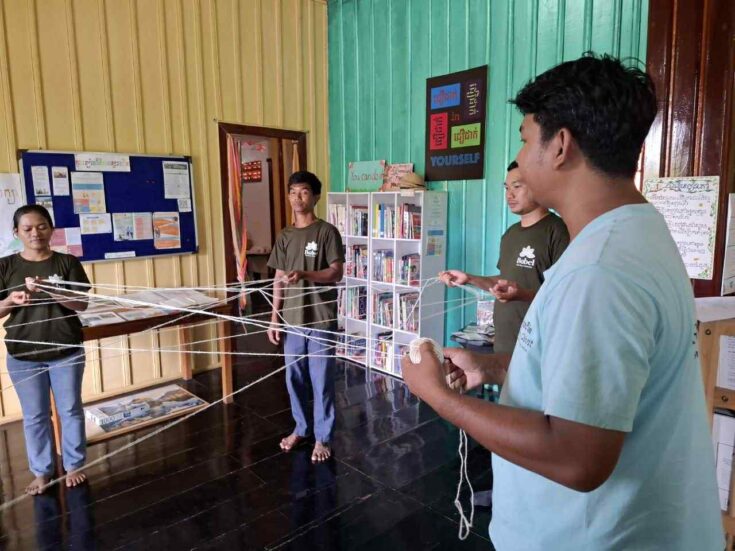
In addition, the couple also supports the local community center Spean Chivit Youth Resource Center with both funding and advertising. The community center offers classes and workshops in topics such as public speaking, recycling and teambuilding. Spean Chivit Youth Resource Center also assists with things like making resumes and writing applications. The initiatives are meant to ensure success for locals. Much of the staff at Babel have taken classes at Spean Chivit and say they have gained valuable skills from the classes and workshops.
To Katrine and Simen, it is about giving back.
“I love our staff. They are like family. I love Cambodia and the people living here,” Katrine says. “I think it is our duty as people from rich countries to give back to the poorer countries we choose to visit.”