



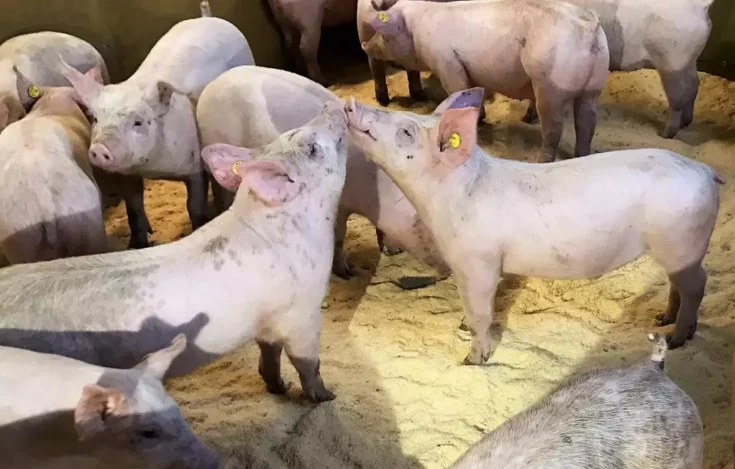
Indonesia has imported live breeding pigs from Denmark for the first time as the country works to rebuild its swine population after years of losses caused by African Swine Fever (ASF).
A total of 546 breeding pigs arrived at Sam Ratulangi Airport in Manado earlier this week. The import was carried out through cooperation between the Indonesian and Danish governments, with support from the private sector.
According to Sauland Sinaga, chairman of the Indonesian Monogastric Association (AMI), the shipment marks an important step in restoring Indonesia’s pig population after ASF first struck the country in 2019.
Indonesia has lost around four million pigs each year since the outbreak, including an estimated 400,000 breeding sows. The disease has severely reduced the supply of breeding stock and affected domestic pork production.
Sinaga said Denmark was chosen because of its high-quality pig genetics and strict biosecurity standards. The imported Landrace and Yorkshire breeding pigs are expected to improve productivity through better feed efficiency, faster growth and larger litters.
He said a sow in Indonesia currently produces an average of eight marketable piglets per litter. Danish breeding stock has the potential to increase that figure to as many as 14 piglets.
Before leaving Denmark, the pigs completed a 20-day quarantine and underwent veterinary inspections to certify they were free from ASF and other animal diseases.
After arriving in Indonesia, quarantine officials carried out document and physical inspections before transporting the animals to a quarantine facility for observation and laboratory testing.
Sinaga said the 546 imported pigs represent only a small share of Indonesia’s breeding needs, but described the shipment as an important first step towards rebuilding the country’s pig industry.