




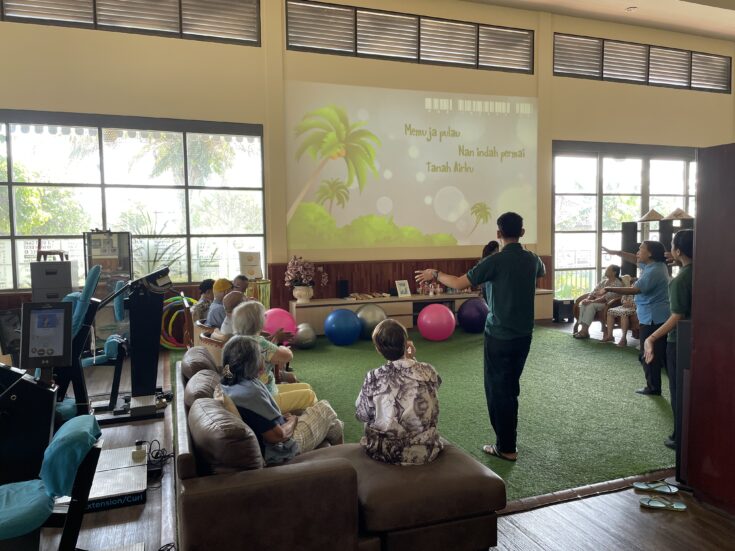
When I step inside Hovi Club Teuku Umar in Denpasar, cheerful music fills the room. About twenty seniors are stretching and moving in rhythm, following simple dance steps shown on a screen. There is laughter, clapping, and an ease that feels more like a social gathering than a care facility.
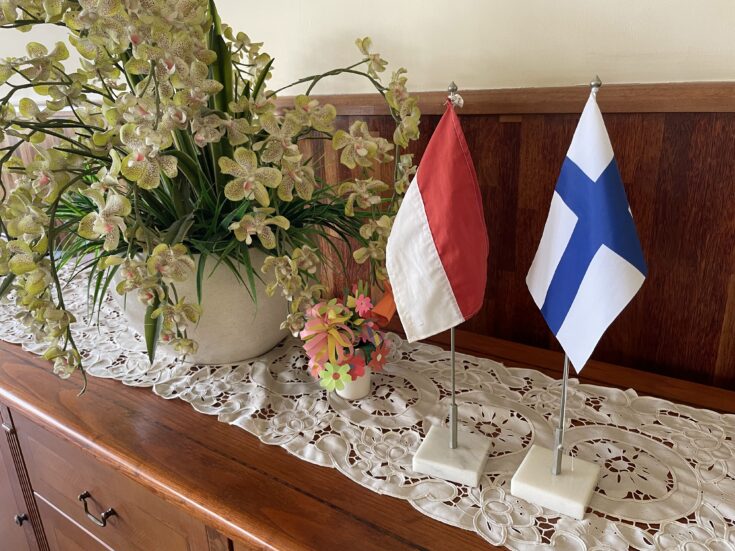
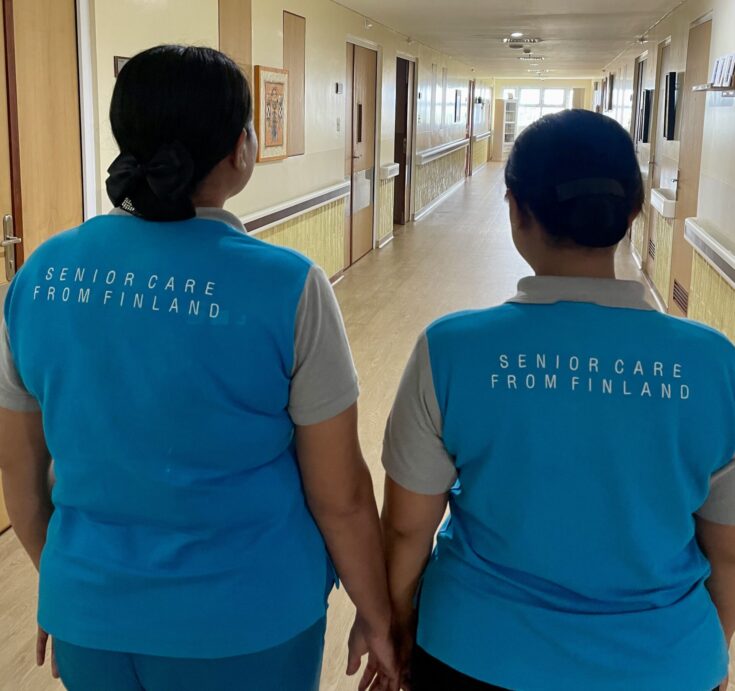
The space is bright and welcoming, furnished with soft chairs, colourful details, and an atmosphere that invites people to stay. A small Finnish and Indonesian flag stand side by side in the living room—a quiet symbol of the partnership behind the place. In one corner stand a few exercise machines, and a physiotherapist visits from time to time to assist with individual training. Nearby is a small karaoke room equipped with microphones where music and singing often take over the day. Along the walls are quiet corners for rest when needed. The staff move between the rooms wearing blue uniforms printed with the words “Senior Care from Finland” across their backs. It feels like a place designed not only for care, but for connection.
“At Hovi we believe that ageing shouldn’t necessarily mean slowing down,” says Dewi Trisnawati, Managing Director of Hovi Care Bali. “It’s about helping people stay active, social, and proud of who they are.”
A Finnish family story with global roots
Hovi Group began in 1989 as a small family-run nursing home in Finland. Over the past 35 years, it has evolved into a trusted name in elderly and dementia care. Today, the company is led by Jussi Peltonen, who in 2008 established Hovi Group Ltd in its current form—built around one clear mission: to help elderly people live with dignity, independence, and purpose.
With over a decade of experience in Finland, Hovi Group began looking beyond Europe. Singapore became its second international location in 2018, followed by Bali in 2019. On the island, the Hovi Care Franchisee, Kasih Ibu Hospital Group, runs two facilities: Hovi Club Teuku Umar, a day centre for seniors, and Hovi Assisted Saba, an assisted living residence near the eastern coast.
“Our mission, Own Your Life, is about giving decision-making power back to the elderly people,” says Jussi Peltonen. “For older people in the Nordic countries, independence is deeply rooted in the culture. Even when someone’s cognitive abilities decline, we believe they should still have a say in their own lives.”
The company’s philosophy draws on the Finnish FINGER study—a landmark research project that showed cognitive decline can be slowed through lifestyle interventions. At Hovi, care revolves around five key pillars: social activity, mental stimulation, physical exercise, healthy nutrition, and control of health risks. These ideas are visible in the daily rhythm of life at both Hovi Club Teuku Umar and Hovi Assisted Saba.
Bridging two worlds of care
When Hovi Care opened its doors in Bali, it entered a society where formal eldercare was almost unheard of. In Balinese culture, caring for ageing parents is traditionally a family duty, and the idea of moving them to a care facility can still be seen as a sign of neglect.
“Many families worry that others will think they are abandoning their parents,” Dewi Trisnawati explains. “We spend a lot of time talking with them, explaining what we do. It takes patience.”
Over time, that patience has built trust among both local and international families.
Finland and Bali may seem far apart, yet they share an understanding of compassion, Jussi Peltonen believes.
“The Balinese approach to the elderly is incredibly warm and respectful,” he says. “It’s something we could learn from in the Nordic countries.”
Hovi’s model combines that warmth with structured Nordic methods: training programmes, digital record systems, and evidence-based rehabilitation tools. Local staff—all of them certified nurses—receive continuous training through HoviAcademy. The Finnish team also visits Bali a few times a year to conduct workshops and share new practices.
“All our staff are qualified nurses, but technical systems can be new for them,” says Dewi Trisnawati. “In Finland also training is very technology-driven. Here, we have to be creative in how we adapt to our individual learning styles.”
The result is a care environment that feels both professional and deeply personal. Every morning, staff members log their mood in an internal app—a small but meaningful reminder that well-being starts with themselves.
Life and laughter at Hovi Club Teuku Umar
Hovi Club Teuku Umar is open Monday to Friday from 9 a.m. to 4 p.m. Seniors can join for a full or half day, depending on their needs. On average, up to 10 participants come daily, though sometimes as many as 25 gather for outing sessions.
There is room for exercise, music, games, creative workshops, and long conversations over coffee. The mood is light, and laughter is never far away.
“It’s important that everyone feels seen,” says Dewi Trisnawati. “Some are more social, others prefer quiet activities, but we try to make sure everyone gets equal attention.”
The participants include both local Balinese and long-term foreign residents from other countries. Language can be a challenge, but the team finds ways around it—through simple English, gestures, and plenty of smiles. Staff members also take English classes to improve communication.
A big part of Hovi Club Teuku Umar’s success lies in its sense of community.
“We see ourselves as a partner to the family,” Dewi Trisnawati says. “They trust us with their loved ones, and that’s a big responsibility.”
A home for the final chapters
An hour’s drive from Denpasar, in the quiet coastal area of Saba, stands Hovi Assisted Saba. Nine residents live here—seven women and two men—most of them between seventy and ninety years old. The residence can host up to fourteen, and most stay for about two years on average.
Inside, the atmosphere is calm and homely. Residents usually gather in the common living area, where conversations drift between memories and small daily moments. Personal items—a framed photo, a favourite cup, a teddy bear—line the rooms, giving each space a sense of belonging.
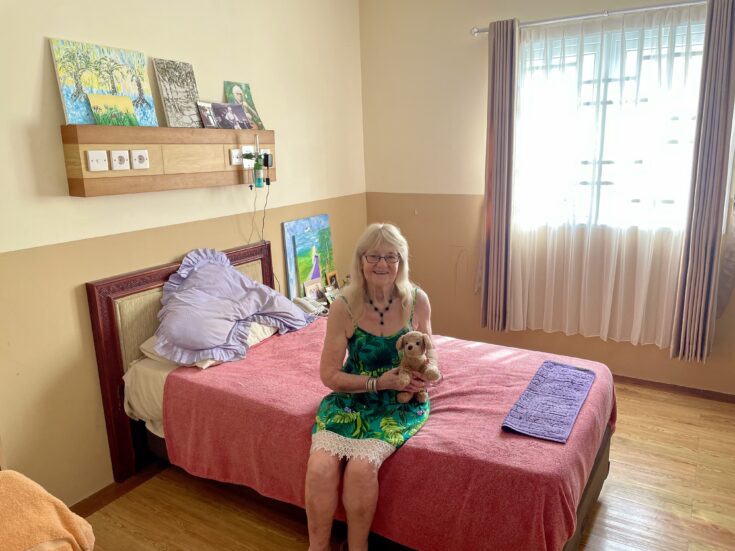
The friendships formed at Hovi Assisted Saba run deep. When one resident recently moved back to France, the others were heartbroken to see her go. In a setting where loss is an inevitable part of life, those bonds bring comfort and continuity.
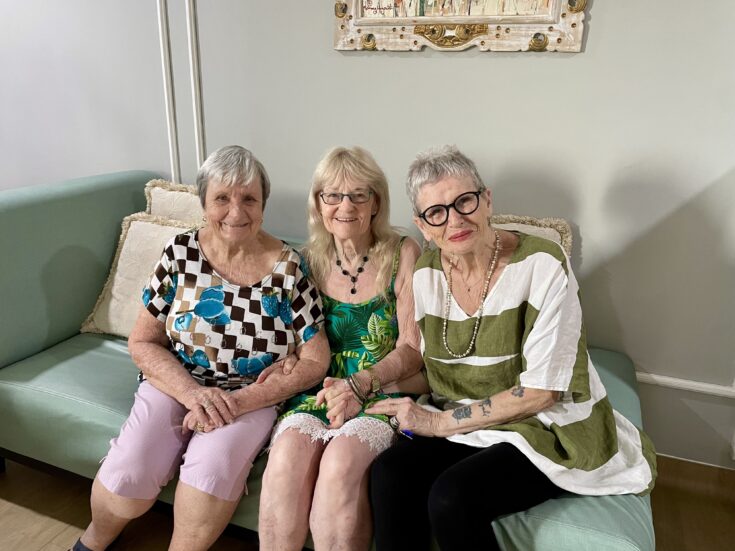
“It’s nice to have a few great friends here,” says Carole, one of the residents.
Another resident, Sandy from Australia, shares her story: “My daughter lives in Bali. But I lost my husband and my two sons. Sometimes I miss home, but then I can talk to my Australian friend about it.”
For Madeline, the combination of care and comfort makes all the difference. “I’m happy to be here and make the best of the last years,” she says. “We have good doctors and lovely staff. We are safe here.”
Residents often go out for lunch or coffee, accompanied by caregivers. These outings are small but meaningful gestures of freedom.
“That’s why we call it assisted living, not a care home,” says Dewi Trisnawati. “People still own their lives here.”
Looking ahead
In Bali, the idea of eldercare outside the family is still new. For generations, ageing and home have been inseparable. But as lifestyles change and more families live apart, attitudes are slowly shifting.
“People are starting to see that professional care doesn’t mean giving up love or responsibility,” says Dewi Trisnawati. “It can be an extension of family care, not a replacement.”
Before Hovi Care opened, there were only two facilities on the island that called themselves care homes. Now, more people are recognising that ageing with support and dignity is possible, even outside the traditional family home.
“The ageing population in Asia is growing rapidly,” says Jussi Peltonen. “There’s a real need for high-quality, research-based services that also respect local traditions.”
At the heart of that mission lies the same principle that started it all in Finland: respect, dignity, and the belief that growing older should not mean losing one’s sense of self.
