



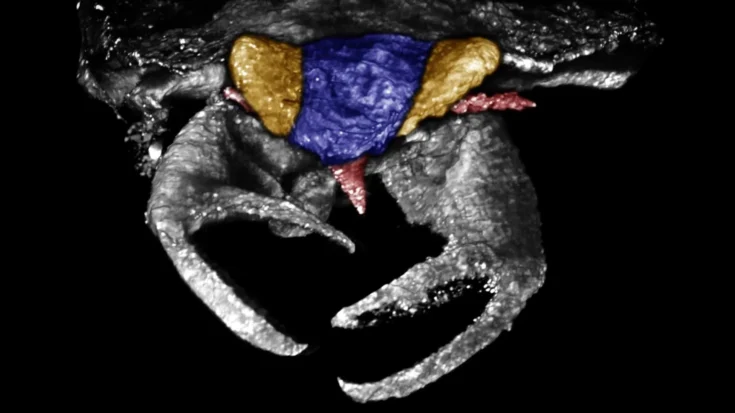
Researchers from the University of Oulu have helped identify a 100-million-year-old insect fossil preserved in amber from Myanmar’s Kachin region.
The fossil, discovered in ancient amber dating back to the Cretaceous period, belonged to a previously unknown species of true bug with unusual claw-like front legs resembling crab pincers. Scientists say such structures, known as chelae, are extremely rare in insects.
The study was led by researchers from Ludwig Maximilian University of Munich in cooperation with teams from the University of Rostock and the University of Oulu. The findings were published in the scientific journal Insects.
Using micro-computed tomography scanning, the researchers created detailed 3D images of the fossil to study its anatomy. They also compared more than 2,000 grasping appendages from living and extinct species to better understand the insect’s evolutionary background.
The newly identified species was named Carcinonepa libererrantes. Researchers said the fossil’s crab-like claws were unlike those seen in other known insects and more closely resembled appendages found in crabs and lobsters.
Scientists classified the insect as part of the Nepomorpha group of true water bugs, although its body also showed similarities to modern predatory toad bugs.