



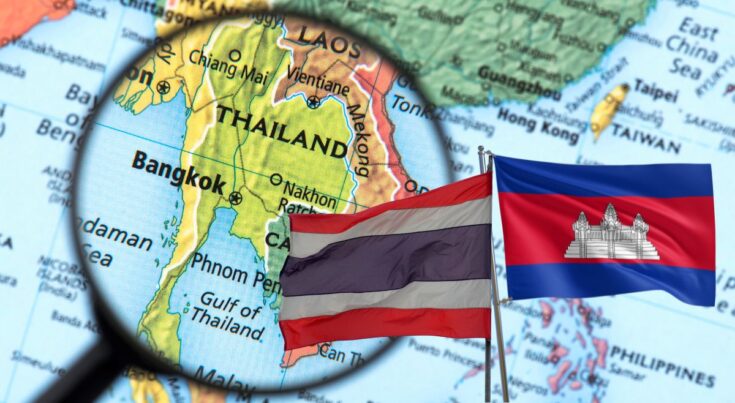
Nordic media outlets have reported on the recent armed clashes between Thailand and Cambodia along their shared border, relying largely on international news agency sources such as Reuters. While most reports have accurately described the events, they have generally provided little background on the underlying causes of the conflict.
The Danish Ministry of Foreign Affairs issued a travel advisory warning against visiting the Thai provinces bordering Cambodia and the Cambodian provinces adjacent to Thailand. Danish media carried the advisory with correct headlines specifying the affected areas.
Some Swedish outlets, however, caused confusion. Expressen published a headline stating “Undantagstillstånd i Thailand – UD avråder från resor,” implying that Sweden’s Ministry for Foreign Affairs warned against all travel to Thailand. The article itself clarified further down that the advisory applied only to the border provinces.
Norwegian media mainly reproduced the official version of events distributed through international agencies, while Finnish media barely mentioned the conflict.
Most reports give the wrong impresson that the conflict is about the few temples along the border which are located within the disputed zone. Suggesting that the conflct is about the ownership of these old ruins is nonsense as nobbody has really cared about this as long as nationals from both sides could visit the temples should they so wish.
TV2 in Denmark was among the few outlets to provide additional context. The channel invited ScandAsia editor Gregers Moller to briefly explain that the dispute is linked to domestic political developments in Thailand. Former prime minister Thaksin Shinawatra, recently returned to Thailand, and his daughter, Prime Minister Paetongtarn Shinawatra, have discussed the prospect of legalising casinos in Thailand. This could threaten one of the key sources of income for Cambodia’s long-time political figure Hun Sen, now chairman of the senate, and his son, Prime Minister Hun Manet.
The tragic clashes along the border seem at this point not to have damaged the appetite of the Nordic people to visit their traditional darling among vacation countries in South East Asia.