



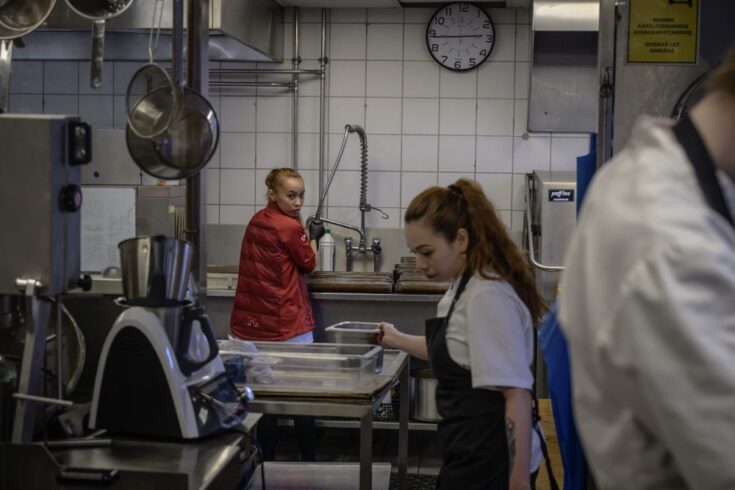
Filipino workers have become an important part of Greenland’s growing tourism industry as hotels, restaurants and fisheries struggle to find enough staff locally, Malay Mail reports.
According to an AFP report from Ilulissat in western Greenland, around 1,200 Filipinos now live on the Arctic island, making them the largest foreign diaspora in the Danish autonomous territory.
Many have moved there for work opportunities despite the harsh Arctic climate and long winters.
Among them is Marinel Garciano, who moved from the Philippines to Ilulissat in 2021 with her three children to join her husband Owie, who had already travelled to Greenland in 2012 to work as a cook.
“It was like I had teleported,” Marinel said about arriving in Greenland.
“From the tropical forest to here.”
The family now works in Ilulissat’s tourism sector. Marinel works as a receptionist while her husband works in a café kitchen. Their oldest son also works in a restaurant.
Ilulissat, which has around 5,000 inhabitants, receives about 50,000 visitors every year. Tourism has expanded rapidly in recent years, but Greenland’s declining population has created labour shortages.
At the Best Western hotel in Ilulissat, manager Arnarissoq Moller said foreign workers are essential.
“We want to hire locals, but it’s hard,” he said.
“I don’t know how we could maintain our high-quality service” without guest workers, he added.
According to Greenland’s employers’ association, between five and six percent of workers in Greenland are Asian.
For many Filipino families, the work is financially important despite the difficult conditions. Marinel said she and her husband save as much money as possible to secure a better future for their children and invest in property back in the Philippines.
“I want my kids to not grow up like me. You want to offer them what you didn’t have,” she said.
Still, adapting to life in Greenland has not been easy. Marinel said she sometimes experiences negative reactions from locals telling foreigners to “Go home!”
“We have to learn the language, and adapt to the culture… but it’s not that easy,” she said.
During the day she switches between Greenlandic, Danish and English while working.
Although the family has built a life in Greenland, Marinel said she hopes to eventually return to the Philippines.