




More than 50 years after the bombing of Laos, unexploded ordnance still claims lives, causes injuries and forces families to live in fear. In May, ScandAsia visited Yanika’s village in southern Laos, where Norwegian People’s Aid is clearing land still contaminated by unexploded ordnance.
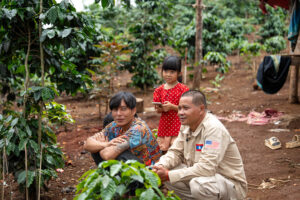
“Attention everyone. Please leave the area immediately. We are about to detonate unexploded ordnance. Please stay outside the safety zone until the operation is complete.”
The announcement echoed through a megaphone as the workday was coming to an end for the Norwegian People’s Aid’s clearance team.
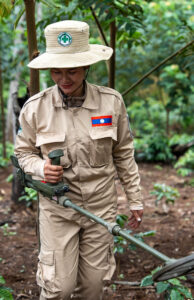
It was around 2 p.m., and since sunrise the clearance team had been searching the area for unexploded ordnance (UXO).
Now, only one task remained: the controlled detonation.
Yanika, her husband, their three children and her father quietly stepped out of their small wooden house in Paksong District, southern Laos.
They didn’t look shocked or alarmed. Having to leave their home before each controlled detonation had become part of their routine.
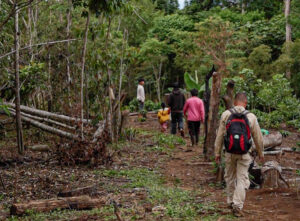
It is all for their own safety. And the 31-year-old mother, Yanika, knows exactly why:
“We’ve seen on the news what happens when UXO explodes. You can lose your arms or your legs.”
Even a small mistake can be fatal
The concern is well-founded. Every controlled detonation involves strict safety procedures, and everyone in the area must keep a safe distance.
“If you don’t follow the rules or procedures, even a small mistake can be fatal,” says Meena Biphachanh, Operations Coordinator at Norwegian People’s Aid (NPA).
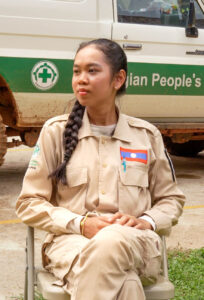
The consequences of UXO extend far beyond controlled demolitions.
“UXO contamination has killed many people in Laos. If not killed, they are often left with injuries or disabilities,” she added.
The danger from unexploded ordnance dates back to the Indochina War between 1964 and 1973, when the United States carried out an extensive bombing campaign over Laos in an effort to disrupt North Vietnamese supply routes along the Ho Chi Minh Trail.
More than half a century after the war ended, UXO remains a major humanitarian and socio-economic challenge in Laos, causing injuries and deaths, limiting access to productive land, and adding significant costs to the country’s development.
It’s all over our farm
For Yanika and her family the war only became real last year in 2025.
Until then, they had no idea that their coffee plantation was contaminated with unexploded ordnance.
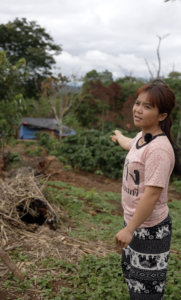
“At first, I didn’t know my farm was contaminated with UXO. I only found out when the NPA team came and started clearing the area,” Yanika said.
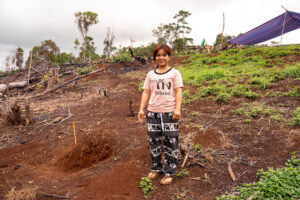
Since then, everyday life has changed.
“Before, we dug the soil as deep as we wanted and we weren’t afraid, but now we have to be very careful when planting coffee or vegetables.”
The family had planned to expand their coffee plantation, but those plans had been put on hold until the land had been cleared.
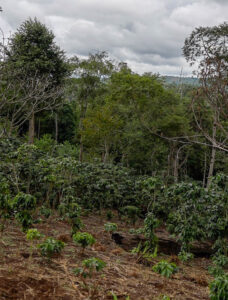
At one point, they even considered leaving everything behind.
“I thought we might have to move somewhere else. At first, I thought the contamination was only up in the mountains. But no, it’s all over my farm as well.”
The family’s coffee plantation is their livelihood. Their land, their income and their future are all here. Simply moving somewhere else is not an option.
Childhood has changed
Since the NPA team began working on the family’s land, the conversations at home changed as well.
“We’ve taught the children: If you see anything suspicious, just come back and let us know. You do not touch anything randomly.”
As NPA cleared the family’s farm, the children were no longer allowed to wander off on their own. If they wanted to go anywhere, they had to be accompanied by an adult.
“If my father isn’t with them, then either my husband or I have to stay with the children. If we don’t go with them, they have to stay here and play close to the house where we can see them.”
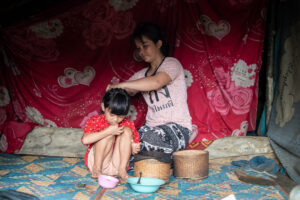
The warnings do not come only from their parents.
After watching videos of UXO accidents on social media, the children began talking to their mother about their own fears.
“They told me they were afraid that the same thing would happen to them. They don’t want to end up like the people they saw in the videos.”
Bombs every eight minutes for nine years
Norwegian People’s Aid (NPA) has been working to clear unexploded ordnance in Laos since 1997. After supporting the national operator, UXO Lao, for its first ten years in the country, NPA launched its own clearance operations in 2009.
Today, NPA is one of the country’s largest mine action organisations, employing more than 1,000 Lao staff. Its current mine action activities are funded by the U.S. Government.
The organisation operates eight survey teams, 40 clearance teams and four risk education teams across the southern provinces of Champasak, Saravane, Sekong and Attapeu.
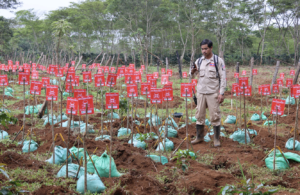
The need for the work remains enormous.
Between 1964 and 1973, more than two million tonnes of bombs were dropped over Laos. According to Norwegian People’s Aid, that equals one plane dropping bombs every eight minutes, 24 hours a day, for nine years.
Many of those bombs never exploded and remain buried beneath farmland, forests and villages across the country. Today, 14 of Laos’ 18 provinces are still contaminated with unexploded ordnance, affecting up to one in four villages.
According to National Regulatory Authority (NRA), more than 22,000 people have been killed or injured by unexploded ordnance since the war, and almost half of them died.
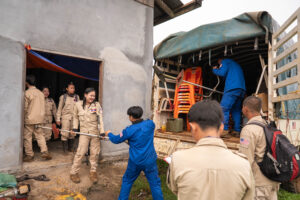
Meena Biphachanh, Operations Coordinator at NPA, says the consequences are felt most in rural communities.
“The people in Laos are still affected by UXO contamination, especially in the rural areas where UXO restricts the safe use of land and the expansion of agriculture.”
Beyond farming, unexploded ordnance continues to slow development across the country. Before schools, hospitals or roads can be built, the land must first be surveyed and cleared – a process that takes both time and money.
Despite the scale of the challenge, Meena says significant progress has been made in recent years. Since the start of its programme, NPA has destroyed more than 170,000 items of UXO and secured safe access to land for more than 590,000 people.
Preparing for the detonation
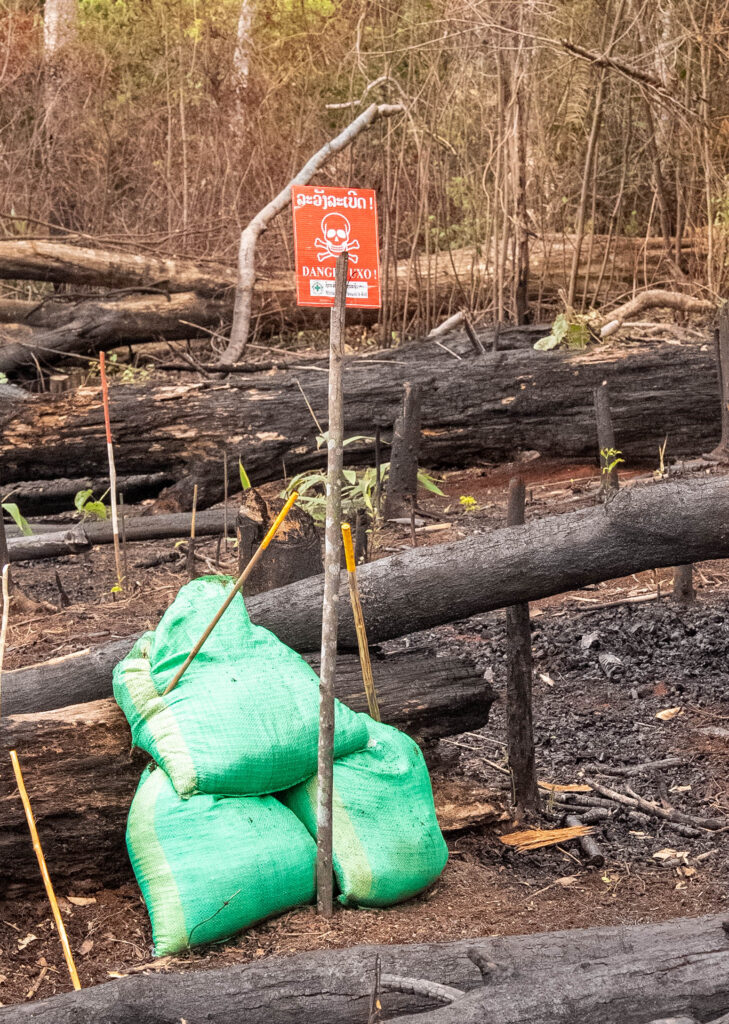
Not far from the family’s house – only a few hundred metres away – two items of unexploded ordnance (UXO) found the previous day were waiting to be destroyed.
The two explosives were marked with sandbags filled with soil and a red warning sign stuck into the ground.
Before the detonation, the team gathered for a final briefing.
Around 10 NPA staff members took part in the operation. They spread out across the surrounding area with megaphones, warning everyone nearby – including Yanika’s family – to leave the area before the detonation began.
Only after the team had confirmed that the area was clear did they return to the demolition site.
Then the countdown began.
“One, two, three… Fire!”
The explosion echoed across the coffee plantation.
And then again.
“One, two, three… Fire!”
This time, the blast was even louder.
What if another UXO is still there?
Although NPA is close to finishing the clearance of the family’s land, the 31-year-old mother still worries the danger may not be over.
“I worry that one day there will be heavy rain or a landslide, and that another UXO buried deeper underground will come to the surface.”
NPA clears land according to the national standards set by Laos’ National Regulatory Authority (NRA), using metal detectors to search the ground to the required clearance depth.
Once an area meets those standards, it can officially be declared cleared and returned to the community.
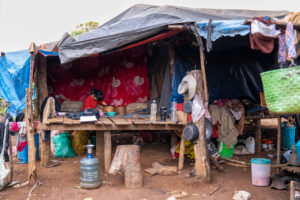
However, no clearance operation can guarantee that every explosive item buried deeper underground has been found. Yanika therefore still fears that heavy rain or landslides could expose UXO buried below the clearance depth.
For now, her greatest wish is simply to stop living in fear.
“If it were possible, I wish we had never found out there were bombs here. We just want to live a normal life without worrying about decades-old UXO.”
The fear has not completely disappeared.
“I’m afraid there is still UXO underneath the house and the farm, but I hope there is no more UXO in our land.”
The family considered moving their wooden house so NPA could search the ground beneath it. Only once the land beneath their home has also been cleared do they hope they can finally put the war behind them.





[…] Read the full article here. […]