


A powerful earthquake struck offshore near Mindanao in the southern Philippines on Monday, killing at least 35 people, injuring more than 200 and triggering a tsunami, 1News reports.
The 7.8-magnitude quake, the strongest to hit the Philippines this year, caused buildings to collapse, triggered landslides and sent waves of up to one metre onto nearby coastlines.
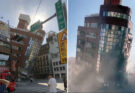
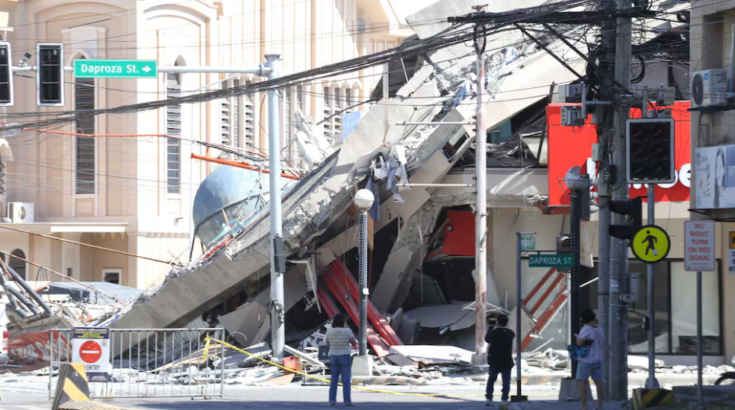
Several low-rise buildings were heavily damaged or collapsed in General Santos, one of the hardest-hit cities. Search and rescue teams continued to look for people trapped beneath the rubble, while at least four people remained missing.
The earthquake also triggered a landslide in Sarangani province, where 13 people were killed.
“Our pickup truck suddenly jerked and I thought we had a flat tire,” Rod Sosmeña, regional director of the Office of Civil Defense, told AP.
“The shaking was very strong and people dashed out of houses into the streets.”
In the town of Malita, more than 100 students had gathered for a flag-raising ceremony on the first day of school after the summer break when the earthquake struck.
“Their excitement on the first day of school turned to trauma,” school principal Rosavel Cachuela told AP.
Although some children screamed and cried in panic, no students were injured.
According to the Philippine Institute of Volcanology and Seismology, the quake struck at a depth of 33 kilometres off the coast near Sarangani province. Authorities warned residents not to return to damaged buildings because of the risk of aftershocks.
President Ferdinand Marcos Jr. ordered disaster-response agencies to mobilise immediately and cancelled classes in affected areas.
“The national government is moving and we will not leave Mindanao behind,” Marcos said.
The quake generated tsunami waves of up to one metre along parts of the southern Philippine coastline. Smaller waves were also detected in Indonesia, Palau and Japan before the threat gradually subsided.
The Philippines sits on the Pacific Ring of Fire, one of the world’s most active seismic zones. Earthquakes and volcanic eruptions are common, while the country is also regularly hit by typhoons and tropical storms.
Most of the victims were killed when buildings collapsed or were struck by falling debris in the provinces of Sarangani, South Cotabato and Davao Occidental. Authorities said the death toll could rise as rescue workers continued searching damaged buildings.