



For Danish companies operating in China, sustainability has become a balancing act between two regulatory systems that do not always align.
On one side are stricter EU and Danish ESG requirements, forcing companies to document climate impact, labour conditions and supply chains across global operations. On the other is China, where ESG rules are evolving but remain fragmented and unevenly applied. The result is a growing compliance gap that Danish companies must navigate in practice.
Under EU rules, ESG obligations apply regardless of where production takes place. This means Danish headquarters often require detailed data from local operations in China. Yet China does not operate with a single, unified ESG framework, and access to reliable data can vary widely by sector and region.
Rules don’t match
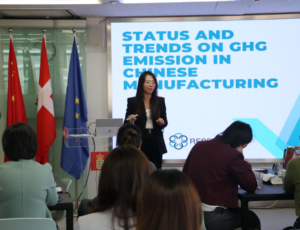
These challenges were recently discussed at a meeting of the Danish ESG Network in Shanghai, where Danish companies described growing pressure on local teams to meet European reporting standards in a very different regulatory environment.
While China continues to offer strong business opportunities, participants noted that sustainability and compliance risks vary widely across sectors and supply chains. This increases costs, raises supply-chain risk and exposes companies to greater reputational pressure, as investors and partners pay closer attention to how global standards are applied locally.
According to Anne Hougaard Jensen from the Danish Ministry of Foreign Affairs, stronger partnerships and closer coordination between headquarters and local operations are becoming essential. Danish companies are therefore strengthening local expertise, tightening internal reporting standards and improving supply-chain mapping to better align European requirements with Chinese realities.
As ESG expectations continue to rise on both sides, companies that combine global standards with strong local execution are better positioned to manage risk and remain competitive in the Chinese market.