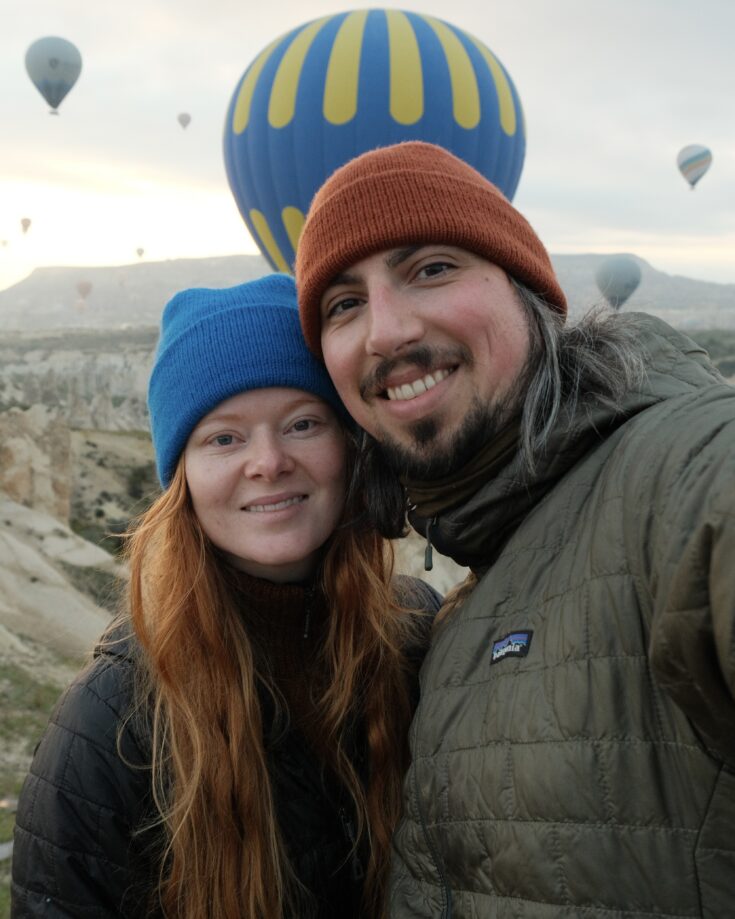



Now they have driven 40.000 kilometers, bought 27 SIM cards, wasted 40 hours at border crossings and seen 8 cultural shows.
But back in mid-April 2025, when the Danish couple Anne Linde and David Powonzka sat down in their Toyota Land Cruiser 100 on Frederiksberg, they looked at each other and laughed nervously.
“Shit, now we’re really doing it.”
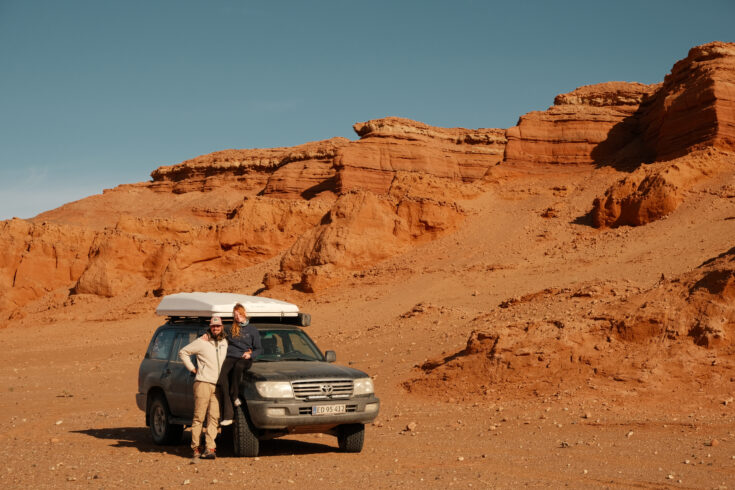
The moment marked the beginning of Expedition East: a self-planned overland journey from Denmark to Thailand. For Anne, 32, and David, 35, it was not just a long drive. The couple had been together for almost seven years, but they had never travelled together for more than three weeks at a time. The journey would therefore be a test of a lifestyle they had only explored in fragments before — and of a relationship pushed far beyond anything they had tried together.
Friends and family had asked the obvious question before they left: Would they really be able to stand each other for that long?
Leaving Denmark behind
Anne works as a web developer, while David is a procurement manager. Both enjoy their jobs, and both were grateful that taking leave was an option.
“It mattered a lot to us that we didn’t have to quit,” David says. “Knowing we have jobs and an income waiting when we get back makes a big difference.”
They were granted leave from 1 April 2025 until the end of the year. With time secured, they bought a Toyota Land Cruiser 100 specifically for the journey and spent months preparing — watching YouTube videos, following experienced travelers online and attending a talk in Copenhagen by a couple who had travelled in a similar way.
Before committing fully, they tested themselves with shorter trips. They drove around Iceland in 2020, explored Norway by car and took road trips to Bosnia and Croatia. Enough to spark a dream — but not enough to remove the sense of risk.
“It still felt like a big gamble to take such a long leave and commit fully,” David says. “What if we wanted to stop halfway through?”
Europe to the edge of the familiar
The route took shape: Denmark, Germany, Austria, Slovenia, Croatia, Serbia, Bulgaria, Turkey, Georgia, Armenia, Russia, Kazakhstan, Uzbekistan, Tajikistan, Kyrgyzstan, Mongolia, China, Laos — and finally Thailand.
Much of Europe felt familiar. It was only after Turkey that the journey truly began to feel different.
“From there on, everything changed,” Anne says.
Landscapes, languages and daily routines shifted. The tempo increased. Days became defined by driving, navigating, exploring sights and finding places to sleep.
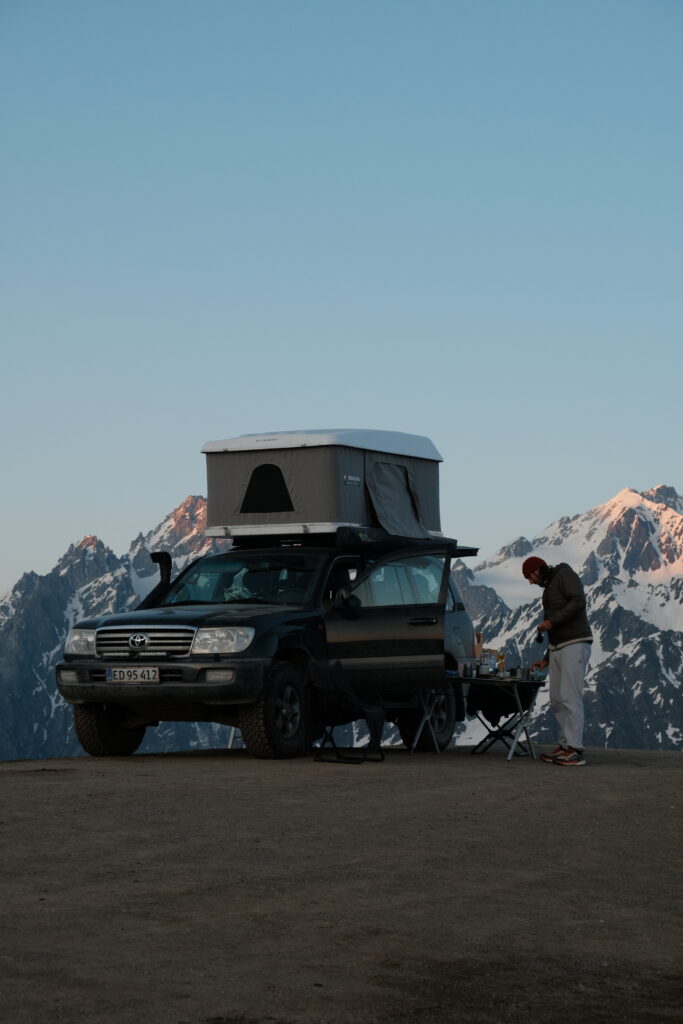
They quickly settled into the rhythm of overland travel. Many nights were spent in a tent mounted on the roof of the car, often far from any settlement.
Anne and David describe themselves as nature lovers, happiest parked somewhere remote with nothing but silence around them.
Life on the road
As the journey moved deeper into remote landscapes, life on the road took on new realities. Distance brought constant questions: Where is the next petrol station? Where do we buy food? What do we do if there is no mobile signal — or no toilet?
Their solutions were methodical: a satellite phone, an extra jerry can of fuel, canned tomatoes, pasta, rice, eggs, freeze-dried meals and a capacity for 40 liters of water.
“There’s always a way to solve things,” David says.
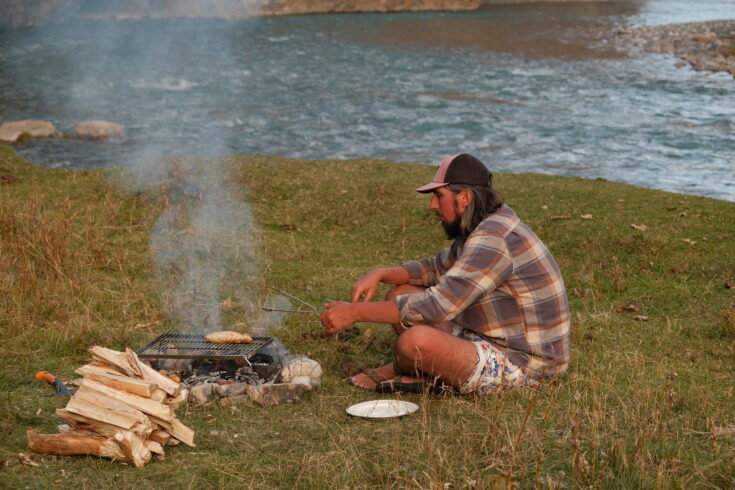
At the same time, they learned that overland travel was not only about isolation.
“We also love good coffee, great food and museums,” David says. “And everything cities can offer.”
The contrast between remote landscapes and urban life became part of the appeal.
Finding a community on wheels
Somewhere along the way, another aspect of the journey emerged: community.
Along the route, Anne and David repeatedly encountered other overlanders — often European — travelling in similar vehicles with similar goals.
“When we see overlanders in remote places, we go straight over and talk to them,” David says. “It’s always fun to hear about other people’s journeys and exchange advice. It really feels like a small community.”
Sometimes they would drive together for a while, agree to meet at the same place for the night, cook dinner together and share stories.
“It’s been really cozy,” Anne says. “There’s a whole lifestyle around travelling like this.”
Rules, limits and deadlines
Despite the freedom, they imposed structure on the journey. They rarely stayed more than one night in the same place. They also made a rule: no more than three weeks in any single country.
The reason was China. Entry dates were fixed and missing them would have derailed the entire journey.
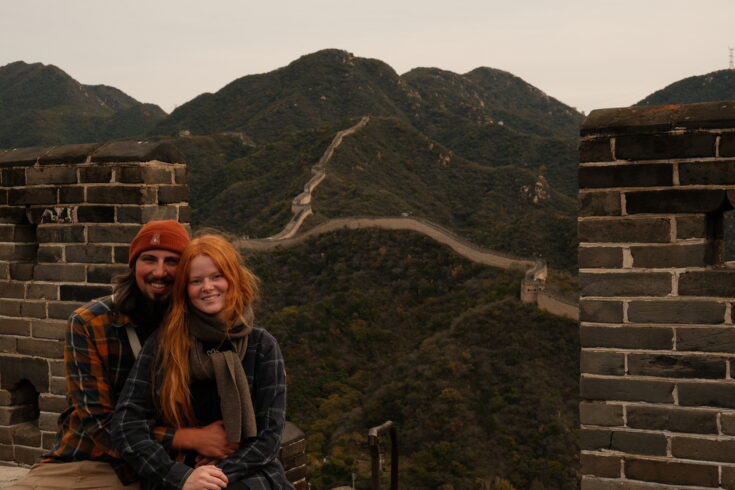
“In some places, locals told us, ‘You really have to see this,’” Anne says. “And we wanted to stay. But we also had to limit ourselves. Otherwise, we would never make it home.”
Russia and Laos were limited to just six days each, yet both left a strong impression. Kazakhstan and Mongolia, however, delivered the biggest positive surprises, particularly in terms of nature.
“They’re absolutely worth coming back to,” they both say.
A tense border crossing
Midway through the journey, the biggest moment of uncertainty arrived.
Given the current political situation in Russia, it was not a country they particularly looked forward to travel through, but it was unavoidable if they were to continue east.
At a military checkpoint, they spent five hours convinced they might end up in prison.
Shortly after a drone-related incident in Denmark had made headlines, a Russian border officer found a drone in their car — brought along to film their travels. Questions followed. Many of them.
“They asked if we had any connection to the Danish military, or if we were from the military ourselves,” Anne recalls.
In Russian eyes, the drone made them a potential threat.
When they were finally allowed to continue, the relief was overwhelming.
“We were incredibly relieved when they let us go,” Anne says.
Long roads, small challenges — and the finish line
As the journey continued east, the challenges remained mostly practical. In Ulaanbaatar, Mongolia’s capital, it once took two hours to drive just four kilometers because of chaotic traffic. In Laos, the car needed to be repaired, which became a challenge, and in several countries the roads proved difficult and unpredictable.
Their longest driving days stretched to 14 or 15 hours.
“The unexpected keeps you awake,” David says. “Maybe an animal jumps onto the road. Anything can happen out here.”
Despite everything, breakdowns were few. They received exactly one parking fine during the entire journey.
“That’s not too bad,” David laughs.
After China came Laos, and from there Thailand. Driving in Thailand brought one final novelty.
“Driving on the left side for the first time was nerve-racking,” David says.

Arriving overland in Bangkok felt both intense and rewarding after months of open landscapes and long drives. Bangkok was the finish line of the overland journey.
From there, the journey shifted pace. After completing the expedition, Anne and David spent a week in Bangkok before travelling on for a beach holiday on Koh Samui with Anne’s family — a clear transition from expedition to rest.
“It feels like the perfect full stop,” Anne says.
The car was shipped back to Denmark by cargo ship. They simply did not have time to drive it home before returning to work after the New Year.
Looking ahead
Along the way, they missed friends and family — and, more than anything, Danish rye bread.
“Exploring cultures and local foods was a big part of the adventure, but sometimes you miss the familiar things like bread and cheese,” Anne says. “In Central Asia especially, it can be a struggle to find breakfast that feels even remotely Danish.”
There are things you miss on a journey like this: friends getting married, friends having children, everyday life back home. But there is also a strong sense of gratitude.
A dream has been fulfilled.
“We’ll enjoy Thailand and the warmth,” David says. “And then we’ll go home, hug our families and friends, eat good food — and a lot of rye bread.”
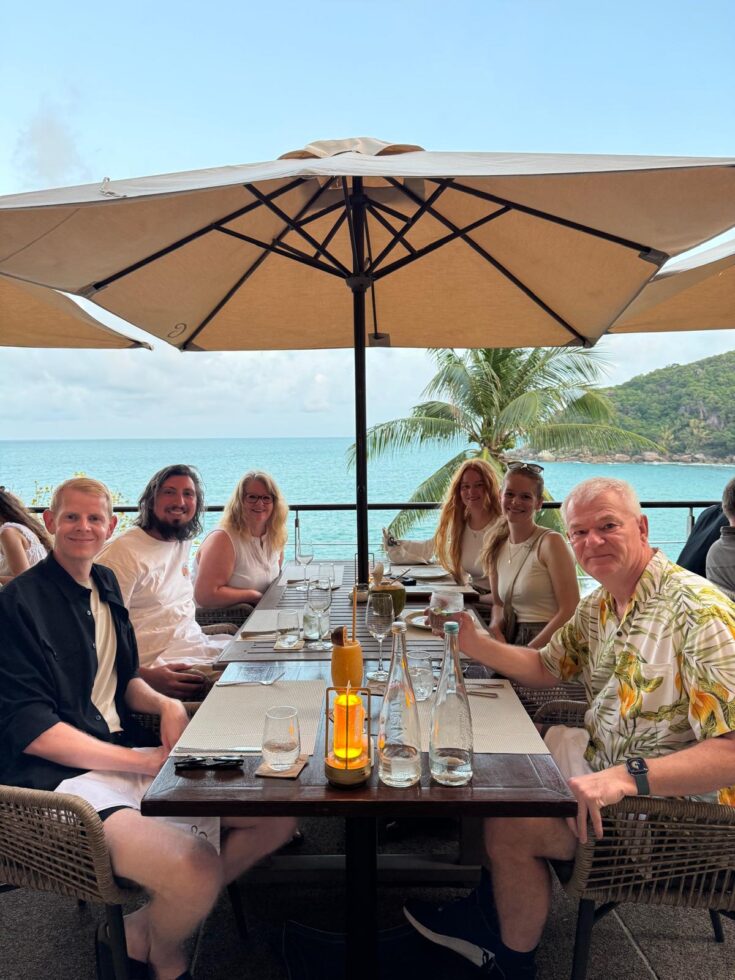
They already know one thing: this will not be their last overland journey.
“I decided this one,” David says with a grin. “So next time it’s Anne’s turn.”
Anne does not hesitate. Alaska to Argentina. Australia. Africa.
Where and when remains unknown. But the road, they have learned, is not just a way to get somewhere. It is a way of living — one they now know suits them very well.