



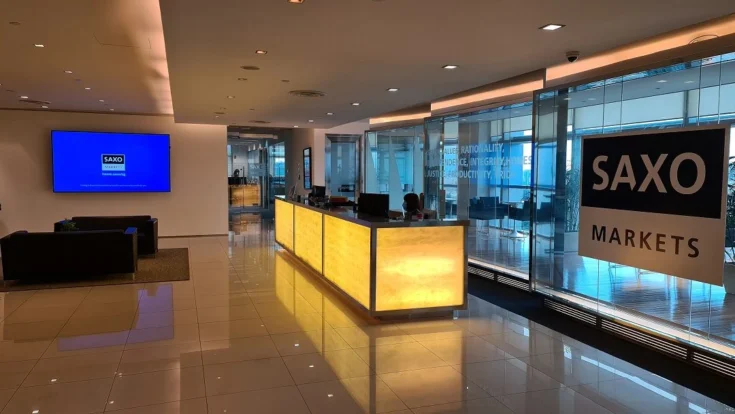
The Danish founded Saxo Bank’s Singapore operations have seen a major boost in 2024, with the firm reporting that assets managed through its External Asset Manager (EAM) segment have doubled over the past year. The milestone comes amid broader momentum in Saxo’s institutional business, which continues to expand its footprint across Asia.
According to recent statements from the company, roughly 25% of Saxo Singapore’s institutional revenues now stem from its wealth management segment, which includes EAMs and family offices. Founded in Denmark, Saxo Bank continues to position itself as a key Nordic player in Asia’s evolving wealth management landscape.
The bank’s regional manager for institutional business, Ivan Chang, highlighted the importance of Saxo’s open-architecture platform and its technology-driven solutions in attracting independent asset managers.
“We’ve seen increasing engagement from EAMs who are looking for scalable, cost-efficient solutions that still offer breadth and depth in terms of investment access,” Chang told WealthBriefingAsia.
Saxo’s appeal among EAMs is further supported by its ability to offer a fully digital onboarding process, integrated client reporting, and access to global markets from a single account – features that resonate strongly with asset managers serving sophisticated private clients.
The positive trend in Singapore aligns with Saxo Bank’s global financial performance. In 2024, the bank reported an adjusted net profit of DKK 1.074 billion (approx. USD 160 million), up from DKK 653 million the previous year. Total client assets rose to DKK 853 billion, up from DKK 745 billion.
While the specific dollar value of the EAM asset growth in Singapore was not disclosed, the doubling of assets under management is being seen as a strong vote of confidence in Saxo’s strategy of combining fintech efficiency with a broad, client-centric offering.
The growth in the EAM segment reflects a wider trend across Asia, where independent wealth advisers are increasingly turning to platform-based solutions to support their clients, particularly in markets like Singapore, Hong Kong, and the broader ASEAN region.