




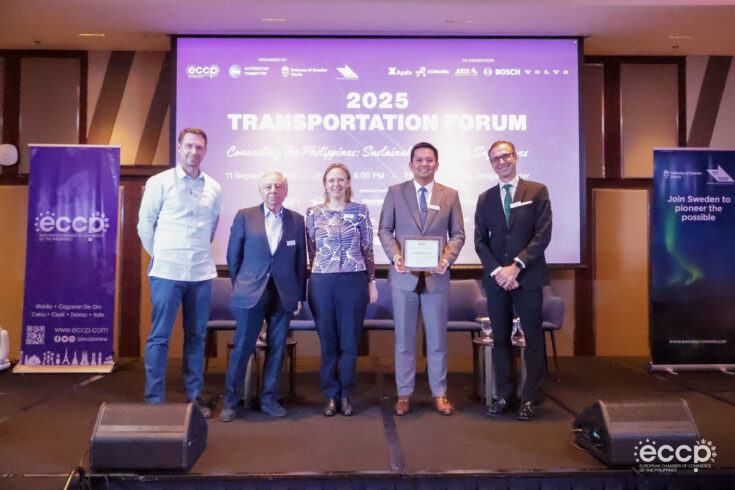
As the Philippines and the broader Asia-Pacific region intensify efforts to modernize transport systems and improve road safety, Sweden reaffirmed its commitment to supporting smart, safe, and sustainable mobility. Team Sweden in the Philippines — comprising the Embassy of Sweden, Business Sweden, and Swedish private sector shared Sweden’s experience during two high-level events the Asia-Pacific Regional Road Safety Conference (APRSC) hosted by the Asian Development Bank (ADB) from 9 to 11 September, and the 2025 Transportation Forum co-organized with European Chambers of Commerce in the Philippines on 11 September.
Road Safety and Vision Zero

Held at ADB headquarters, the Asia-Pacific Regional Road Safety Conference (APRSC) brought together ministers from throughout the region, development banks, and road safety experts to advance the Second Decade of Action for Road Safety (2021–2030). Transport ministers and officials from the Philippines, Bangladesh, Bhutan, Cambodia, Fiji, Samoa, and Papua New Guinea participated in the APRSC to highlight the need to strengthen financing and investment for road safety in Asia and the Pacific.
H.E. Anna Ferry, Ambassador of Sweden to the Philippines, shared the country’s experience with Vision Zero, a policy framework that has halved road fatalities in Sweden since its adoption in 1997.
“All lives matter. The goal of Vision Zero is to have zero fatalities or seriously injured from road accidents. Vision Zero is not just a transport policy, it’s a shared responsibility across sectors. Road safety is embedded in health, urban development, education including behavioral change, and enforcement frameworks. That systemic approach is crucial for diminishing the staggering number of fatalities and injured ,” Ambassador Ferry said during the panel.
She also cited Sweden’s support for the EDSA Busway Project and ongoing collaboration with the Philippine government through Swedfund, including studies to improve bus standards and reduce CO₂-emissions.
United Nations Secretary General’s Special Envoy for Road Safety Jean Henri Todt, also participated in the event, reminding the audience of the staggering figures that every year more than a million people in the world are killed from road crashes and millions more are injured. Road traffic deaths are also the leading cause of death for young people aged 15-29. Beyond human suffering, road traffic deaths and injuries impose significant economic and financial losses to societies.
In August 2020, the UN General Assembly adopted resolution 74/299 “Improving global road safety”, proclaiming the Decade of Action for Road Safety 2021-2030, with the ambitious target of preventing at least 50 per cent of road traffic deaths and injuries by 2030.
Innovating for Smart and Safe Mobility
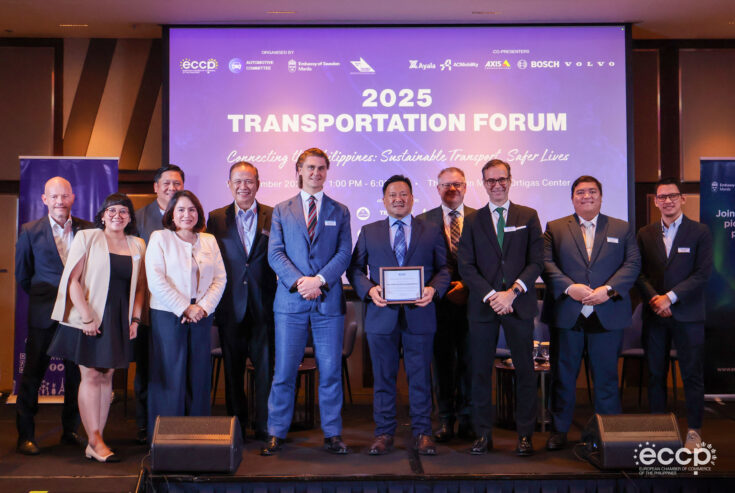
The European Chamber of Commerce of the Philippines (ECCP) and Team Sweden co-organized the 2025 Transportation Forum focused on the theme “Connecting the Philippines: Sustainable Transport, Safer Lives.”
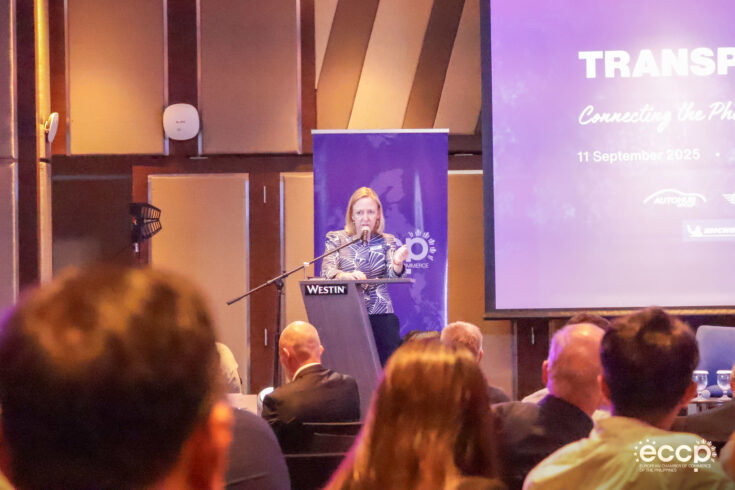
Ambassador Anna Ferry delivered the opening remarks and later joined as a resource speaker. Trade Commissioner Johan Lennefalk led the first panel discussion, “From Planning to Pavement: Ensuring Safer Roads Through Strategic Infrastructure Development.” Swedish companies such as Volvo Bus and Axis Communications showcased innovations in smart mobility and data-driven safety.
Volvo Buses is a leader in bringing the bus rapid transit (BRT) system to congested cities. Mats Nilsson, Vice President of Volvo Buses Asia Pacific Region, emphasized that smart mass transportation systems are key to reducing emissions, noise, and accidents in urban areas.
Meanwhile, Engr. Chris Flores of Axis Communications discussed how artificial intelligence and video surveillance data enhance operational efficiency and passenger safety in public transport.
Sweden’s participation reflected its support for national priorities, including grants for BRT systems in EDSA and Iloilo, and its broader contributions to rail development and sustainable urban transport.
“Critical for our success in road safety is a holistic approach in society; not only new tech and improved infrastructure, but also access to public transportation and emergency care, as well as behavior change and rule of law,” said Ambassador Ferry.
Working Jointly with Philippine Stakeholders
The Department of Transportation (DOTr) commended the initiatives by Team Sweden which are aligned with the Philippines’ National Transport Policy and Road Safety Action Plan. These efforts reflect a shared commitment to advancing safe, smart, and sustainable transportation systems across the Philippines.
Mark Steven Pastor, DOTr Undersecretary for Road Transport and Infrastructure, outlined key initiatives including the expansion of the EDSA BRT system, installation of bike lanes to support active transport, and development of a new integrated exchange terminal. Assistant Secretary for Railways Eduardo Danilo Macabulos provided updates on major rail projects such as the Subic-Clark-Manila-Batangas (SCMB) Railway, MRT Line 4, PNR South Long Haul, and the Mindanao Railway.
Undersecretary for Road Transport and Non-Infrastructure Ramon Reyes emphasized the role of policy and regulation in improving driver and vehicle registration systems to enhance road safety. He also reaffirmed the Department’s commitment to building an organized, efficient, and responsive public transport network.
Director Patrick Aquino, CESO III, of the DOE’s Energy Utilization Management Bureau, highlighted the accelerating adoption of electric vehicles (EVs) as part of the Philippines’ shift toward sustainable mobility. He discussed the challenges and opportunities in expanding EV infrastructure—particularly charging stations and maintenance facilities—through private sector collaboration. These efforts align with the Electric Vehicle Industry Development Act (EVIDA), which seeks to bolster energy security by reducing reliance on imported fuels.
Closing the 2025 Transportation Forum, Senator Joseph Victor “JV” Ejercito advocated for the importance of advancing safe and efficient public transportation systems and called for sustained collaboration between European development partners and Philippine stakeholders.
A Unified Commitment to Smarter, Safer, and More Sustainable Transportation Systems
The back-to-back events marked a significant milestone in Philippines-Sweden collaboration, reinforcing Sweden’s role as a strategic partner in advancing road safety, sustainable transport, and climate action. From national initiatives in the Philippines to regional dialogues at ADB, Sweden continues to champion inclusive, data-driven, and resilient mobility systems.
Related posts:
 Asian Development Bank and its international partners launch new program to fight climate change
 Swedish delegation visits Tetra Pak Philippines to discuss sustainable packaging
 Swedish Embassy in the Philippines to host Transportation Forum on sustainable mobility
 Sweden commits SEK 258 million to Asian Development Fund
