



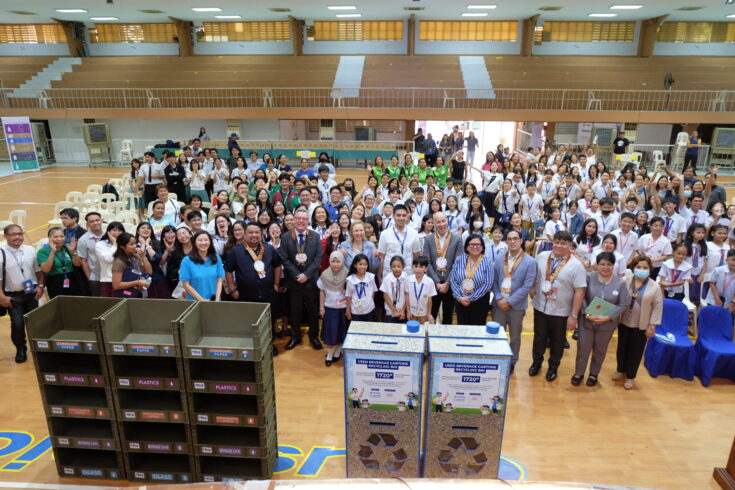
The Nordic Embassies in Manila and Tetra Pak Philippines launched on Tuesday 30 September 2025 the “Cartons for Communities and Nordic Waste Classification System” program in elementary and high schools in Pasig City. This initiative aims to engage with youth, encouraging them to learn and lead in circular economy solutions.
As local government units (LGUs) endeavor to manage post-consumer waste, including food and beverage packaging, companies are stepping up their efforts. Tetra Pak, a Swedish packaging solutions company, is one of them.
Through its Cartons for Communities platform, Tetra Pak partners with schools, private communities, and LGUs to promote the segregation of Used Beverage Cartons (UBCs) for recycling, while also supporting their collection through local solid waste management systems. These used beverage cartons are recycled into boards that can be converted into useful everyday items such as chairs and tables.
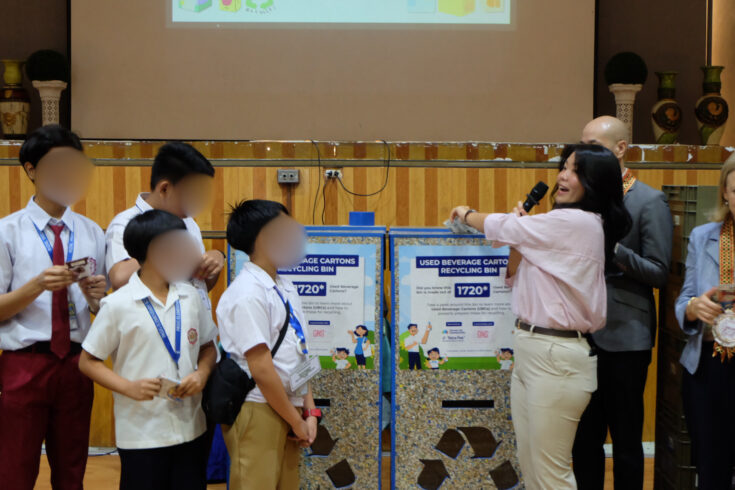
Pinagbuhatan Elementary School, Pasig Elementary School, Eusebio High School, Pasig Science High School, and Rizal High School will take part in the pilot program under Cartons for Communities. Each school will receive collection bins made from recycled UBCs, where students can deposit rinsed and flattened cartons for recycling. Participating schools will also join an interschool competition to win prizes for the highest volume collected, with students earning incentives for their contributions.
During the launch event, students and teachers learned the science behind Tetra Pak’s food and beverage packaging, as well as the complete recycling processes. These cartons are made of 70% paperboard, 25% plastic, and 5% aluminium and are recyclable.
The city government’s Solid Waste Management Office also launched the local adoption of the Danish waste classification system, following a study visit of representatives of Pasig City to Denmark and Sweden. To be piloted in schools in Pasig City, the classification system aims to incentivize the proper segregation of major waste fractions suitable for upcycling such as plastic and glass bottles, aluminum cans, and paper and cardboard.
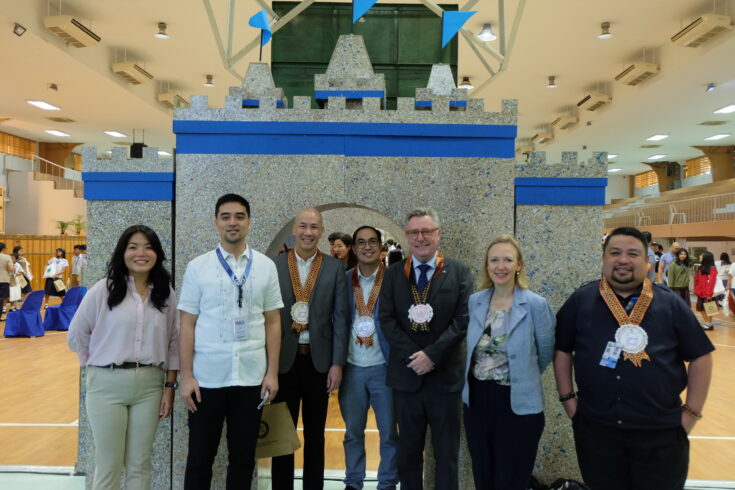
Pasig Mayor Vico Sotto addressed the students and discussed why trash must be kept off the streets — to prevent clogging sewage and drainage systems and therefore help minimize incidents of flooding in the city’s alleyways and inner roads. He noted that while the local government plays a big role in keeping the city clean, citizens also play an important role in this goal, starting with schools and children.
In Sweden, kids learn about waste segregation and recycling at an early age at home, shares H.E. Anna Ferry, Ambassador of Sweden to the Philippines. “This continues in preschool and grade school, where they are taught about the deposit return system for cans and bottles or panta in Swedish. This project with Tetra Pak is similar to this, and a great start to learn about the circular economy model,” she explains.
Albert del Fonso, Packaging Portfolio Director and Site Manager at Tetra Pak Philippines, noted, “At Tetra Pak, we believe that empowering the next generation is key to building a more sustainable future. Through the Cartons for Communities program, we are proud to work alongside the Nordic Embassies and Pasig City to help students become champions of the circular economy. By learning how to recycle and upcycle used beverage cartons, these young leaders are not only protecting the environment—they’re shaping a culture of sustainability in their schools and communities.”
Also supporting the event was Danish retail company Flying Tiger Copenhagen which has also taken a more sustainable and circular approach in its design, production, and packaging processes and has established several stores across the Philippines.
The Cartons for Communities and Nordic Waste Classification project with Pasig City is supported by the Nordic Initiative on Circular Economy. The Nordic region, represented by the Danish, Finnish, Norwegian, and Swedish Embassies in Manila, is home to the most innovative circular economy solutions. In 2024, the Embassies signed a Memorandum of Understanding with Pasig City to support the local government’s transition to a circular economy. In April to May this year, representatives from the city government also participated in a study visit to Denmark and Sweden for benchmarking best practices on circular economy.