


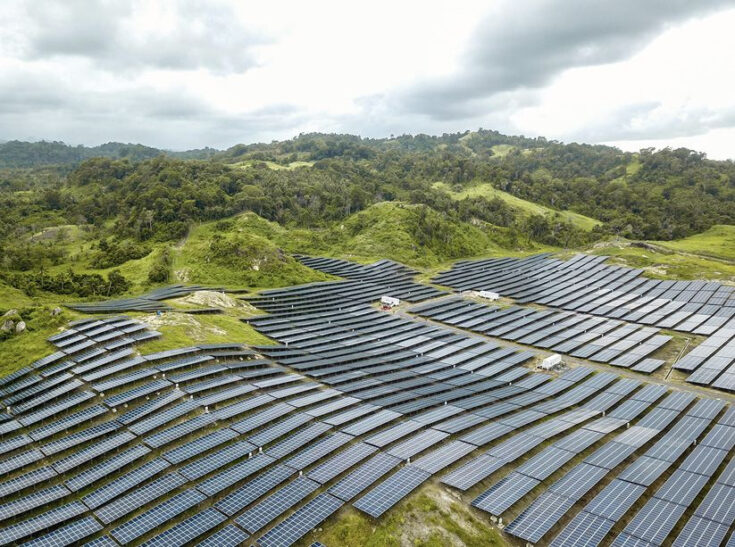
A Danish-Indonesian research group says Indonesia needs updated grid code standards to integrate higher shares of renewable energy and support its solar expansion, according to a report published 7 January 2026.
The study’s lead author, Majid Ali, said outdated or weak grid codes are a major bottleneck for renewable deployment. He added that wider changes are also needed, including grid investment, regulatory reform, financing, and stronger institutions.
Researchers assessed technical requirements for integrating large volumes of renewable generation at the distribution level. They compared Indonesia’s planned grid code with existing standards, including those used in Denmark and those developed by the Institute of Electrical and Electronics Engineers (IEEE).
The proposed framework includes reactive power compensation and harmonic analysis to assess grid hosting capacity and maintain system reliability. It also includes an information and communication technology framework for real-time monitoring, plus low-voltage and high-voltage ride-through requirements to keep renewable generation running during short disturbances.
Indonesia’s National Energy Policy aims to reach up to 108.7 GW of solar capacity by 2060, the article said. It added that Indonesia’s cumulative installed solar capacity surpassed 700 MW in August 2024.