




Its ‘Micro housing’ is making inroads in Oceanian countries
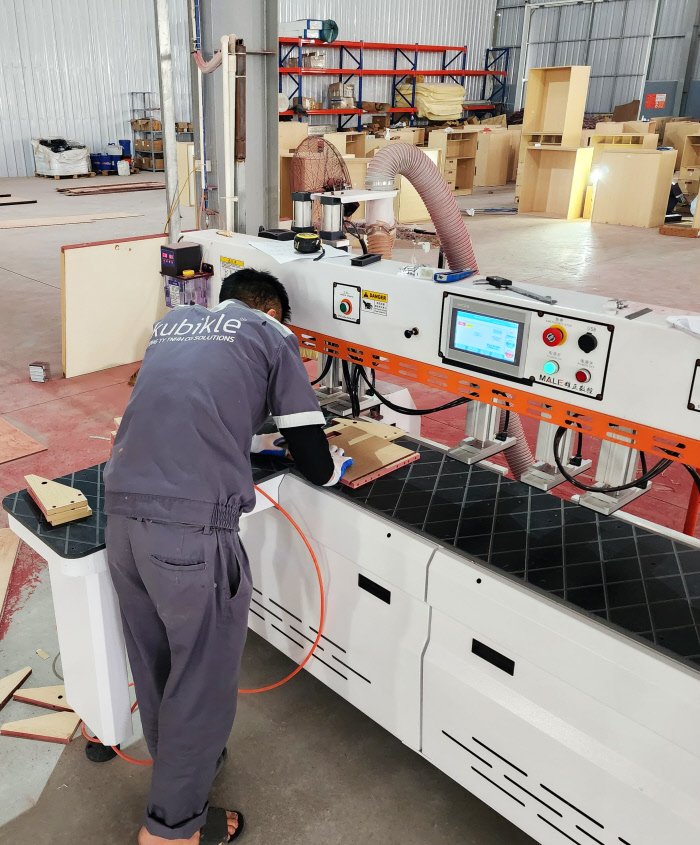
Despite all the hardships, many new businesses and ideas could be brought to fruition as a result of Covid-19. Kubikle, a firm at the forefront of creating cutting-edge modular accommodation, is testament to this. Plenty of business disruption meant many that people suddenly had a lot of – unexpected – time on their hands. In the case of Kubikle’s Danish CEO Knud Clausen he found himself in Vietnam, having previously operated a business from China that provided shop interiors as well as built big hardware stores in Oceania countries and the Middle East. He ended up having some skilled architects, craftsmen, and production specialists without tasks when business went quiet. Knud then initiated R&D and development of what has resulted in a new, unique modular housing solution based on functionality but to also offer “adaptable and future-ready spaces.”
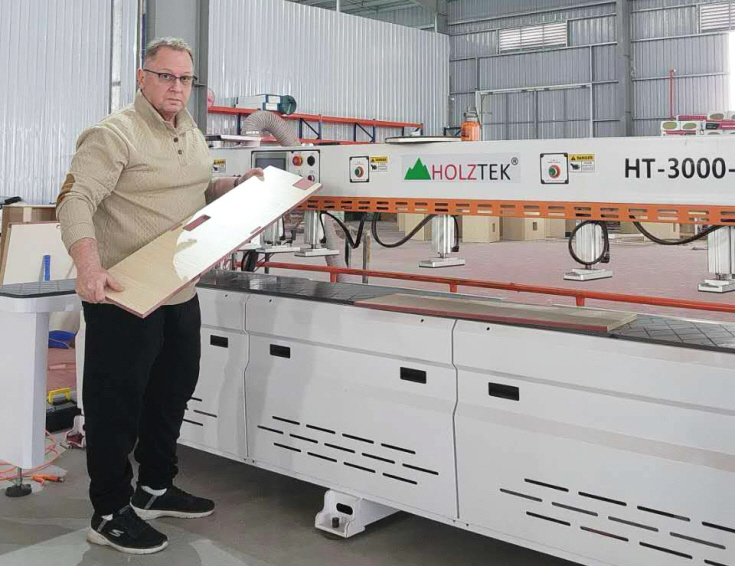
His solution fits within the ‘Modular room system market’ – an industry within property and housing that incorporates by now well-known concepts (but for Knud new business segments) such as sleep and meeting pods, and prefab housing.
And here Kubikle has not merely entered an established market but is positioning itself as a prototyping player out to revolutionise living and working environments through innovative accommodation products and services. Already, what Knud calls ‘Micro housing’ has found its market within student accommodation, in Australia including the needs among 650 000 international students looking for a place to stay! So initially he is now delivering orders from clients there (and with keen interest from potential customers on other markets).
In 2H of 2024 Kubikle also expanded its production capacity with a significantly larger, 3,500 m² state-of-the-art factory outside Hanoi to allow for handling projects of any scale.
Unparalleled, modular housing concepts with ‘Micro’ accommodation
Having studied the various market segments in detail, Kubikle has decided to concentrate on accommodation (especially long stay guests and employee lodging) and student housing.
These niche segments keep evolving based on market changes and new customer needs, such as the growing group of digital nomads and the growing need for – and in many places significant lack of – budget-friendly living options. The modular room system market is also propelled by technological advancements.
“I found out that the office pod market was very crowded and saturated with local products, whereas student accommodation is a much more lucrative and untapped segment,” Knud comments on these focus areas for his innovative concept that is both designed and manufactured in-house.
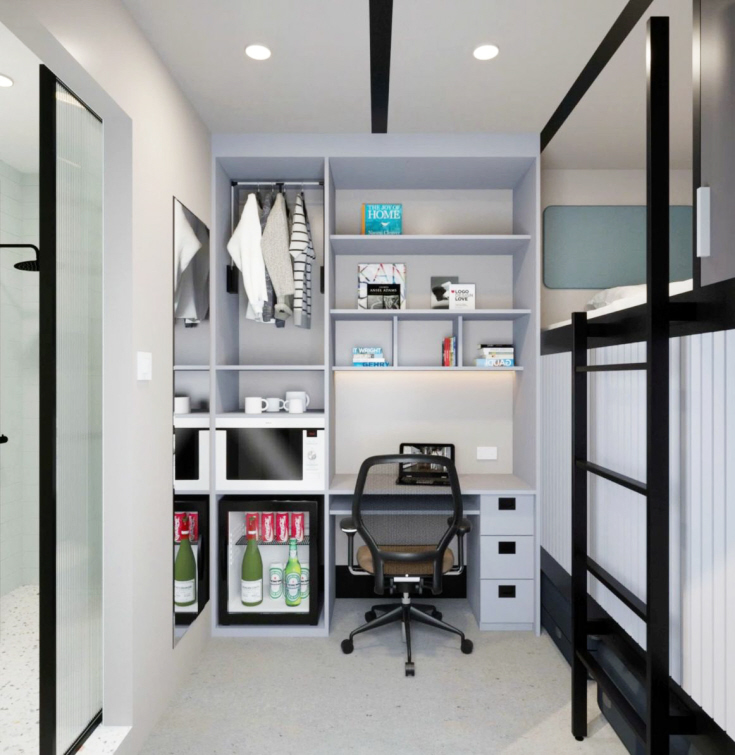
“We have developed the Japanese style sleep pods further into what we call ‘Mikro’ rooms, and there we are unique – since it doesn’t really exist anywhere else,” Knud mentions as benchmarking. “So, for student accommodation, it’s about literally being able to give people a private space – not a dormitory – but with a footprint of less than 6 square metres.”
This compact living micro-room innovation is meticulously crafted featuring all essential amenities – that can include a refrigerator, safe, TV, wardrobe, a fold-up desk, a pull-down clothes rack, and more – everything one needs within a small, compact space. Ensuring optimal functionality and comfort are key. These modules come fully prepared and boast full insulation, pre-wiring and soundproofing features, and where an ensuite bathroom (‘Kube’) can be added. Among the materials, Danish Rockwool stone wool insulation is used, which is both fireproof and relatively soundproof.
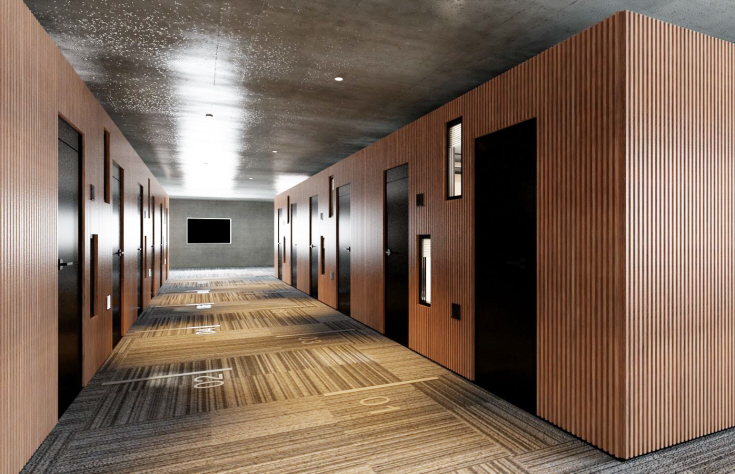
“One configuration is basically like a set of bunk beds, where the top bunk goes out one side and the bottom bunk out the other way. So, each bed belongs to a separate room, and that can vary in size depending on whether it’s premium or not. And they get to share common areas like co-working spaces, office pods, kitchen, gym and rooftop venue with outdoor seating. So that’s the upselling. We’re basically like a one-stop-solution except for the building itself,” explains the Dane.
“We sell a turnkey solution – that’s the whole aim; to fit everything – kitchen, bathrooms etc. –delivered from the factory.”
Assembly-wise it is based on an intricate system developed inhouse by Kubikle. Knud says that the flexibility of their system allows for unparallelled customisation such as flexible combinations, adapting to spatial circumstances or fulfilling customers’ design requests.
Personalisation and branded design can also be accommodated with basically endless possibilities: It can, for instance be customised with various finishes for the wall panels or adding a unique skin (made through UV printing technology).
Quick to build/assemble, yet qualitative
Quality is also in focus for Kubikle’s competitive edge: “We’re not going for the cheap end of the market; we’re aiming for high quality. Actually, around 50 % of the materials used come from China, as they cannot be sourced in Vietnam.”
Other than that, Knud underlines the importance of the cost-savings achieved from having the production in Vietnam, which results in significantly lower construction costs (a usual advantage with prefab).
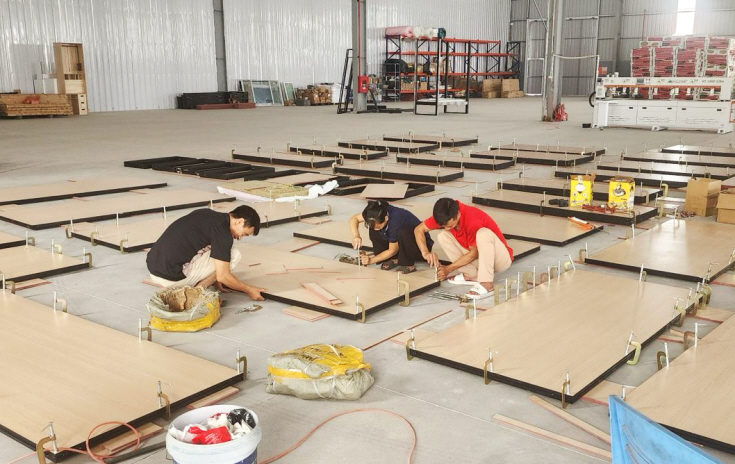
“You’re more effective when you build it completely in the factory, where Vietnam of course is a big advantage with its much lower labour cost compared to Australia. It’s extremely quick to build; we can do a complete double room with wiring and everything in 3-4 hours, so basically you are shifting the labour content to Vietnam.”
For larger orders Kubikle sends a technician to guide and teach the tradesmen the assembly work for a few days – tasks that professionals will pick up fast.
Compliance is also demanding concerning housing, with Australia and New Zealand being among the strictest, where Kubikle is now approved, and, for instance, uses specifically approved MDF fibreboard. Expanding to other markets therefore also takes time and will therefore be dealt with one country at a time, informs Knud.
Bridging the gap
As for the relatively small private area, in Australia regional students from China, India and Sri Lanka are jumping at the offer for micro housing: “Asians wanting to pay less are willing to accept less living space. Later, when it becomes acceptable, I think local students will start looking at it as well because of the price difference.”
In a country like Australia where property is very expensive and accommodation in high demand, this kind of modular housing can actually contribute to solve the challenges with urbanisation and the increasing need for ‘smart cities’
“There is definitely a need for an entirely new type of housing and to get enough of it provided in close vicinity of public transportation,” agrees Knud. “And they struggle to come up with a solution for affordable homes; hence I can see a gap in that part of the market.”
“What we’ve developed so far is basically micro housing – or ‘tiny homes.’ We also have an Australian customer looking at this for normal housing needs; for beach resorts and also for retail stores. With the projects so far, we are literally only at the starting point.”
Elsewhere, hospitality operators – as with a case in Singapore – are looking at bridging the gap between the quality and the privacy of a boutique hotel versus the hostel affordability, and where ‘Mikro’ rooms could be the game changer.
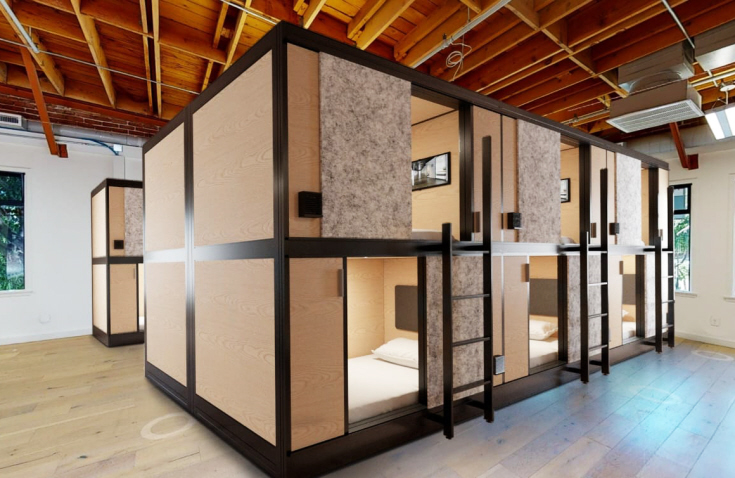
One project is for ‘digital nomad’ accommodation and with better quality than a dormitory. “That’s a segment where there really seems to be growth potential – especially in Asia. There are many sleeping pod lodges around and we’re on high end quality-wise compared to some of them. But people are willing to pay for that, and what seems to be key for digital nomads is to be able to have a community around them; having such spaces rather than staying isolated in a standard hotel room, even one at budget price. Therefore, the potential market is there even in countries like Thailand, where you think you could get some cheap accommodation, but where the social aspect is lacking.”
With its Kabin and Mikro rooms, Kubikle is a first-mover, having come up with a module system that has been extremely complex to develop. This gives an obvious market advantage as markets and segments are being approached.
Being first to market is always a good thing, and I think that even though there will be copies down the road you still have a future, looking at for example the continued sales within the office pod market.”

[…] CLICK HERE to read the entire ScandAsia article […]