


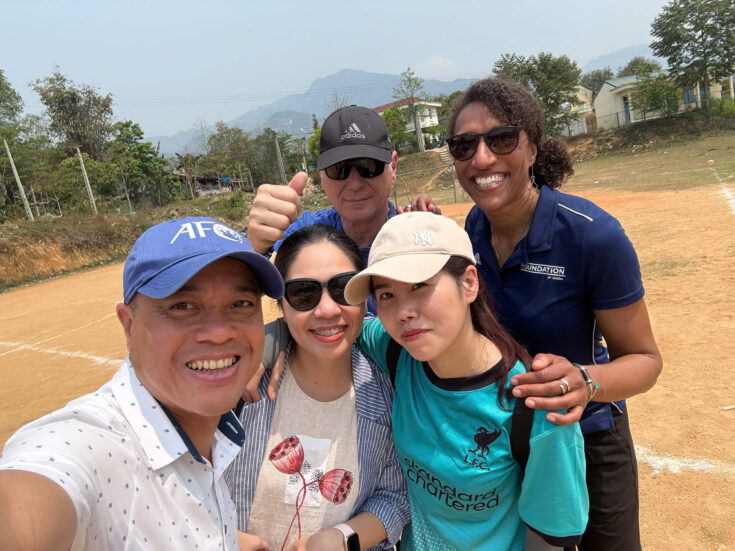
Nguyen Hoang Phuong grew up playing football with his friends. Growing up in a rural part of Vietnam, he and his friends didn’t have access to fancy equipment, so they had to get creative: unripe grapefruits, air-stuffed pig bladders or rolled-up banana leaves would serve as a ball. For Phuong, resources mattered less than simply being able to play.
“Football is simple. All you need is something to kick and friends to play with. To us it was more about teamwork, socialising and the fun of playing,” he says.
Today Phuong works as Director of Football For All In Vietnam (FFAV). FFAV is an initiative by the Football Association of Norway (NFF) in cooperation with the Vietnam Football Federation. With Norwegian government support, FFAV works to bring football to marginalised, rural and impoverished communities.
FFAV was initiated in 1997 and the first pilot project launched in 2001 in Hanoi. The goal was to empower children through football, with funding from the Norwegian government and the Football Association of Norway (NFF). That funding continued until 2018, when—due to a multitude of reasons, such as Vietnam’s growing economy—the Norwegian government decided to phase out support and let Vietnamese officials take over. NFF has continued funding the FFAV.
Nguyen Hoang Phuong has worked for FFAV since the beginning, collaborating closely with Norwegian officials over the years.
Scoping out the playing field
FFAV focuses its efforts on empowering local communities. The initiative works with local schools, mainly in rural communities and is currently supporting football clubs in five provinces.
Not every local community is suitable for FFAV’s projects. The programme does not pay and relies on volunteers from the local schools and community to run activities. Sometimes the enthusiasm is not there, or officials expect to be paid, and then Phuong and his team must move on.
“We meet with schools and representatives from the community, and we explain to them about FFAV, and we gauge whether they seem excited about it. Most times they are very enthusiastic, but a few times some people have not been willing to engage, and that’s okay, then we move on,” Phuong says.
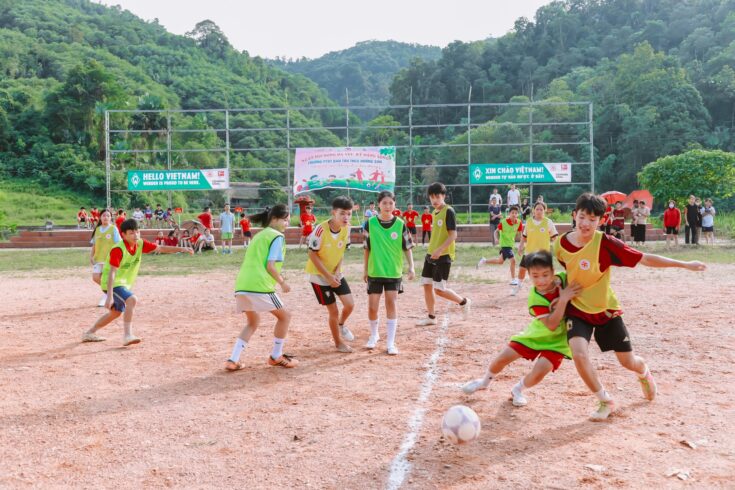
FFAV sets up football clubs, train teachers, provide football equipment and annual financial incentive for the local football events—what Phuong calls “Fun Football Festivals”—for children, designed to highlight different issues and teach life skills. The Fun Football Festivals are non-competitive and focus on having fun and learning rather than winning.
“We go into a community and see what issues they deal with, then we help set up football clubs, football activities with lifeskill education, and putting on a Fun Football Festival is one of the ways to highlight those issues,” Phuong explains.
“If a community is dealing with gender inequality, that could be integrated into the festival. Mixed-gender teams would play, and every time they scored a goal, they would have to answer questions related to gender equality correctly for the goal to count.”
The topics of the Fun Football Festivals vary depending on community needs and the life skill education components. Kids living in a city environment, might benefit from a festival focused on traffic safety. In central Vietnam, where landmines left over from the Vietnam-American War are still a danger to rural communities, a festival could focus on mine safety. In southern Vietnam, where storms and rising water levels pose a threat to rice farmers, a festival could focus on climate change and preventive measures.
The goal is to educate local people on solutions to the issues they face through football and movement games, and it is up to the community to decide how to implement the lessons and the festivals.
“It’s all in the community’s hands,” Phuong says.
Boots on the ground
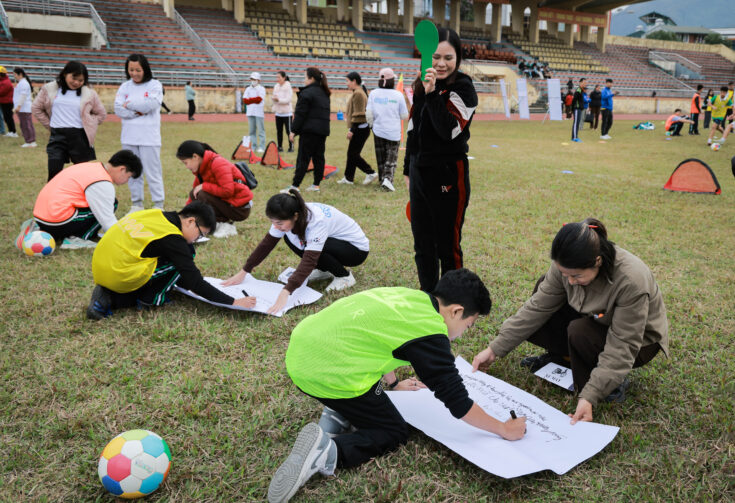
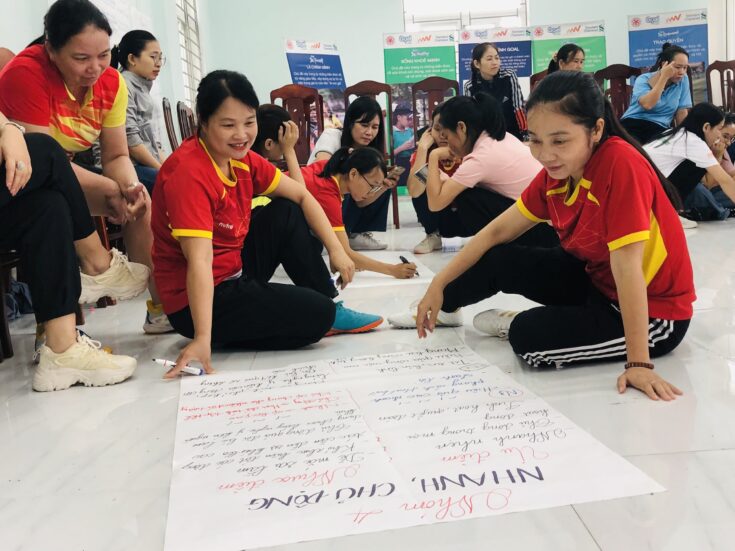
FFAV does not pay schools to establish football clubs. The initiative funds the festivals and equipment for clubs; the rest is run by people on the ground. FFAV trains coaches who run the clubs it helps set up. The coaches are typically teachers at the school—always one man and one woman to ensure gender balance.
The teachers receive training not only in coaching football but also in addressing social issues and supporting children and families in difficult situations.
Getting parents on board has sometimes required extra convincing. For many parents in rural and impoverished communities, priorities for the children lies elsewhere then school, like in the home or with a job. Some may see the football clubs as a distraction. However, FFAV projects and clubs at schools have been linked to lower dropout rates.
“It has been reported to us that when kids become invested in the football club, they are more likely to come to school and stay longer,” Phuong says. “So while the football club is what keeps them around the school, at the same time they are also going to class.”
Phuong has seen many parents who were initially sceptical about the projects become involved with the clubs and volunteer at the festivals.
For Phuong and FFAV, it is about breaking with traditional ways of teaching—using football and active learning to teach life skills and giving children the confidence to stay in school.
FFAV has been operating for a while, and throughout the years, Phuong has seen kids who grew up in FFAV football clubs return as adults and volunteer for FFAV, passing the joy of football on to new generations.
Norwegian teamwork
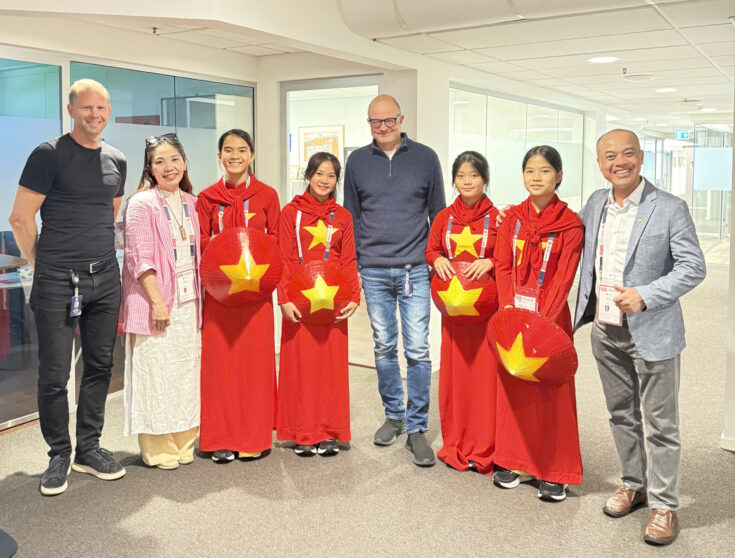
FFAV’s network of coaches originated with Norwegian coaches sent by NFF, to teach the first group of football coaches for FFAV. Despite the Norwegian government phasing out funding starting in 2018, NFF decided to continue providing support for FFAV. This is a decision Head International Social Responsibility Department at NFF, Anders Hasselgård, is happy with;
“We are very proud of our long-standing partnership with FFAV. Their work has been instrumental in spreading accessible, inclusive football opportunities to both girls and boys throughout Vietnam.” He express.
“We have signed an agreement with the Vietnam Football Federation through 2026, and our plan is to extend it to 2030. This will allow us to continue supporting Vietnamese football through FFAV’s outstanding efforts.”
Over the years, Phuong and FFAV have worked determined and tirelessly to improve its model of community engagement to the point where the initiative is now able to stand on its own. The hard work that Phuong and volunteers at local football clubs have put in, has inspired NFF.
“This commitment and impact have motivated us to continue supporting the development of grassroots football in Vietnam.” Anders Hasselgård says.
The score
FFAV’s model of community engagement through football has proved a success and has earned international recognition. The initiative received the Ministry of Education and Training Award in 2009, Asian Football Confederation (AFC) Dream Asia Award in 2014 and 2017, Asia Sports Industry Awards for Best Sports Youth Program 2015, Award from Vietnam Ministry of Culture, Sports and Tourism in 2022, and AFC Special Grassroots Awards – Best Grassroots Project in 2024.
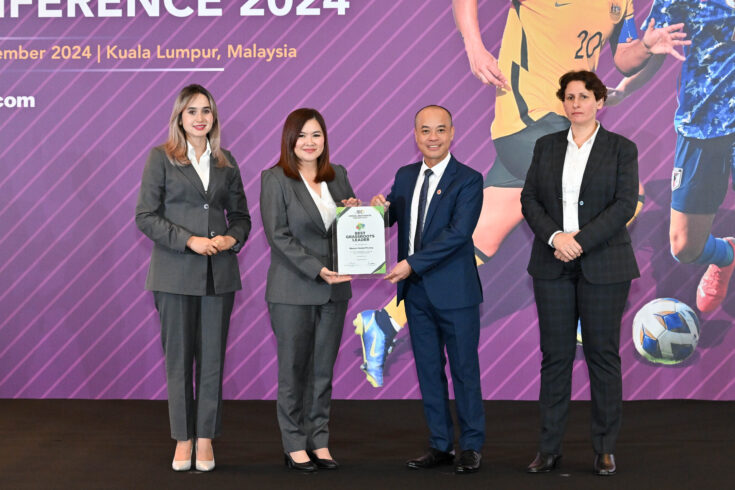
Phuong was also awarded AFC Special Grassroots Awards as Best Grassroots Leader by the AFC. FFAV has been recognised and adopted by both UNICEF, UNFPA and UNESCO for their work on gender-based violence, gender inequality and child protection.
In 2015, the FFAV model was selected by VFF and the Ministry of Education and Training for replication all over Vietnam as part of the “Vietnam Football Development Strategy to 2020, with vision to 2030”. Since then, the FFAV model has been replicated to more than 15 provinces all over Vietnam.
In collaboration with The Norwegian Church Aid, FFAV projects have also been established across the border in Savannakhet Province in Laos PDR. Likewise, FFAV projects have taken place in camps for Burmese refugees in Mae Hong Son in Thailand.
Currently, FFAV operates in five provinces in Vietnam, with plans to expand to other provinces in 2026 – 2030.
Phuong is excited to see the progress and impact FFAV has had on children’s lives across Vietnam, and he hopes to see even more success in football and education.
“The power of football is already here. We can harness it to better the community and connect people,” he says. “I want everyone to play, even those who have never touched a football before. It will give everybody the opportunity to have fun and become involved.”