



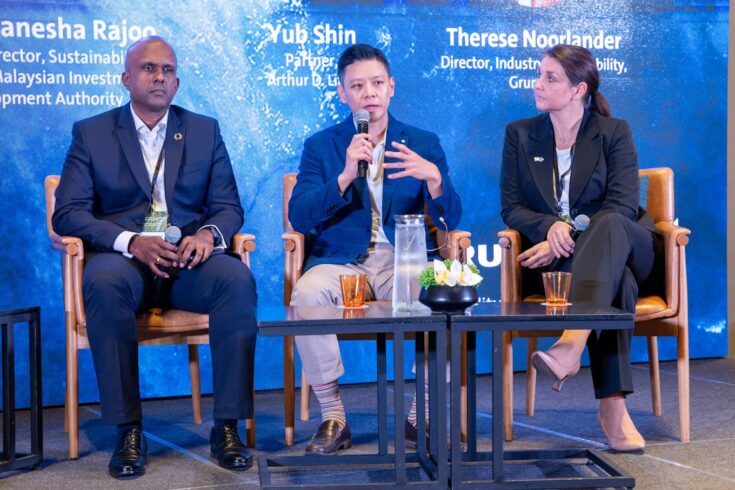
Malaysia’s rapidly expanding semiconductor industry could lead to a sharp rise in electricity-related emissions unless manufacturers improve how energy and water are used, experts warned at a sustainability summit held in Penang earlier this month.
Malaysia’s share of the global semiconductor market is expected to double from 7 percent to 14 percent by 2029, increasing pressure on electricity demand and Scope 2 emissions, which stem from purchased power.
The warning was raised during the Semiconductor Sustainability Summit 2025, organised by Danish water and pump solutions company Grundfos.
“The semiconductor industry is one of the most capital- and energy-intensive industries in the world,” said Yub Shin, partner at management consulting firm Arthur D. Little.
According to the International Energy Agency, the global semiconductor industry consumed 149 terawatt-hours of electricity in 2021, while purchased electricity accounted for 77 percent of the sector’s carbon footprint in 2023.
Grundfos highlighted water systems as one of the most effective areas for reducing both energy use and emissions in chip manufacturing.
“Water systems account for up to 30 percent of fab energy consumption. Within these systems, pumps alone can contribute up to 15 percent of total fab energy use,” Shin said.
Speakers at the summit said improving energy and water efficiency will be critical as Malaysia seeks to strengthen its position as a global semiconductor hub.
Source: Eco-Business