


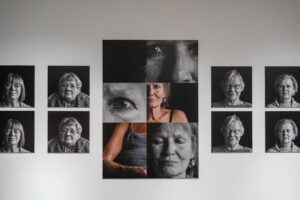
Inside a former factory building in Beijing’s trendy 798 Art District, visitors move slowly between photographs, handwritten reflections and installations about womanhood, ageing, mental health and relationships.
At the entrance, Chinese visitors are invited to answer personal questions about their experiences and everyday lives. According to Danish Cultural Center director Eric Messerschmidt, that kind of participation is exactly the point.
One of few
The Danish Cultural Center in Beijing is not just another foreign cultural institution abroad.
Only around seven countries operate officially recognised cultural centres in China that are not part of diplomatic missions – and all of them are located in Beijing.
Foreign countries cannot simply open cultural centres freely in China. They first need approval from the Chinese government through official agreements between the two countries.
Denmark has operated one of them since 2005, with Eric leading the centre.
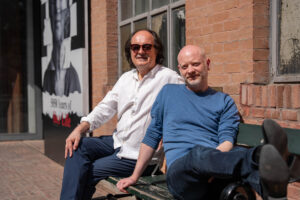
“We are very, very unique,” Eric Messerschmidt told ScandAsia and added that Chinese authorities have historically been cautious about allowing foreign organisations to operate independent cultural platforms inside China.
Eric insists the centre is not about promoting Denmark in a traditional sense.
“We don’t promote Denmark,” he said. “We promote Chinese people’s understanding of Denmark just as much as we promote Danes’ understanding of China.”
Focus on mental health, sexuality and ageing
Instead of mainly focusing on traditional Danish branding, the centre increasingly builds exhibitions and talks around social issues affecting everyday life in China.
Recent projects have explored subjects such as depression, sexuality, ageing, motherhood, menopause and mental health.
“We try to create a space where people can reflect on their own lives,” Eric said.
“That is the only truly Danish thing about what we do. We are very Grundtvigian – without ever mentioning Grundtvig in our work at all. But it is about getting people to reflect on their own lives and the society around them.”
That approach also gives the centre a very different role from traditional diplomatic institutions.
More connected to ordinary Chinese society
Unlike embassies, the Danish Cultural Center has much more direct contact with ordinary Chinese people, according to Eric.
He describes the centre as being “much more in society” than embassies typically can be.
That also means the centre often notices social changes and new conversations in Chinese society earlier than embassies do.
Chinese visitors actively participate
That close connection with ordinary Chinese society is also reflected in how visitors interact with the exhibitions themselves.
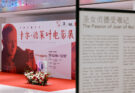
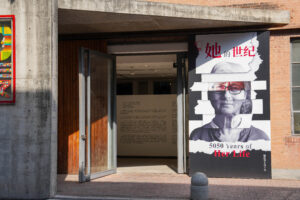
During the recent exhibition, 5050 Years of Her Life, visitors were invited to answer personal questions and leave written reflections on notes displayed across one of the walls.
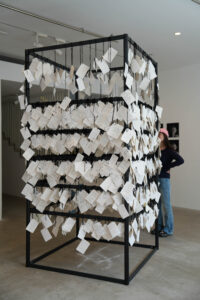
Danish Cultural Center believes that level of participation reflects a strong interest among many Chinese visitors in discussing topics that are not always openly talked about elsewhere.
“There are many places showing art in Beijing.”
“But what we do here, you cannot really find anywhere else.”
For Eric, that openness and willingness to engage are exactly what keeps the centre relevant after nearly two decades in China.