


Remarkable things can happen when creative energy meets reinvention. This is exactly what happened to my longtime friend Daniel.
After more than a decade dedicated to producing a world-class cycling event in Bangkok — featuring some of the top riders from the Tour de France — Daniel suddenly found himself at a crossroads. Just five days before the event’s final presentation, the main investor decided to step back.
Instead of becoming stressed or disappointed, Daniel chose to return to artistry — seeing Asia and its fashion not through a big, exclusive camera, but through his iPhone.
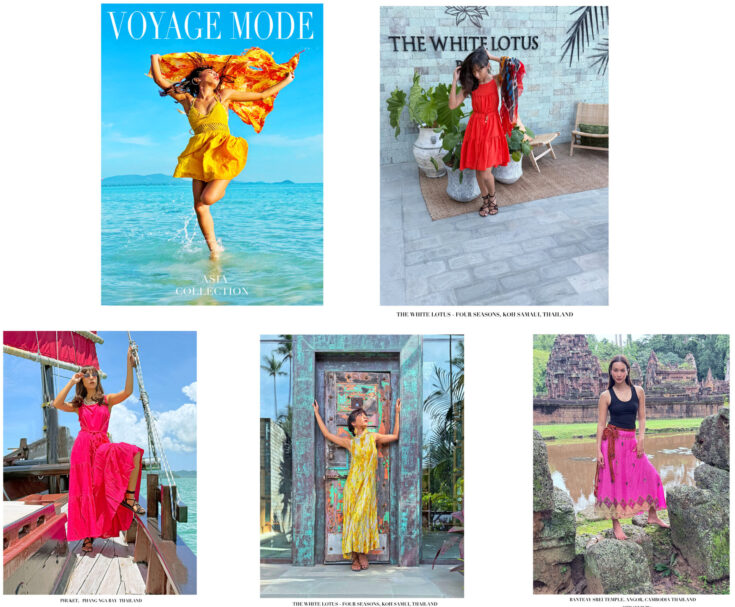
In a remarkably short time, his first book, VOYAGE MODE, came to life: a luxury travel and fashion photography book filled with striking images. With my background as a former fashion model, I took the opportunity to sit down with Daniel to talk about the story behind the lens, his journey of reinvention, and what comes next.
The concept of VOYAGE MODE is fascinating. How did the idea of making a book come about?
“It began after the cycling event I’d worked on for ten years collapsed just before the final presentation. That project had become my entire world. All the elements were in place — riders from the prestigious Tour de France, media connections, sponsors, and logistics.
When it ended, I suddenly found myself without a goal, without direction, and without a defining mission.
Rather than sinking, I decided to swim. I fell back on what had always centred me: photography. Almost immediately, VOYAGE MODE – Asia Collections became my lifeboat.
One idea after another started coming to me, and before long I was travelling within Thailand, and on to Vietnam and Cambodia. I started shooting what would later become VOYAGE MODE. At first, I didn’t know where it would lead, but once all the images were complete, I realised they deserved to become a book.”
I understand that you shot all the images on your iPhone?
“Yes, entirely on an iPhone. It was a challenge, but I wanted to show that artistry isn’t about exclusive equipment — it’s about the eye, emotion, and composition.
Using my iPhone made the process intimate, fast, and authentic. It allowed spontaneity and a kind of freedom you simply don’t have with a large camera setup. Even I was surprised by the results — the high resolution, the rich tones, and the immediacy gave the collection its distinct character.
It became a great marriage between art and technology.”
How did you select the locations for your shoots?
“I wanted outstanding locations in Asia — places that felt cinematic, iconic, and timeless. Many of them have been used for major feature films. Angkor Wat in Cambodia was the backdrop for Tomb Raider. Phang Nga Bay and Phuket were featured in Jurassic World: Rebirth, and the Four Seasons Resort on Koh Samui was where HBO filmed The White Lotus.
In Vietnam, I was shooting on the stunning Golden Bridge when I accidentally discovered the French Village, complete with its own Louvre replica and castle-like architecture. It felt surreal — like stepping into another era.
Each location became part of the book’s narrative, blending culture, architecture, and natural beauty into a seamless visual journey.”
How did you first get into photography?
“It all started with the classic film Blow-Up, starring David Hemmings. The movie captivated me — it’s eccentric, hypnotic, and strangely modern, even today.
The portrayal of a photographer’s world, the intrigue and artistry, was incredible. Within a week of seeing the film, I bought a camera.
At first, I just shot for fun — anything that caught my attention. Then it evolved into working with models, and soon I opened my own studio. Eventually, I received a call from MGM to shoot celebrities for media promotions.”
That’s an extraordinary progression. What followed?
“After working in Los Angeles, I eventually moved to Thailand and was fortunate to make some meaningful connections. One of them was Tommy Tang — a producer and restaurateur who played a key role in introducing Thai cuisine to America. His restaurants in New York and Hollywood were frequented by stars, and that opened a new creative circle for me.
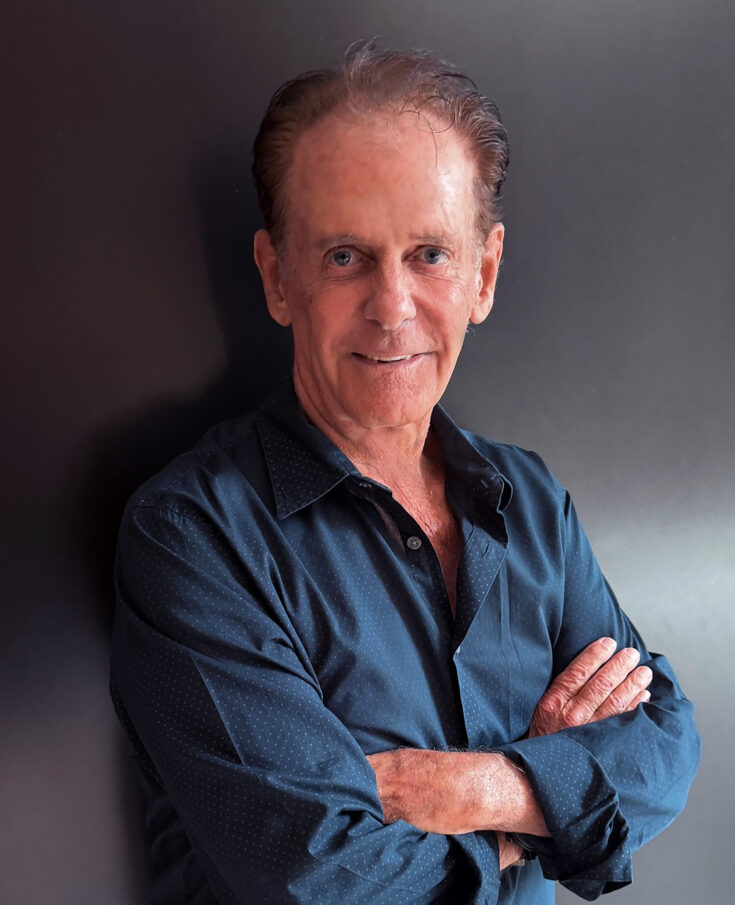
Before I knew it, I found myself shooting on international film sets. Two notable projects were Kickboxer: Retaliation with Jean-Claude van Damme and Jiu Jitsu with Nicolas Cage. Each experience taught me how to capture personality and energy — lessons that later shaped the visual tone and intimacy of VOYAGE MODE.”
Wasn’t it a big jump into feature film photography? How did it affect you?
“It was unbelievable to be offered the job, and of course I saw it as a crowning moment in my career. Reality hit when I arrived on set and saw the scale — around 300 people involved.
As a set photographer, your responsibility is to capture the key images that will promote the film long before its release. The shoot lasted six weeks, six days a week, often ten to fourteen hours a day, including nights. Add Thailand’s humidity and high-action scenes, and you have to be fully present at all times.
I survived the long hours, the humidity, and the intensity of the shoot. After that, I went on to shoot stills for Jiu Jitsu, filmed in Cyprus. Both films are now available on Netflix.”
Has anyone else in your family been involved in photography?
“Yes, my aunt Nancy Thomson worked as a photographer for Columbia Pictures. She was close to major Hollywood icons such as Elizabeth Taylor, Richard Burton, Christopher Plummer, and Rex Harrison. So perhaps it runs in the family.”
After this stunning book, what are you working on now?
“I’m planning a second collection — this time possibly in Polynesia. It will mix a different culture, nature, and high fashion. Another VOYAGE MODE, but with some twists in shooting style.
For me, it’s all about creating without pause, always evolving. That’s how I am.
I really like Thailand — the people, the culture, the food, and what I call the ‘seven smiles’. I feel safe here, and most foreigners I’ve met feel the same way. I’ve also found Vietnam and Cambodia to be charming and welcoming.”
Daniel Herron’s journey reminds us that reinvention, resilience, and creativity are essential in today’s hectic and often glorified world.
VOYAGE MODE is not just a photography book — it is proof that artistry can emerge from disruption, and that vision and courage matter more than circumstance.