




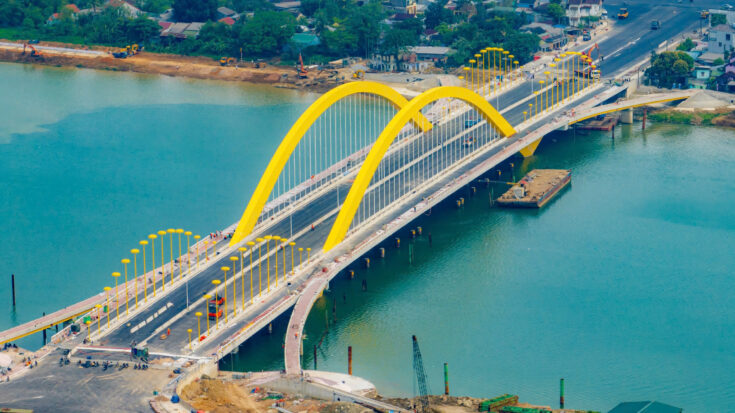
The Finnish-designed Nguyen Hoang Bridge in Hue city was officially opened to traffic on March 26, 2025, coinciding with the 50th anniversary of Hue’s liberation. This significant infrastructure project was completed after approximately one year of construction and marks a new chapter in the city’s urban development.
The Nguyen Hoang Bridge, which spans the Huong River, is based on the winning concept from the Hue River Bridge Design Competition, created by Finnish bridge architect Antti Karjalainen and the project was designed in partnership with WSP Finland and Transport Engineering & Architecture Consultants Joint Stock Company (A ETC) from Hanoi.
A design inspired by Hue’s imperial heritage
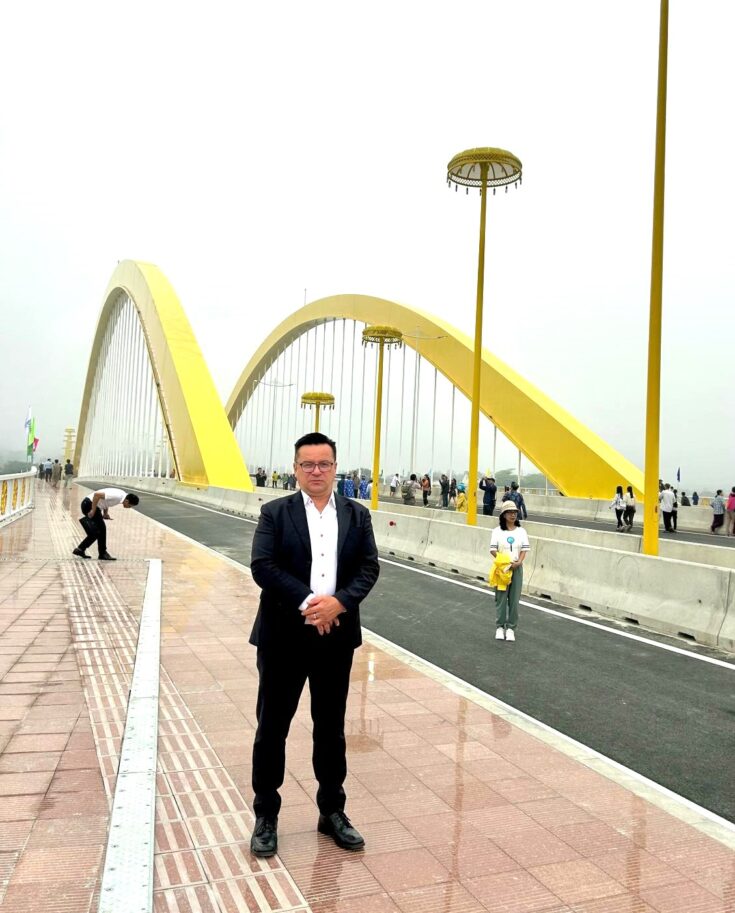
More than just a transportation structure, the bridge is an architectural masterpiece celebrating the rich cultural heritage of the ancient capital. According to the design consultancy team, the inspiration for the bridge was drawn from the image of a crane flying toward Thien Mu Pagoda. This concept is reflected in various decorative details reminiscent of the Nguyen Dynasty, most notably the 64 golden parasols symbolizing the grandeur of the imperial court.
The bridge’s artistic lighting system highlights its symbolic significance while ensuring harmony with Hue’s heritage landscape. The golden parasols are crafted from galvanized steel with an electrostatic coating, designed to withstand Hue’s harsh climate and ensure near-permanent durability.
Approved by the Hue authorities on September 9, 2022, the Nguyen Hoang Bridge was built with a total investment of over VND 2.281 trillion. Spanning approximately 380 meters in length, 43 meters in width, and standing over 20 meters high, the bridge meets the growing demands of urban traffic and development. Completed after two years of construction, the project coincides with the 50th anniversary of Hue’s liberation (March 26, 1975 – March 26, 2025). The bridge strengthens connectivity between key cultural and historical sites such as Thien Mu Pagoda and Tu Duc Mausoleum, welcoming tourists to the former imperial city.
Sharing his thoughts on the project, architect Antti Karjalainen expressed his pride:
“I am thrilled to contribute to a structure that brings a fresh aesthetic to Hue. The bridge not only adheres to my original design-from the overall concept down to intricate details like handrails and patterns-but also represents the culmination of a long journey that began with my initial sketches before the COVID-19 pandemic. I believe this project will play a crucial role in the development of Hue, a city that is evolving every day.”
A strategic infrastructure project boosting urban and tourism growth
With a total investment exceeding VND 2.281 trillion, the Nguyen Hoang Bridge features a length of approximately 380 meters, a width of 43 meters, and a height exceeding 20 meters. The structure includes six lanes for vehicles and two 3-meter-wide pedestrian lanes. As part of the Ring Road 3, the bridge alleviates traffic congestion on National Highway 1A, facilitates rapid connections between Hue’s western urban area and the city center, and supports the formation of satellite towns while driving socio-economic growth.
Mr Nguyen Kien Trung, an engineer from VISICONS Construction & Investment JSC, highly praised the innovative use of imperial-style golden parasols in the bridge’s design:
“Hue is rich in cultural heritage with its ancient structures, yet such traditional elements are not always intentionally incorporated into modern architecture. The golden parasols on the bridge not only add an aesthetic highlight but also help define the city’s cultural urban landscape.”
At the opening ceremony, thousands of Hue residents gathered to witness the unveiling of this landmark project. Thai Van Anh, a civil servant in Hue, shared her excitement:
“I am delighted that Hue now has a new bridge, making it more convenient to travel between both sides of the Perfume River. At night, the Nguyen Hoang Bridge is illuminated beautifully, becoming a new visual highlight of the city. I hope that in the future, Hue will see more large-scale, well-planned projects designed by international experts, modernizing the city’s infrastructure while preserving its distinctive charm.”
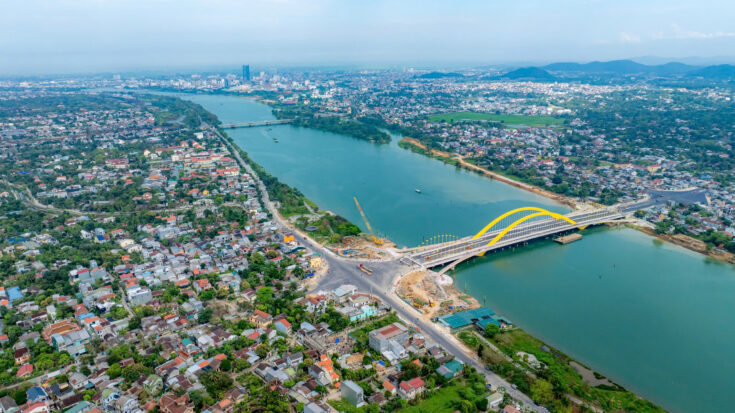
Beyond its transportation role, the bridge holds significant potential for tourism development. Pham Tien Dung, Vice President of the UNESCO Travel Club in Hanoi and CEO of Golden Tour Ltd,. commented:
“The Nguyen Hoang Bridge is not only a key connector but also a landmark that enhances Hue’s urban landscape and tourism appeal. Designed by Finnish bridge architect Antti Karjalainen, the bridge blends modernity with the heritage architecture of the former imperial capital. Its completion greatly improves accessibility for visitors, particularly to the Citadel area. This bridge is set to become a new symbol of the city, attracting more travelers to explore the timeless beauty of Hue.”
