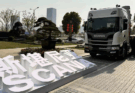




Swedish truck maker Scania has inaugurated its new €2 billion factory in Rugao, China — the company’s largest overseas investment.
In an interview with China Daily, Christian Levin, president and CEO of Scania, said the establishment of the Rugao facility is a “given” move to overcome production bottlenecks and make Scania’s global operations more resilient.
“China is the right place to build heavy-duty commercial vehicles of the highest standards,” he said.
The new site, located in Jiangsu province near Shanghai, covers around 800,000 square meters and will employ up to 3,000 people. It is Scania’s first fully owned plant in China and its third global production base, following facilities in Sweden and Brazil. Deliveries from the Rugao plant, which has an annual capacity of 50,000 trucks, are expected to begin later this year.
Scania previously faced capacity limitations that slowed its global delivery schedules. Levin described the new plant as “an insurance against risks,” citing potential disruptions caused by natural disasters, geopolitical tensions, or other unforeseen issues.
“The advanced ecosystem and technologies available in China address the problem of losing out on orders, which has afflicted Scania for years,” he explained.
The Rugao hub will serve not only China but also other markets across Asia. While Brazil remains Scania’s largest market by deliveries, Levin emphasized that the company’s growth potential lies in Asia — and particularly in China, which has been the world’s largest heavy-duty truck market since 2010.
To gain a stronger foothold, Scania is tailoring its strategy to local needs. The company has launched leasing services in China, allowing customers to use a truck by paying a monthly fee of around 19,000 yuan, including maintenance, insurance, and driver training. Levin said this helps customers lower operational costs and improve competitiveness without large upfront investments.
Customization will also be a focus for Scania’s China operations. A new model called Next Era, developed specifically for the Chinese market, will be produced at the Rugao facility and launched in the first half of 2026.
“Instead of competing on price, we will help customers save costs and increase efficiency,” Levin said. “A customized vehicle designed for specific purposes can clearly increase the competitiveness of Chinese and Asian customers.”
Levin described Scania’s latest move as “timely, balanced and long-term.” The Rugao facility, he said, will ensure Scania can continue producing vehicles “for a very long time to come” while balancing its global production system.
Source: China Daily