




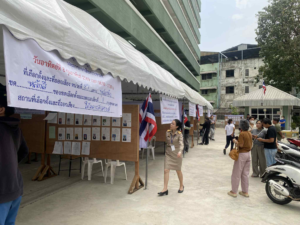
In Nordic democracies, election night usually brings clarity. Votes are counted, winners are declared, and within hours the political direction is clear.
In Thailand, the first morning after an election can tell a very different story.
Thailand’s general election on February 8 2026 has produced early results that diverge sharply from many pre-election analyses. What was widely expected to be a tightly balanced three-way race now appears to favour the conservative establishment.
At the same time, the outcome remains legally unresolved, and the process of forming a government has only just begun.
Unavoidable coalition talks
According to Reuters, Thailand’s Election Commission must verify and certify all results before they become legally binding – a procedure that can take several weeks and may be prolonged if complaints or recounts are filed.
Until then, all figures remain unofficial and provisional.
By Monday morning, unofficial counts reported by Reuters pointed to a clear but unexpected frontrunner. Prime Minister Anutin Charnvirakul’s Bhumjaithai Party emerged with a commanding lead in projected parliamentary seats, overtaking both the reform-oriented People’s Party and the populist Pheu Thai Party.
Early projections suggest that Bhumjaithai, which is currently projected to hold around 192 seats, remains short of an outright majority in Thailand’s 500-seat House of Representatives, where at least 251 seats are required to govern alone.
The reform-oriented People’s Party now holds 117 seats.
As a result, coalition talks now look unavoidable. Rather than producing a quick and clear outcome, the election is likely to be followed by weeks of negotiations between parties with very different political priorities.
Clear parallel with Nordic countries
The clearest parallel with the Nordic countries can be found at the polling stations.
Across Thailand, election day unfolded in a calm and orderly atmosphere, with voters queuing patiently and moving through rows of voting booths set up by schools and community halls.
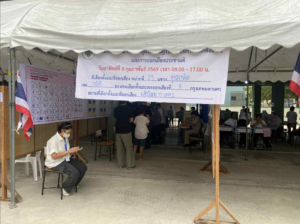
A steady hum of conversation filled the areas – a scene that closely resembles election day in Nordic democracies, where voting is defined less by drama than by routine and trust in the process.
As the polling stations closed, the focus quietly shifted, and the next phase began: counting the votes.
Another outcome than expected
In the weeks before election day, several opinion polls and political observers suggested that the People’s Party could capitalize on its strong support among younger and urban voters and challenge for first place.
Instead, its performance fell well short of those projections.
The People’s Party remains politically significant despite this setback. Formally established in 2024, it is the successor to the Move Forward Party, which won the most seats in the 2023 election before being dissolved by a court ruling.
The dissolution fits a recurring pattern in Thai politics, where reformist parties have secured strong voter support only to be blocked by courts or constitutional rulings.
Analysts say this has kept support for reform alive, even as Prime Minister Anutin’s emphasis on stability and security persuaded many voters to favour continuity over confrontation.
A sharp contrast to Nordic elections
The next phase is expected to take time. Coalition talks are expected to stretch over weeks, and formal confirmation of the results will come only after the Election Commission completes its verification process.
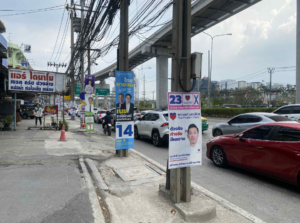
The People’s Party has already indicated that it does not intend to join a Bhumjaithai-led government, increasing the importance of smaller parties in determining the final governing coalition.
For spectators in the Nordic countries, Thailand’s election once again illustrates a fundamentally different democratic rhythm.
Where Nordic systems prioritise speed, clarity and decisive transitions of power, Thailand’s process is slower, more layered and far less settled on election night.
The surprise shift in momentum revealed the morning after the vote underscores that in Thailand, elections are not single events but unfolding political processes whose final shape may only become clear long after the ballots are cast.



[…] zeigen einen klaren Spitzenreiter, der von den vorab durchgeführten Analysen abweicht. Laut Scandasia wird die Partei von Ministerpräsident Anutin Charnvirakul, die Bhumjaithai Partei, mit rund 192 […]