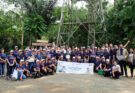



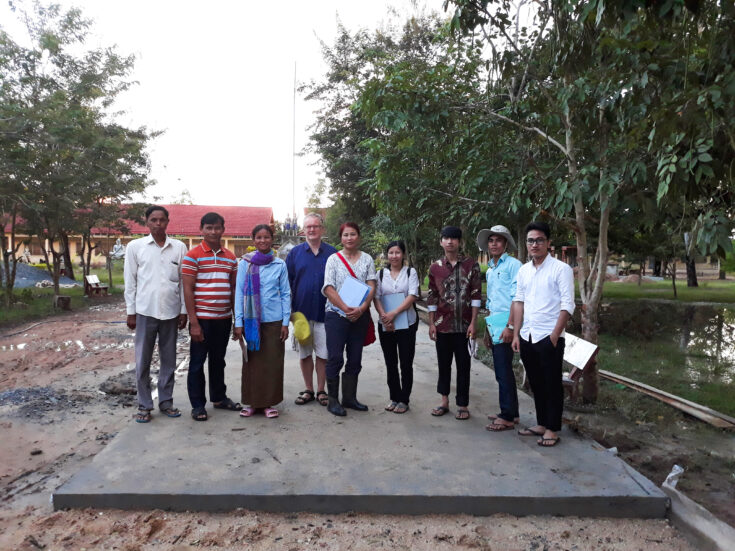
Amid rising climate tensions, many people around the world are running projects to combat rising CO2 emissions and help nature recover from human-caused interference. Danish Steffen Johnsen is one of these people. He is the CEO of TROFACO, a tree-planting company that operates in various places in Southeast Asia, including rural Cambodia and Vietnam. TROFACO is a carbon-offset company, whose main clients are Danish companies looking to offset the carbon emissions created by their business to attain carbon-neutral status. Steffen Johnsen is a biologist and advisor in ‘development’, and to him, TROFACO’s work is not just about capturing and lowering CO2 emissions; it is also about working closely with the locals in the areas where TROFACO operates to benefit the community.
The sun bakes the land below the Phnom L’ang mountain. White cows graze on light green pastures and gather under the towering coconut palms that sporadically dot the landscape for shade. Water buffalo mud-bathe in shallow ponds to escape the heat. Isolated houses on raised dirt islands overlook an endless ocean of shadeless rice fields. This is rural Cambodia, Kampot Province—to be exact.
The local schoolyard is empty, because it’s a local holiday, the Pchum Ben festival for the ancestors. The laughter of children has been replaced by the song of birds, but many years ago the playground would have been quiet even on a busy school day. Back in 2016, the schoolyard was an open, desolate dirt field. Recess was in the middle of the day when the sun was at its highest, and the children at Sri Chea Primary School could not go out to play. They had to stay in the open-air shaded hallways—it was too hot to play in the sun, teacher Hen Chann explains. However, in 2017, TROFACO, with the help of local landowner Khao Sukom, started a new project. They planted 2,000 trees on the school grounds, covering the whole yard in trees. Now, you feel the temperature drop the second you step into the tree cover. The children can play tag among the trunks. Insects buzz through the leaves. Birds sing in the branches. “The children love it,” Hen Chann says.
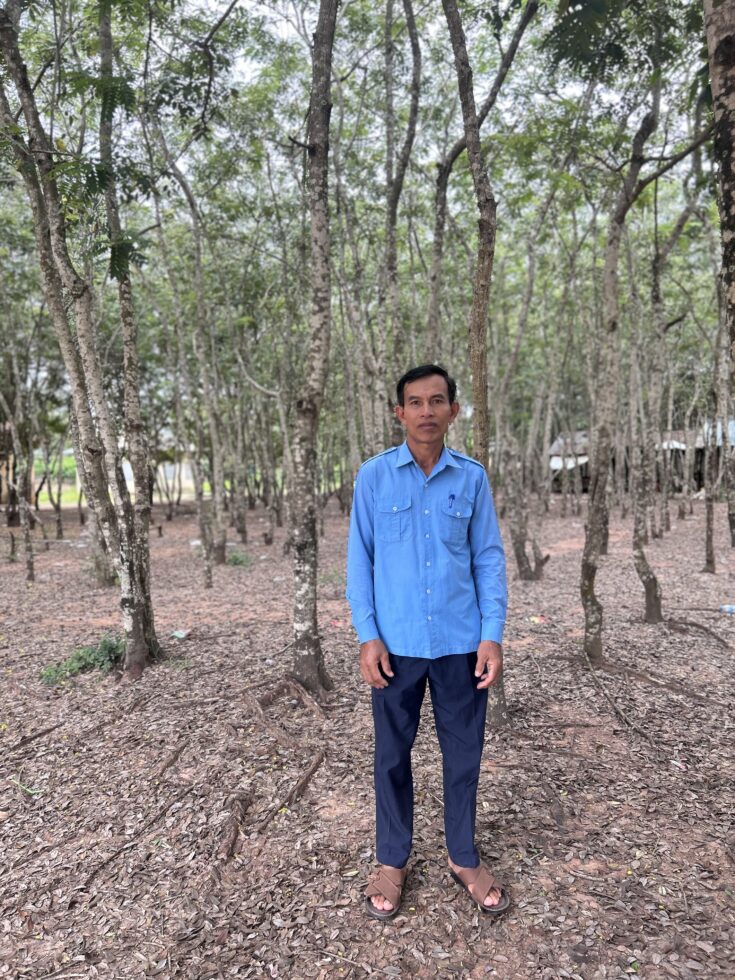
The same story has played out all over this local community. In the neighbouring village primary school, Preah Thiet, shade from tall trees provides the children with a place to play, talk, and do homework outside. Roads are lined with miles of trees on either side. Their crowns provide cover for villagers moving around their area on a hot sunny day —all planted with the help of TROFACO.
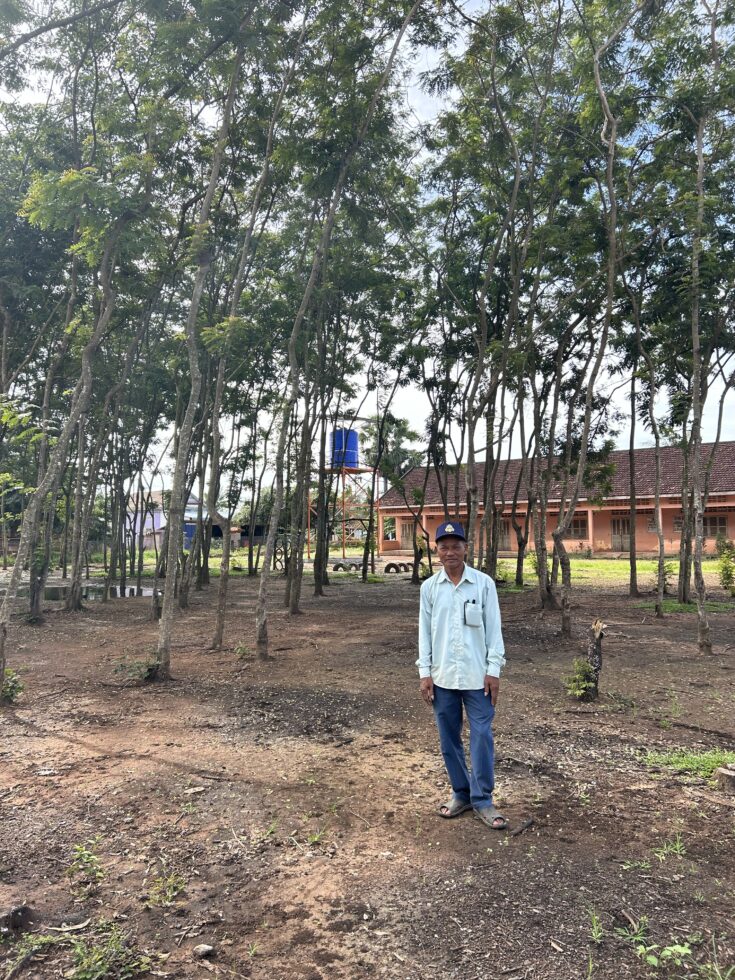
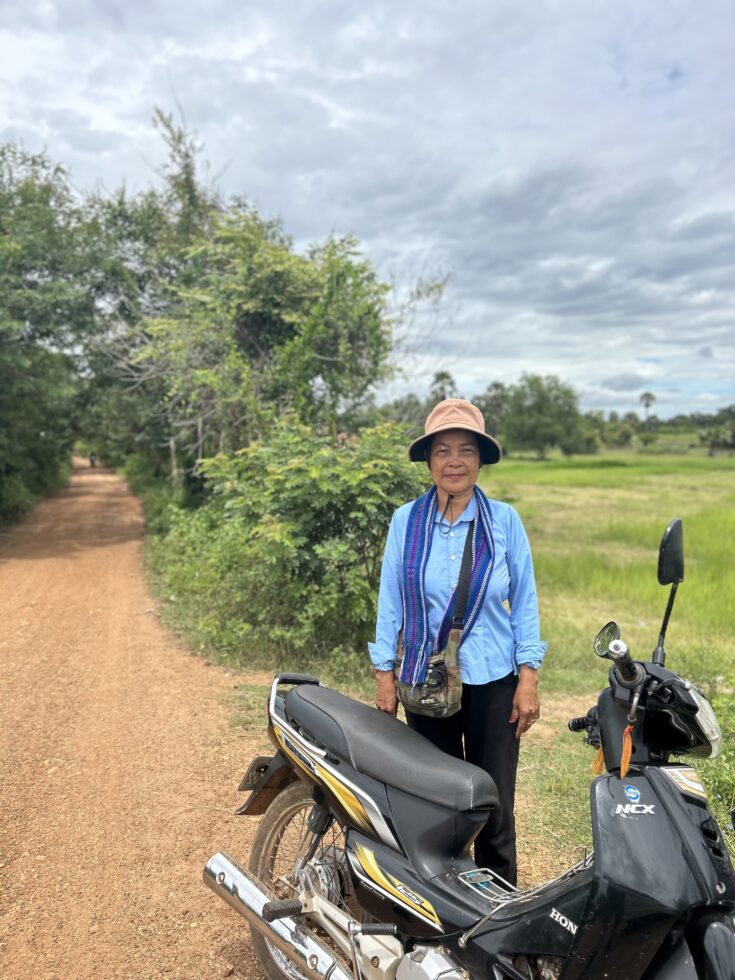
Han Samol works with TROFACO to keep an eye on the projects in the Kampot region, where his family also lives.
“These projects are very good,” he says. “The people living here have been happy with the projects that TROFACO has done.”
The benefit to the locals is very important to Steffen Johnsen when he decides where TROFACO should start tree-planting projects. TROFACO’s main aspiration is to combat carbon emissions, but to Steffen, the environmental and local benefits are closely connected.
“The first thing we do is ask the community to identify what they want to do. Usually, we go through local NGOs and our partners that operate in the local area to have boots and ears on the ground,” Steffen explains.
Certain requirements apply when TROFACO starts tree projects. It all relies on the enthusiasm of the locals. There needs to be a strong sense of community, as well as community members like Han Samol, who can be directly involved with TROFACO.
TROFACO provides the trees, but it is up to the locals to keep the project going and the trees alive.
“There has to be a commitment to keep the project alive,” Steffen explains. “They have to keep an eye on each other and encourage one another to keep the trees alive. The more trees are kept alive and allowed to flourish, the more money we pay.”
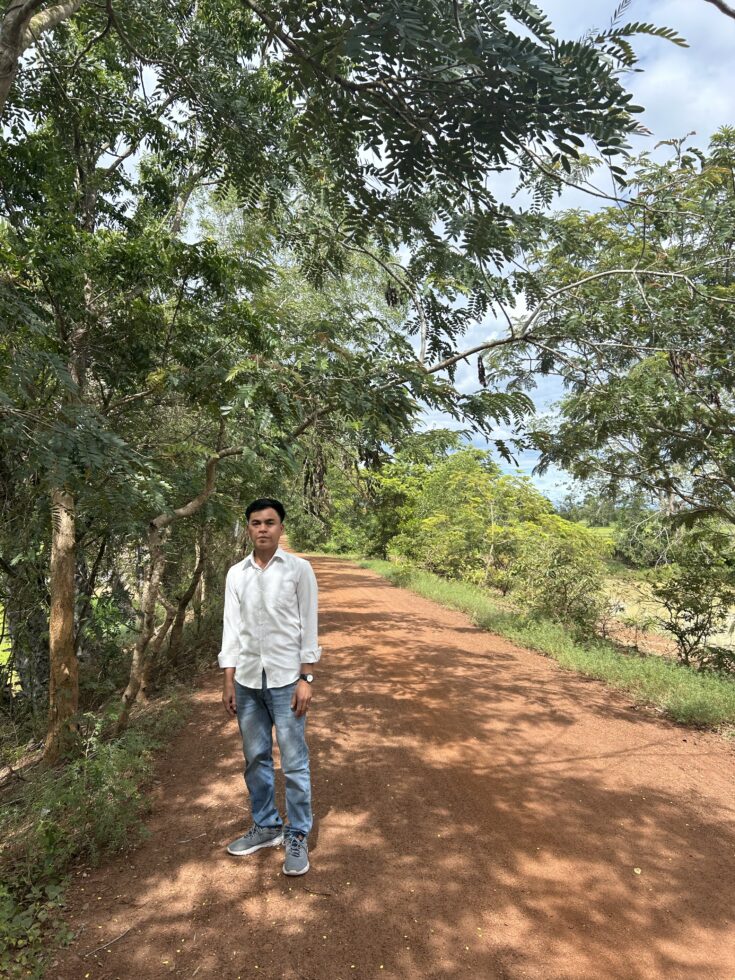
TROFACO pays the locals to plant trees on their land. The money paid to have the trees on the land is invested back into the community. Over time, TROFACO has built better roads, connecting villages and supporting local schools. In addition to these community investments, TROFACO sets aside around 30 percent of its income for an independent foundation. Annually , money from that fund is paid out to individual farmers and landowners. This works as an incentive to keep the trees alive and healthy.
“Ownership is key in everything we do; the locals need to see the benefit in our projects and feel like a part of it,” Steffen says.
The benefit to the locals goes beyond the financial. In Cambodia, the tree projects have brought shade to playgrounds and roadsides, protecting children and travellers from the scorching sun.
In Vietnam, TROFACO’s projects have also been helpful and potentially lifesaving.
High up in the highlands of northern Vietnam in the Lao Cai region, close to the tourist hotspot of Sapa, landslides are a major threat, causing casualties every year, especially during and right after the rainy season, when heavy rainfall makes the steep mountain slopes unstable. Here, TROFACO has partnered with local landowners and NGOs to plant teak and other trees. Teak is a species native to the region. It has a wide and deep root network that helps keep the mountainsides in place and prevents landslides.
Simultaneously, the teak trees provide cover from the sun that allows the understorey to flourish. Here, local farmers are planting herbs used for medicinal purposes and spices. These are high-value crops, providing the locals with a source of revenue that does not disturb or cut down the trees. Tree-planting projects have also involved fruit trees.
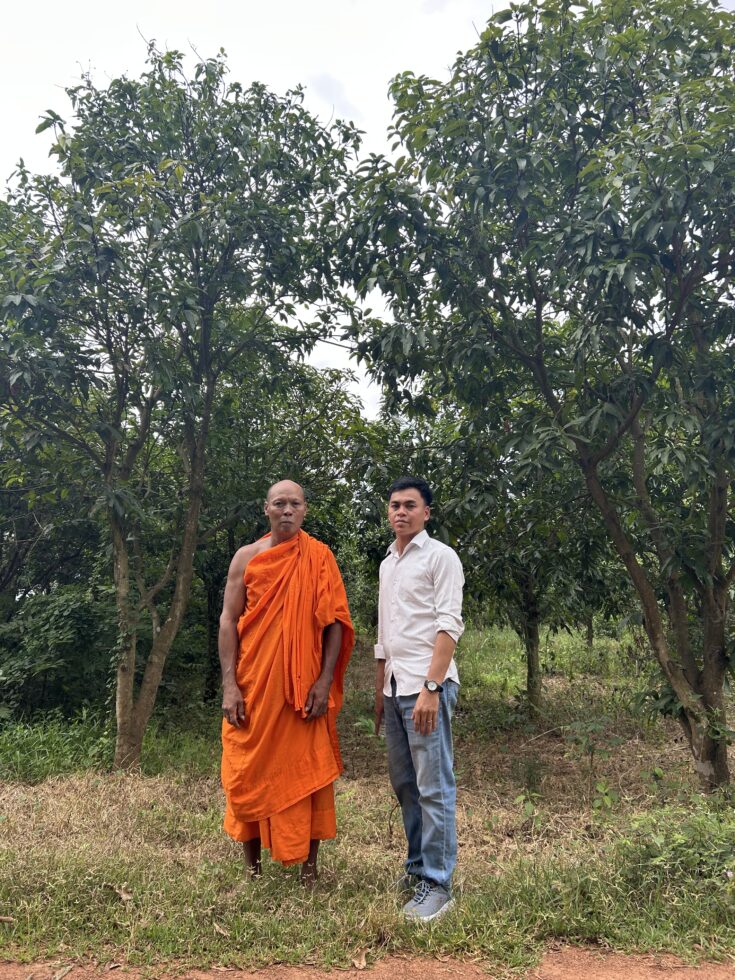
To Steffen Johnsen, the work has only just started. TROFACO has seen massive success in Vietnam, with many more landowners and local communities applying to be part of tree-planting projects. He wants TROFACO to expand and to collaborate with more local communities.
“Our model is very simple and very easy to replicate, if you do it right,” he says with a smile. “Trees grow by themselves; they can’t help it.”
Click here to see more of TROFACO’s work.