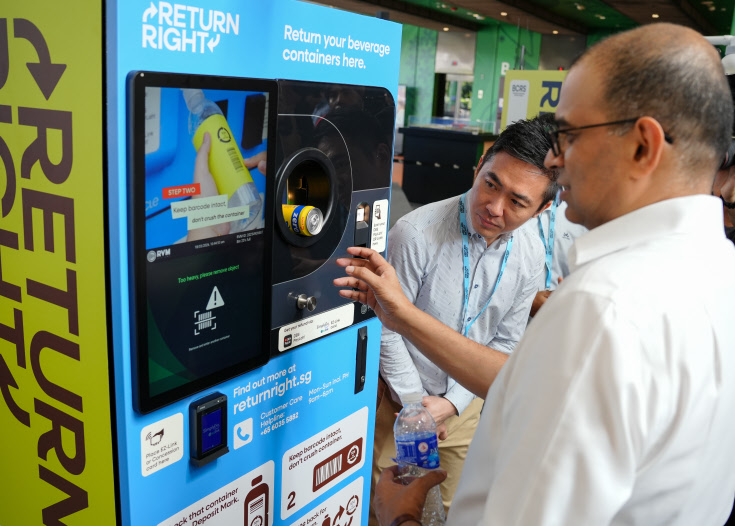



Since April 2026, Singapore has started implementing its brand new ‘Return Right’ scheme, in a bid to improve domestic recycling, expecting to recover no less than 16,000+ tonnes of material every year. This is bringing the overall well-developed city-state on to a path of further upgrading and strengthening its waste management systems. For this ‘Deposit Return Scheme’ (DRS), ‘Reverse Vending Machines’ (RVMs) are used in a bid to recover higher-quality recyclable materials, and keep more materials in circulation for longer. And Scandinavian know-how and solutions play a crucial role – while the Singapore model clearly differs from return-to-retail systems as Scandinavians know them from back home. RVMs are being adapted to the local regulatory and infrastructure for each market and the city-state poses specific challenges. ScandAsia takes a deep-dive into this much-needed new effort to minimise the waste and push for a more circular economy.
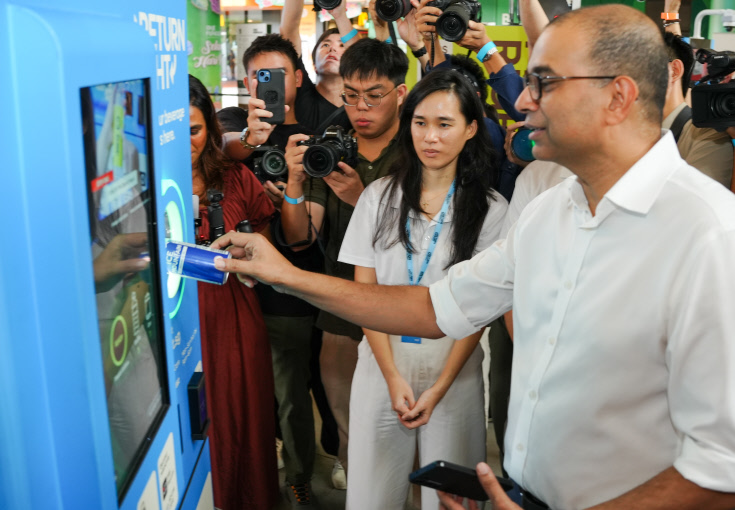
One waste stream that deserves particular attention is packaging waste, of which plastics is a significant component. The amount of packaging waste generated in Singapore forms one third of our domestic waste generated. Our overall recycling rate is low, informed the Dr Janil Puthucheary, Senior Minister of State for Sustainability and the Environment.
Studies have identified Singapore as a global leader in single-use plastic production per capita, with one report citing 76 kg per person annually.
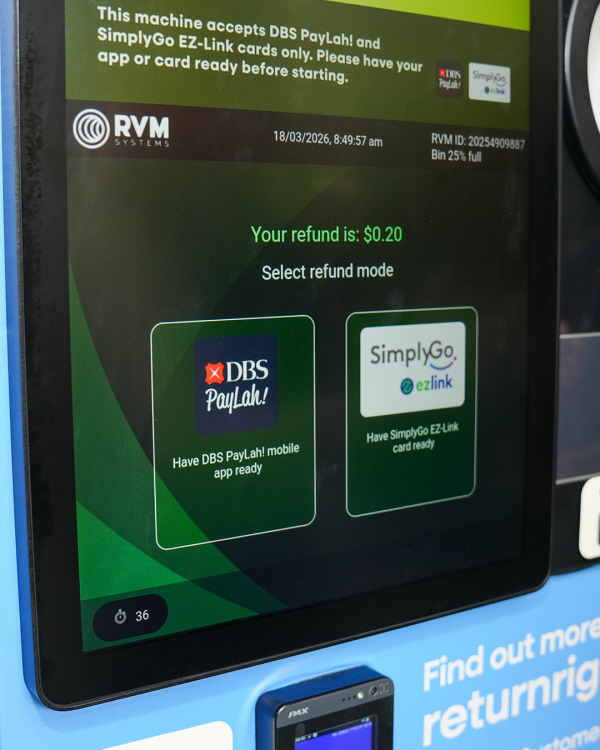
The citizen-initiated ‘Beverage Container Return Scheme’ (BCRS) intends to change that, as the public can now return their empty plastic and metal beverage containers bearing a deposit mark at over 1,000 (to be expanded to 2,000) Reverse Vending Machines (RVMs) located across the country.
This follows the introduction of Singapore’s first Extended Producer Responsibility (EPR) scheme in 2021 that ensures proper end-of-life management and recycling of e-waste.
By using the EPR concept the BCRS can build on the previous experience. National Environment Agency (NEA) informs that the scheme will ensure clean stream collection of plastic and aluminium beverage containers between 150 to 3000 ml.
Return Right scheme: first of its kind in Southeast Asia
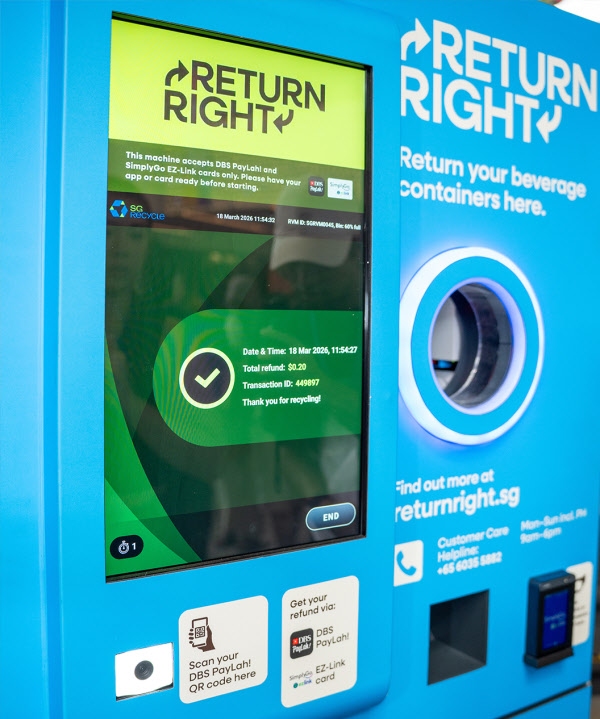
Singapore is pioneering in this space, becoming the first country in Southeast Asia to have a comprehensive, legislation-based deposit return scheme for single-use beverage containers.
The projected volume is more than one billion plastic and metal beverage containers used each year, allowing us to recover over 16,000 tonnes of material annually. This translates to reduced waste to incineration/landfill, lower carbon emissions, and circular economy, National Environment Agency (NEA hereafter), informed.
Return Right also aims to catalyse changes in behaviour amongst Singaporeans: By shifting towards mindful consumption and sustainable habits of reducing, reusing and recycling, we can minimise the amount of waste disposed of, according to NEA.
Responsibility placed on the local market
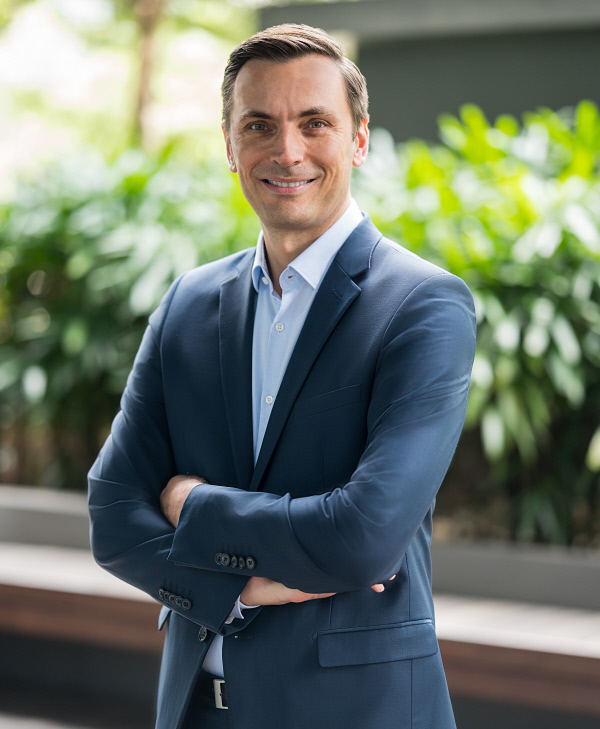
Offered to comment on the concept the President and CEO of the Alliance to End Plastic Waste Mr Jacob Duer says that the BCRS is a useful example of how EPR can help strengthen the systems needed for a circular economy.
“It matters, because one of the biggest barriers to a circular economy for plastics has been chronic underinvestment in waste management infrastructure and systems. In recent years, EPR legislation has increasingly been introduced to reduce litter, improve recycling rates, and support the multiple use of materials,” explains the Singapore-based Dane.
“Under EPR, responsibility sits with the companies that place products on the local market – including importers – rather than where the product itself was manufactured. In practice, this creates clearer accountability and more stable funding for collection and recycling systems, while encouraging greater collaboration across the value chain. In Singapore’s case, producers and importers supplying beverages into the local market are responsible for participating in and funding the BCRS.”
“By introducing a simple refundable deposit – a model already used successfully in many countries around the world – Singapore’s BCRS can help strengthen collection, improve the quality of recovered materials, and ensure more packaging is returned into the system instead of becoming waste,” believes Jacob Duer.
This can be compared with for instance Thailand, where single-use plastic bottles (primarily PET) are collected through a high-functioning but largely informal system. There, PET bottles have a recycling rate estimated at over 95% due to their high trade value.
Singapore’s industry-led scheme features a deposit paid at the point of purchase to incentivise consumers to return their containers, while the scheme operator BCRS is funded through the producer fees it collects and through the sale of recyclables collected.
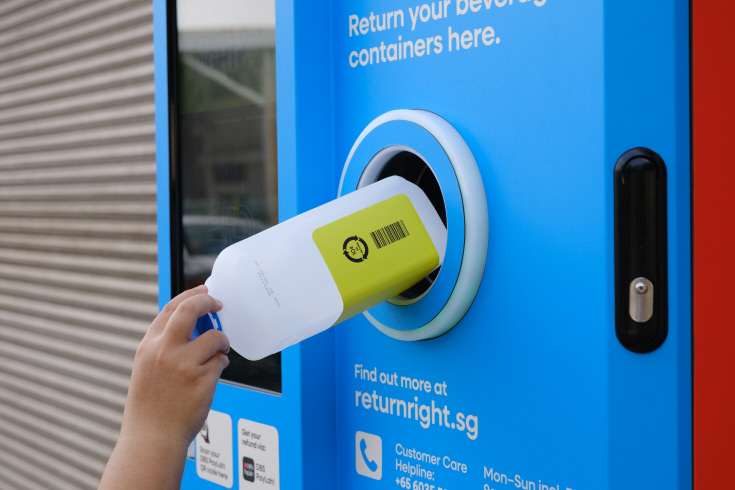
“In designing the scheme, we studied the experiences of other jurisdictions. Schemes in Norway, Denmark, and Lithuania have achieved high collection rates, and one common factor was having an industry-led, not-for-profit entity run the scheme,” said Dr Janil Puthucheary.
NEA deems that the industry stakeholders are best placed to determine the most effective way to recover used beverage containers. They are also incentivised to operate the scheme efficiently and effectively, to ensure that the cost impact on producers is manageable.
Refillable system not viable
Refillable PET bottles are however not a viable solution: “Singapore imports most of its beverages, which arrive in single-use containers manufactured overseas. Unlike some countries in Europe, where large domestic producers control local distribution networks and can feasibly run collect-wash-refill loops, Singapore has no equivalent manufacturing base to anchor a refillable system,” explains the NEA spokesperson.
“Since bottles would need to travel back through international supply chains to be refilled, a true refillable model is neither practical nor cost-effective here. The beverage container return scheme is therefore the most practical approach – working with Singapore’s import-dependent reality to ensure that single-use containers are at least returned and recycled, rather than wasted.”
Dr Janil Puthucheary described it as a significant step forward in Singapore’s recycling journey: “It will take time for people to adjust. As we gather more data, we will refine and improve the scheme.”
Keeping collected material suitable for recycling
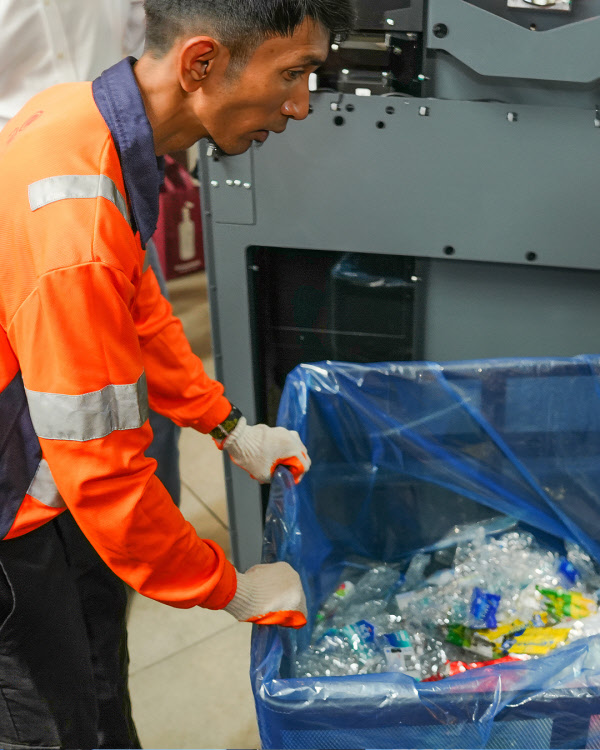
When it comes to RVMs, the BCRS Ltd. spokesperson (BCRS hereafter) informs that these ensure that metal and plastic are collected in a “cleaner” environment. It keeps the collected material compact and minimises contamination so that it remains of better quality. Clean plastic can then be sold to local manufacturers to create new packaging, reducing the need for “virgin” plastic made from oil.
“RVMs also support consistent material quality by enforcing basic return conditions,” states BCRS and compares: “Informal collection systems, such as those seen in some countries, can achieve high recovery rates where there are strong material value and an established collection network. Singapore’s approach is designed for a different context – a regulated, nationwide system that combines financial incentives, accountability under EPR, and dedicated infrastructure to drive consistent consumer participation, while facilitating higher return rates and material quality suitable for recycling.”
BCRS operates under a regulatory framework set by NEA, which ensures that collected containers are properly treated and recycled, and not sent for incineration.
BCRS Ltd. has appointed three industry partners to supply and operate the network of RVMs across Singapore – each allocated a geographical area: RVM Systems (Sweden), SG Recycle, and TOMRA Collection (below: Tomra) from Norway.
Each market in Asia poses its own unique challenges, and here it is noteworthy that system providers such as Tomra are already experienced in delivering custom-made solutions. Beyond Singapore, the Norwegian provider operates across China, Japan South Korea etc., bringing proven DRS and sorting solutions – including own-developed technologies – produced in China, Xiamen, by TOMRA Recycling Technology (TRT) – to markets across the globe. Worldwide, Tomra’s RVMs capture over 53 billion used bottles and cans each year!
South Korea is the primary example in Asia that operates a nationwide deposit-return system specifically for refillable glass bottles.
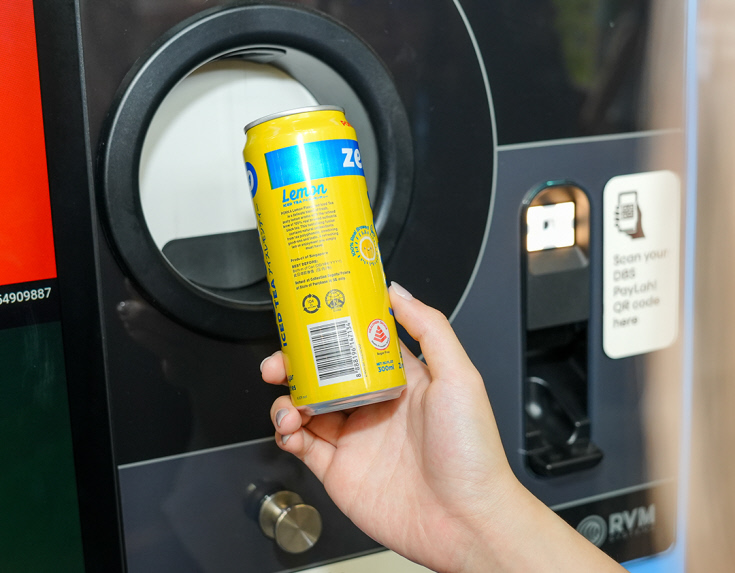
Tomra aims scale deposit return systems across Southeast Asia
“These models are adapted to each market’s regulatory frameworks and infrastructure to ensure effective, locally tailored circular systems. Singapore’s DRS is a hybrid model, tailored to local consumer habits and urban conditions. This differs from many Scandinavian systems, which are primarily based on return-to-retail models,” Steve Mellbye-Stølen, Head of Tomra Collection Asia tells ScandAsia.
“Since 2020, we have supported Singapore’s journey toward implementing a deposit return scheme through knowledge sharing with public- and private sector stakeholders. This included sharing international best practices, and operational insights from other DRS markets, as well as our vision for a cost efficient and consumer friendly system suitable for Singapore.”
Singapore plays a pivotal role in Tomra’s regional strategy, but mainly as an example of a successful adaptation: “Each market in Southeast Asia has unique regulatory, infrastructural, and cultural conditions. While Singapore provides important learnings, we do not expect a ‘copy paste’ model. Instead, we will apply insights gained in Singapore to develop solutions appropriate to each new market,” explains Steve Mellbye-Stølen.
This spans areas such as user interface preferences, payment and refund integrations, machine sizing for high density urban areas, and local infrastructure requirements.
Tomra’s RVM division aims to scale deposit return systems across Southeast Asia wherever policy conditions enable implementation.
New financing models needed for a circular plastic future
Finally, back to The Alliance to End Plastic Waste, it is focused on developing and implementing solutions to drive systems change for a circular plastic future.
Jacob Duer explains: “Managing plastic waste is a systems challenge that requires solutions across design, collection, sorting, recycling, and end-market demand. This is especially true in markets where waste management systems are still underdeveloped.”
There, investment risk often remains high, limiting the flow of capital needed to scale solutions. This in turn requires coordinated action, practical solutions, and new financing models.
“That is why the Alliance’s Country Programmes are focused on helping high-need countries move up the recycling maturity curve by improving collection, sorting, recycling, and strengthening demand for recycled materials. We work with governments, industry, waste managers, recyclers, communities, and investors to develop solutions that are practical, scalable, and financially sustainable over the long term.”
Over time, this can help countries progressively strengthen recycling systems and build more durable, long-term solutions from the ground up.
A showcase example is a recently launched pilot in Malang Regency, Indonesia: “We’re supporting the development of an integrated waste management system that combines behaviour change campaigns, improved collection infrastructure, enhanced sorting capacity, and stronger linkages with local recyclers. The aim is to create a system where materials that might otherwise leak into the environment are collected, recovered, and kept in circulation. Once fully operational, it is expected to serve up to 18,000 households.”
The project is also intended to demonstrate how coordinated investment and collaboration can strengthen local waste management systems in ways that can be adapted and replicated elsewhere.