


A chance encounter on a street in the Philippines changed the course of Norwegian Erlend Johannesen’s life. More than twenty years later, Streetlight continues to support vulnerable children and families.
“One warm summer day, I was standing waiting for a bus. I noticed something coming down the street. Cars stopped. People stopped and stared. Something was approaching, and as it came closer, I realised it was a funeral.
The nearer it got, the more I could see. It was children carrying a coffin made from broken pieces of wood and plastic, held together on bamboo stilts. They were barefoot, wearing clothes full of holes. They were around 8 to 15 years old. The coffin was only about a meter long.
The procession passed me, and traffic returned to normal. I got on the bus, but I kept thinking about what I had just seen.
My first thought was that it was horrible, because they were children. It felt deeply unfair. What had they done to deserve that?
But during the three-hour bus ride that followed, I started to reflect more deeply on what I had witnessed. What had happened before I saw that procession? They had found a friend who had died, gone to the sea to gather materials, carefully built a coffin, organised themselves, and planned the funeral: ‘We meet here, we bury her there.’
Then they carried her through the city in broad daylight, fully aware of the stigma attached to them. People are often afraid of street children. They are seen as thieves, as dirty – and they know that people see them this way.
Yet they chose to do this anyway.
Why? To give their friend a dignified farewell. They showed compassion, even in a world where they themselves often experience very little of it.”
That moment became the turning point. Then 21-year-old Erlend Johannesen, once a smoke‑diving squad leader in the Norwegian navy, decided he would not return to the safety of his old life.
He sold his car and drum set, and bought an abandoned warehouse.
Out of it grew Streetlight: an organization built on the conviction that children deserve dignity, education, and a chance to dream.
Roots of action
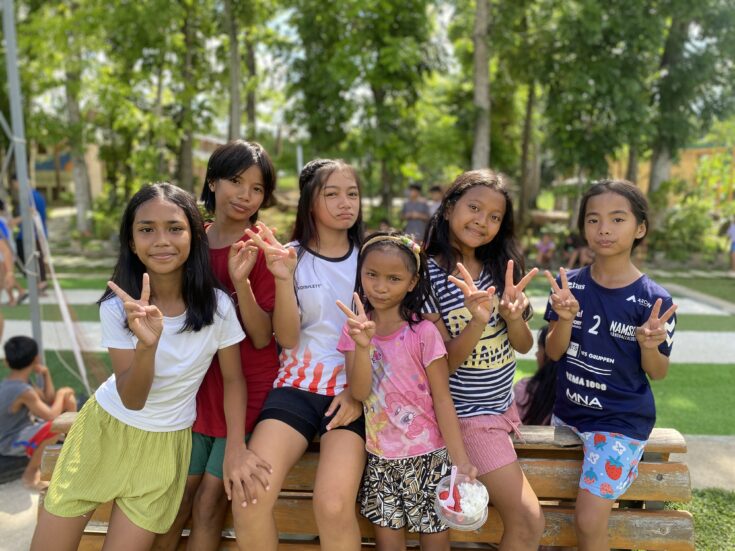
What began as a shelter for street children in a renovated storage building gradually grew into a non-profit organization supporting vulnerable children and families in the Philippines.
Over the years, Streetlight expanded far beyond emergency care. More than 20 years after its founding, Streetlight supports hundreds of children each year.
While the programs have evolved, the idea remains the same as it was when Erlend first arrived in the Philippines: that every child deserves dignity and the chance to build a different future.
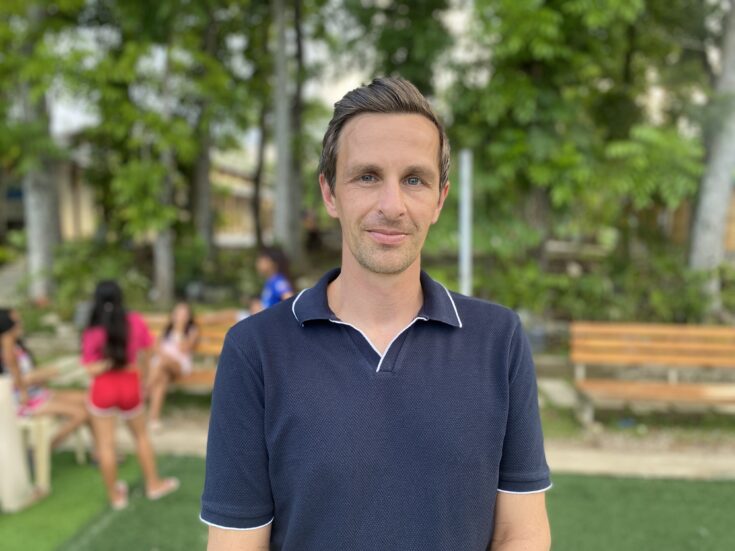
That belief was rooted in values Erlend had carried with him long before he arrived in the Philippines.
Erlend grew up listening to stories from his grandfather, a man of the Second World War generation whose life was guided by a simple principle.
“My grandfather would always say: the most important thing isn’t what you do but that you do something,” Erlend recalls.
His grandfather started festivals for the elderly, created emergency buttons for seniors to call for help, fought the closure of nursing homes, and opened new ones, all as a volunteer.
“That has been with me for as long as I can remember,” Erlend says.
For decades of service he was even awarded the King’s Medal of Honor.
“We could sit and talk for weeks about his stories. He reminded me that action matters more than words.”
That ethic carried Erlend through the early years of Streetlight.
During the first year of travel, he met his wife while volunteering in an orphanage.
She was a social worker, hired as executive director, and she had two conditions before joining him in building Streetlight: she would not be paid, and he had to cut his hair and dress appropriately.
“I had no idea what I was doing,” Erlend admits.
He remembers following her into the field, watching how she spoke to families, how she listened to children.
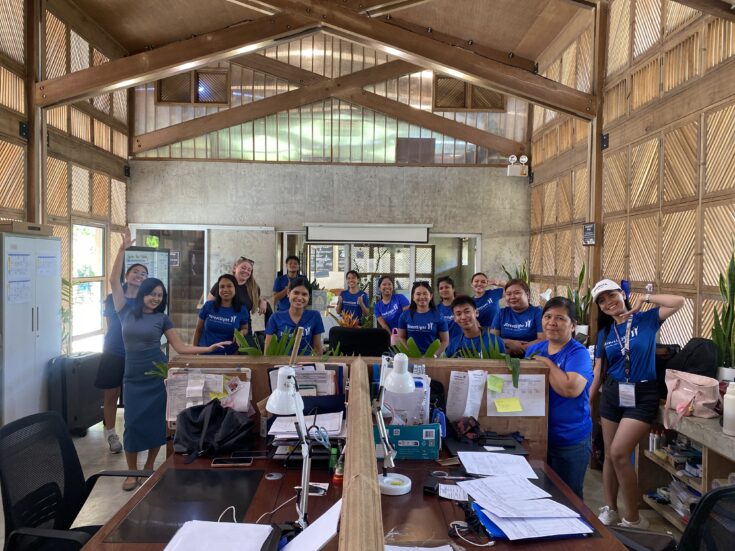
“I was a sponge just learning from her.”
So Erlend cut his hair, changed his clothes, and kept his promise. It was about learning from those who knew the culture better than he did.
After a few years they started dating.
Together they built the foundation of Streetlight. Over the years they raised three children of their own, while helping hundreds through the organization.
Rebuilding more than homes
In November 2013, disaster struck.
Super Typhoon Haiyan tore across the Philippines with winds of 315 kilometers per hour.
At Streetlight’s study center, the water rose so fast that children and staff had to flee to the second floor. Moments later, they had to break through to the roof as the flood kept climbing.
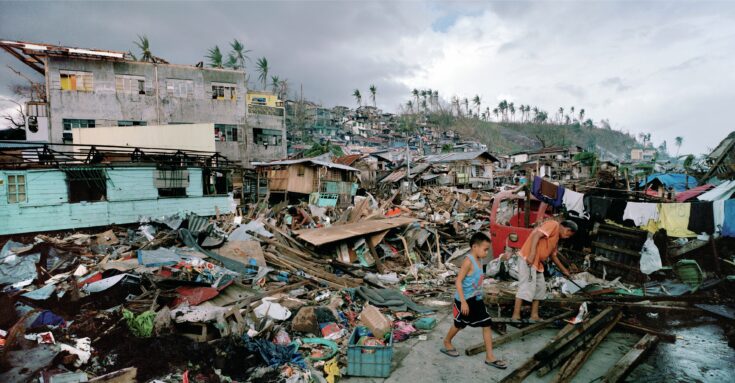
Stranded above the wreckage, the children and staff waited while the city drowned beneath them. Seven thousand people died, two thousand went missing.
Every Streetlight child survived – but everything else was gone.
In the aftermath, the children were evacuated to Davao. Support poured in from around the world.
Streetlight chose not to rebuild in the destroyed seawall area, but in Tagpuro, forty minutes north of Tacloban, where relocated families now lived with unstable electricity or running water.
The relocation was meant to protect lives, but it also tore families away from the places where they earned their living. Fishing boats and daily work along the coast could not simply be replaced by new houses inland.
“They lived there for a reason. That’s where they earned money. Take that away and replace it with a good home, then you get a challenging situation. Increased crime, selling drugs, using drugs, selling bodies, selling children, organ harvesting. Things we see every day here. And who are the most vulnerable? The children,” Erlend says.
He explains how such conditions shape the next generation. When exploitation surrounds children, it becomes part of their normal world.
“You are a product of DNA but also of environment. The abnormal becomes normal, and when they grow up and they have children it’s embedded even more. The echo chamber gets stronger and stronger. We want to be the counter to that scale.”
The storm scattered families, stripped them of their work, and left children exposed to dangers that had always lurked in the margins.
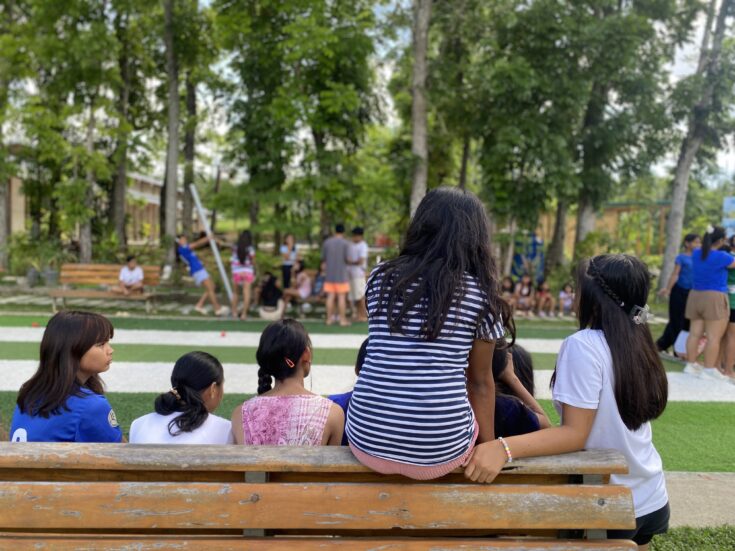
From the ruins grew a place where children could study, play, and imagine futures untouched by the cycle around them.
A Dream Factory in Tacloban
On the grounds of Streetlight, the transformation is palpable.
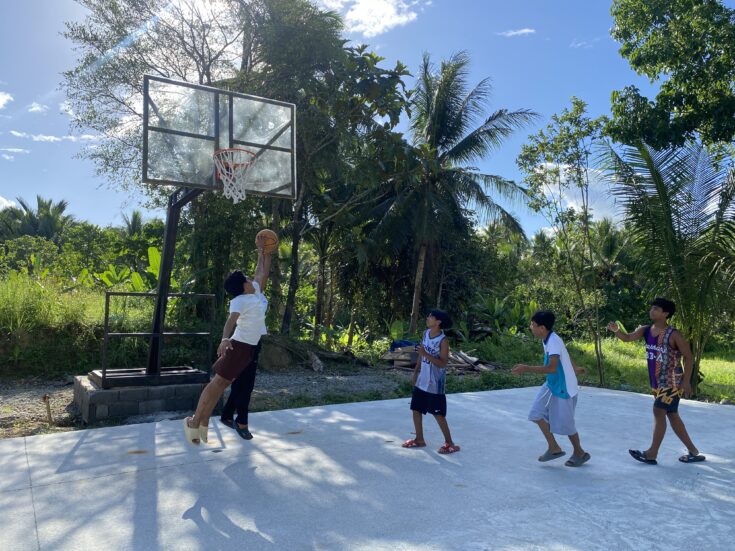
Children chase each other across the basketball court, voices rising in laughter and song. A girl perched high on a stack of chairs points finger‑guns at Erlend, and he fires back in mock duel until she collapses in giggles.
It is hard to imagine the trauma these children carry, yet here it is met with play, with dignity, with the chance to dream.
Those dreams are not abstract. Streetlight calls itself a “dream factory,” and its vision is to change the world one child at a time.
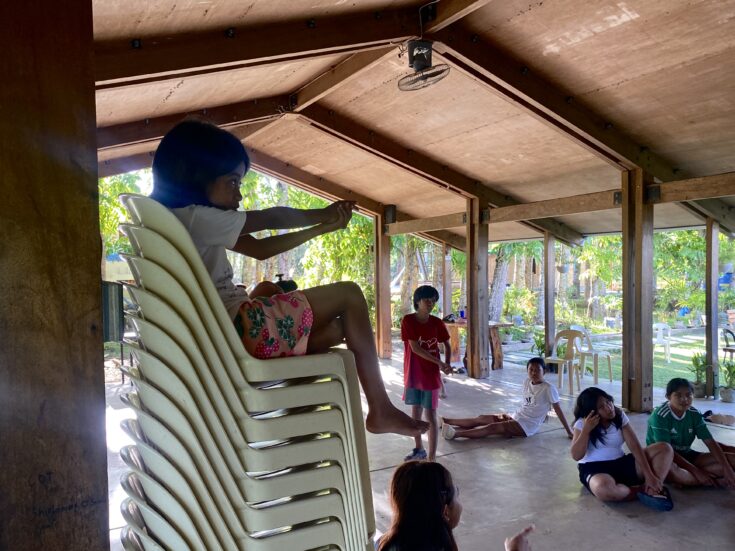
Many of the dreams begin small: a clean shirt or a pair of shoes, but they grow into futures as teachers, nurses, police officers.
Former street children now serve in those dreams; Camille, once a scholar, is today a public school teacher and a board member of Streetlight. Marlin, who once arrived at Streetlight in the back of a police car, is now a police officer himself.
Behind the laughter lies structure: safe space facilities, food and shelter, reconnection with families when possible.
Parenting sessions teach alternatives to punishment, and family days bring parents and children together. Children even learn their rights and sometimes correct their parents during meetings.
Education is the backbone. Streetlight distributes notebooks, pens, uniforms, shoes – essentials that otherwise force children out of school.
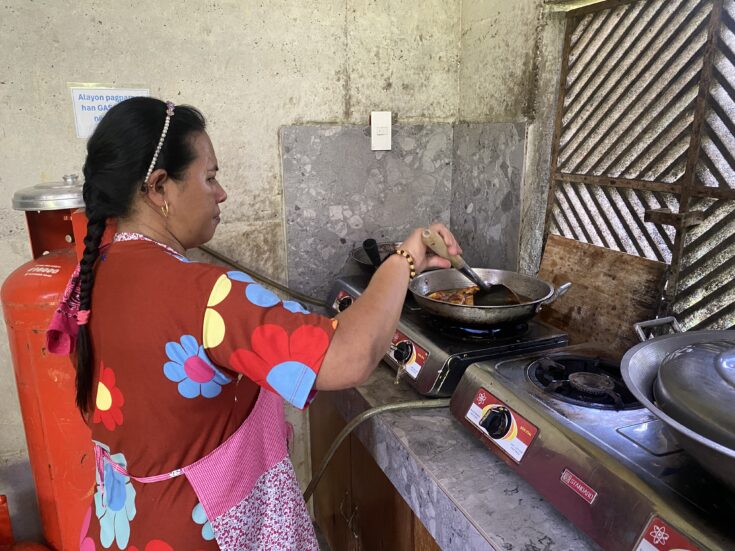
Health and nutrition are woven in: dental care, hospital support, fundraising for surgeries.
And behind every part of the work lies a consistent approach.
“We are not a shopping mall where everything is fast and quick. We are the small tailor hidden in the corner. Tailored for each and every child. Each child is seen. And we want to do that for as many as possible.”
The laughter on the basketball court and the duel of finger-guns are small reminders that even in places marked by hardship, childhood still finds its way back.
And that a single child’s dream can echo far beyond what anyone first imagined.