


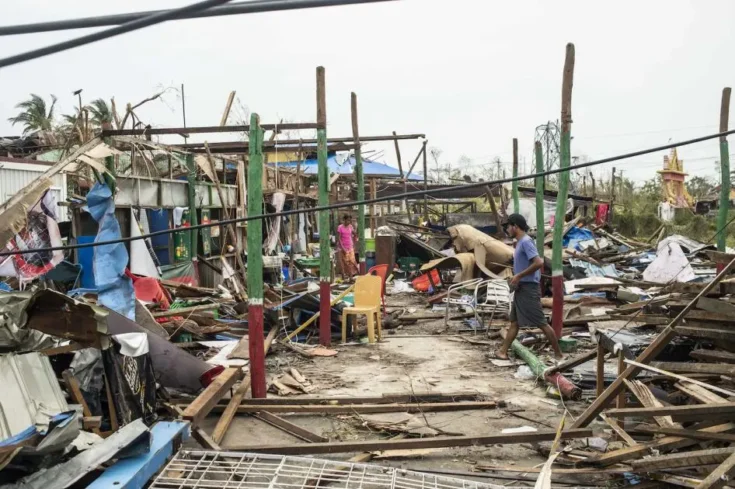
New research from the Swedish Defence University examines disaster response after Cyclone Mocha hit Myanmar’s Rakhine state on 14 May 2023. The study says the Arakan Army became a central actor in relief.
The research, by Kyungmee Kim at the Department of Political Science, describes how the group organised large-scale operations. It says the military junta did little evacuation and restricted humanitarian access.
The study says the relief efforts strengthened the Arakan Army’s local legitimacy. It also notes fighting later escalated, including coordinated attacks in Rakhine in November 2023.
The research highlights severe impacts on Rohingya communities, including limited evacuation and reduced access to aid. It cites movement restrictions and fear shaped by past abuses.
The study says its findings can inform future disaster planning in conflict areas, including Myanmar’s cyclone-prone regions. It points to the need for context-specific engagement, trusted local intermediaries, and clearer strategies when aid access is restricted.